"Amimals" – in zoos

Going to the zoo was always my favourite activity as a child (still love it today) so I could hardly wait for E. to get at least a little bit interested. And the time has come.

Our first time to the Budapest zoo was when she was 6 months old. It was more fun for me than for her. She had a look at the camels (and smiled when saw them pee) and the farmyard and then fell asleep. She only woke up for nursing (which I managed in the disabled loo) then went back to sleep again.

But now as she is over 1 (15 months old more precisely) she takes pleasure in walking around and looking at animals.

Visiting relatives in Debrecen gave us the sudden idea to visit the zoo there. It was actually a great idea. We all loved it. We were already in the zoo for half an hour (saw some parrots, giraffes and monkeys) when I realised what a good occasion would this be to use English (our Hungarian relatives didn’t accompany us). So we just sang our song to signal the change in using languages and continued our animal adventure in English.
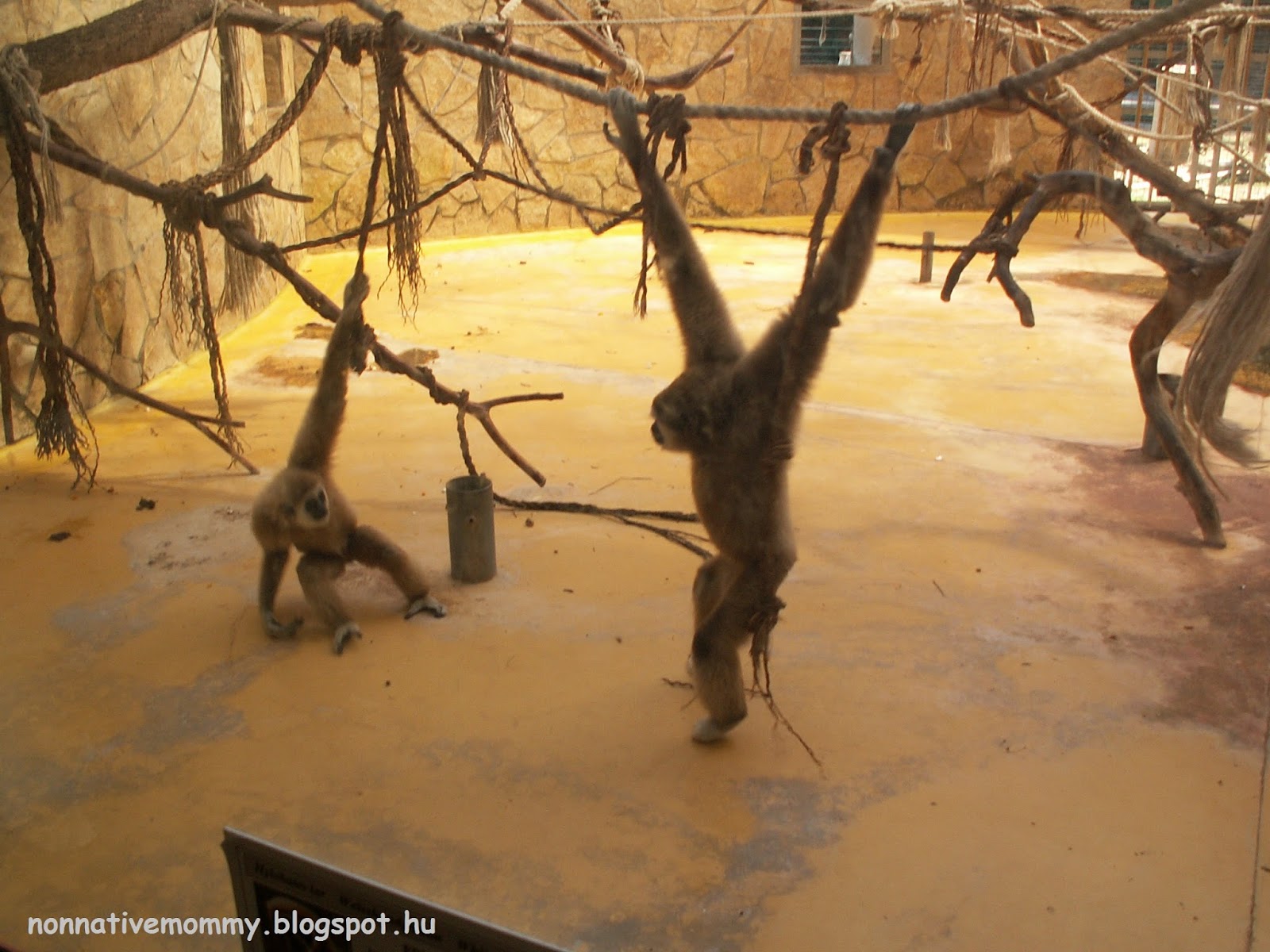
As we were walking around, we described everything to her in English (and as usual she was repeating everything like a parrot):

  • what animals we saw (turtles, a hippo, penguins  – her favourites, more monkeys, laughing doves, roosters and hens, camels, goats, ostriches and lions)
  • what they looked like (“Look, the camel has two big humps”; “Wow, this rooster has a huge red comb on his head”)
  • what sounds they gave (roar, squeak, cock-a-doodle-do, coo-coo etc.)
  • what the animals were served for dinner (fruits, vegetables, mouse, rabbit etc.)

At the end of our visit we found a wooden playground where there were a lot of animals. E.’s favourite was the caterpillar. She climbed on it and rode it for about 15 minutes. We also counted and named the caterpillar’s legs, eyes, mouth and antennae.

Our second English tour in the zoo was in Budapest with our native nanny, A.
I learnt some new animal names (e.g.:cassowary) and we had a wonderful day with a lot of English (I tried to stay in the background and let A. and E. interact with each other a lot). The photos speak for themselves.

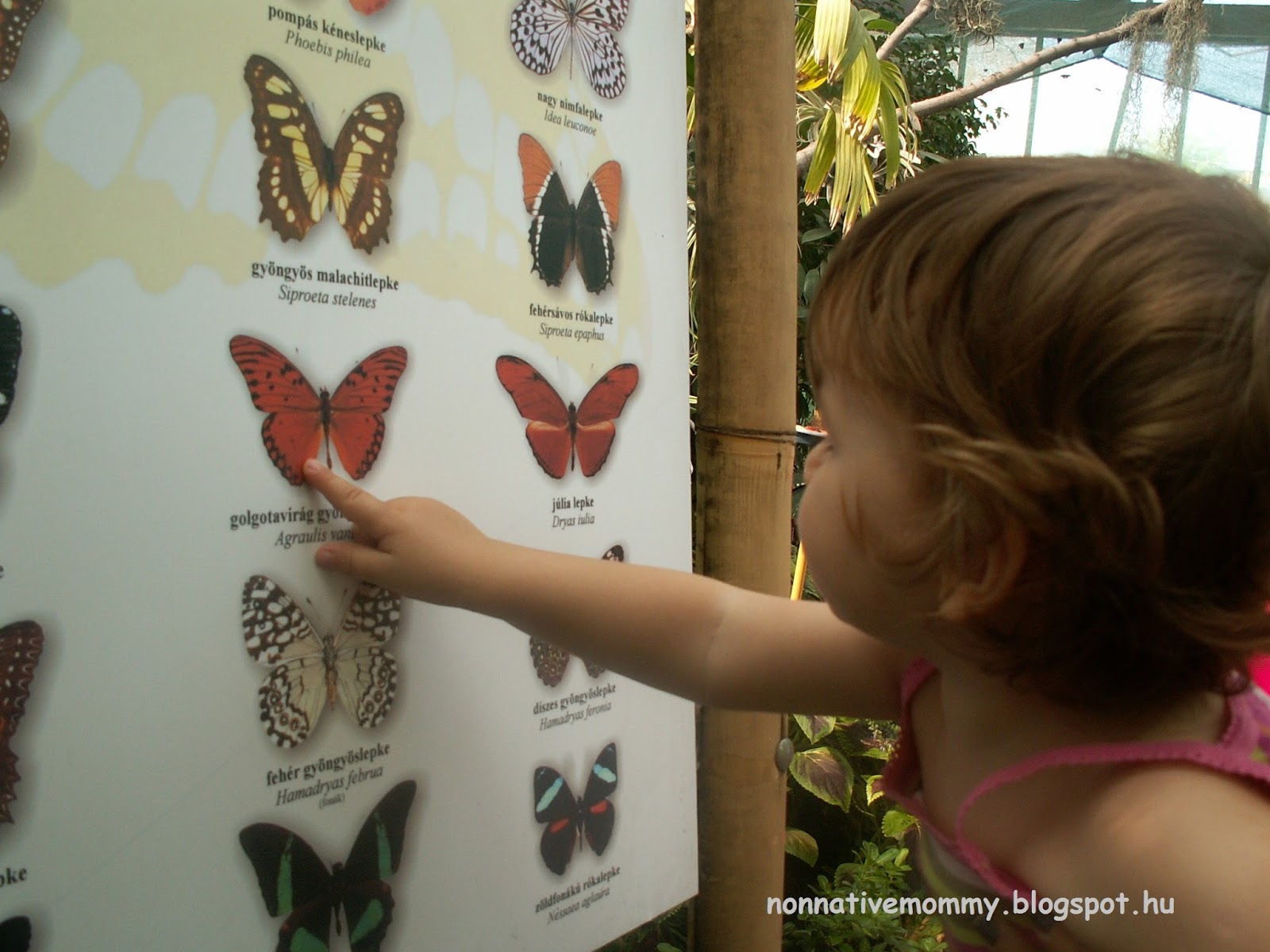
E.’s favourite place was the Butterfly House, where we could see how butterflies come out of their pupa, and of course, there were plenty of different types of butterflies flying around, eating oranges or just resting on the plants. We had to go back once again before leaving the zoo. E. was running around and one could see on her little face how amazed she was. Her favourite animals are butterflies at the moment.
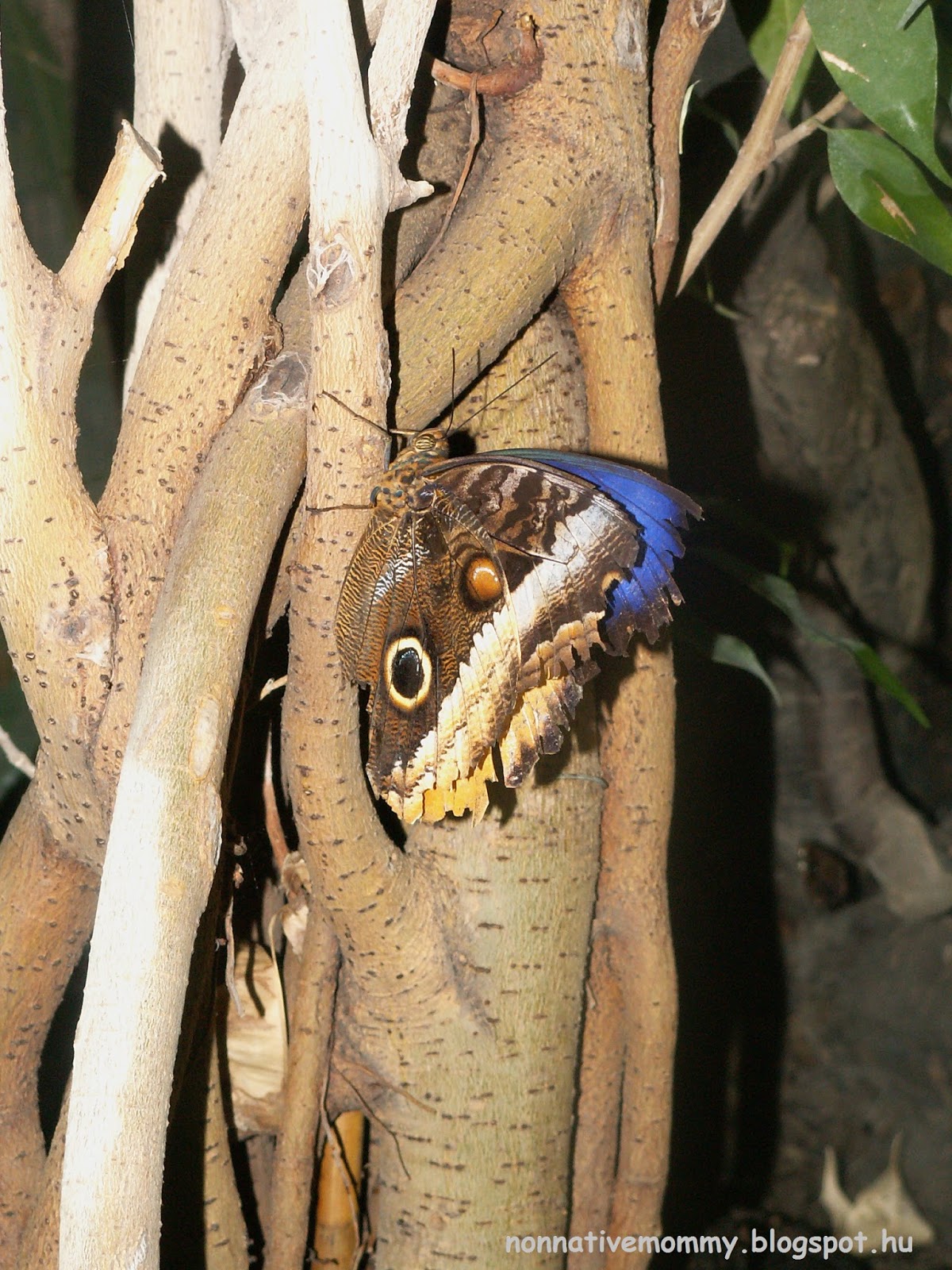
Morpho peleides butterfly – blue on the inside
E.’s pointing at the butterfly she liked the most, saying: “orange”

After the zoo experience I found a nice page where the metamorphosis of a butterfly can be seen quite nicely. So I printed it and E.”coloured” it 🙂 with my help.

We also watched the seal show at 11 o’clock. A big crowd gathered to see the seals but everything was explained in Hungarian only. (Sorry A., I didn’t interpret it at all 😦  )
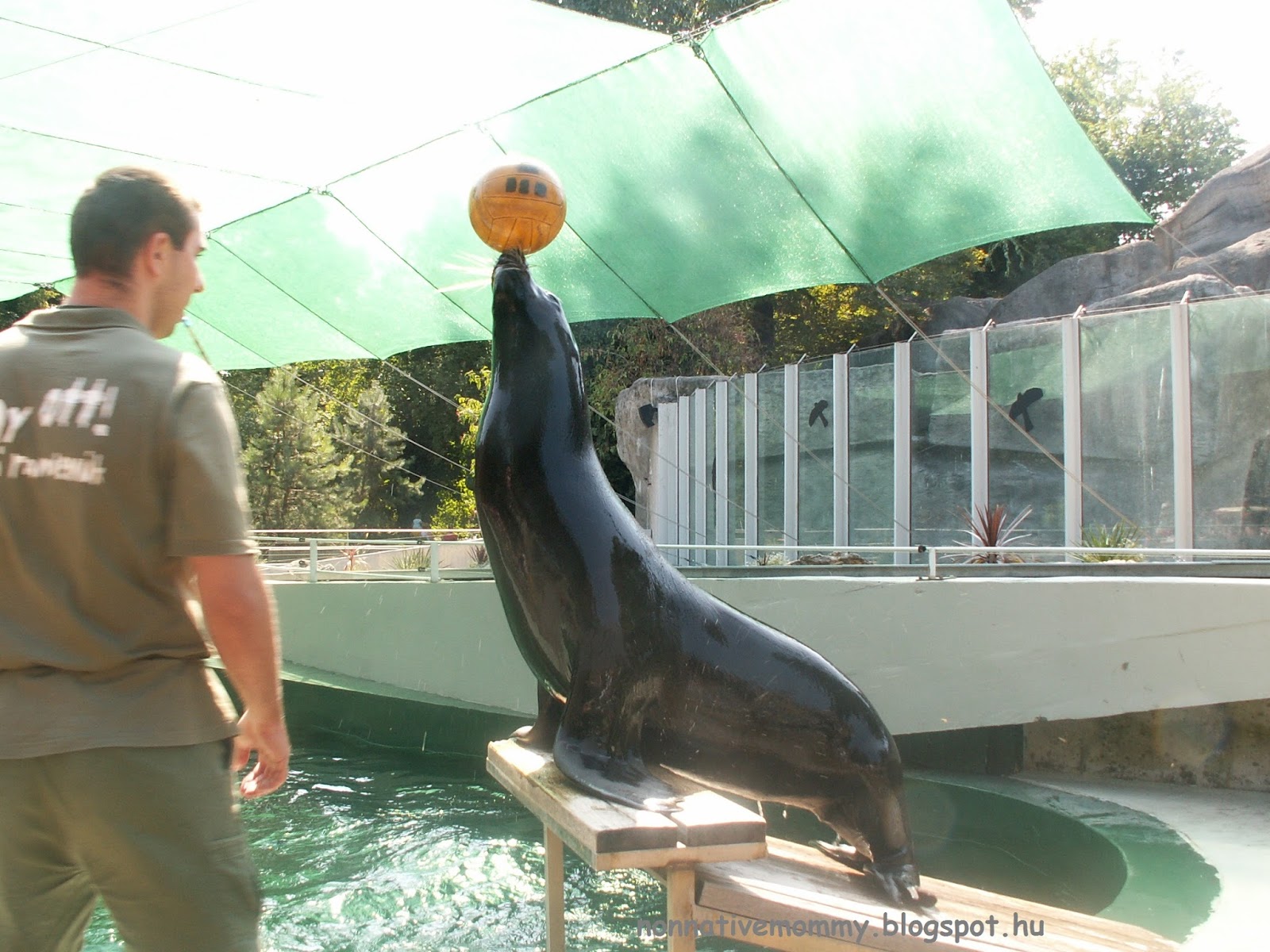
E. was fascinated by the ball (and not the seal…)


Baby Giraffe

E. was sleeping when we went to see the Neanderthals. It’s a relatively new exhibition of a (wax) Neanderthal family. This little boy with the cave drawing was my favourite.

After E. woke up we had some lunch (vegetable dish for E. and sandwiches for A. and myself – I wish E. hadn’t said “people” for the first time while I put a spoonful of her dish into her mouth)
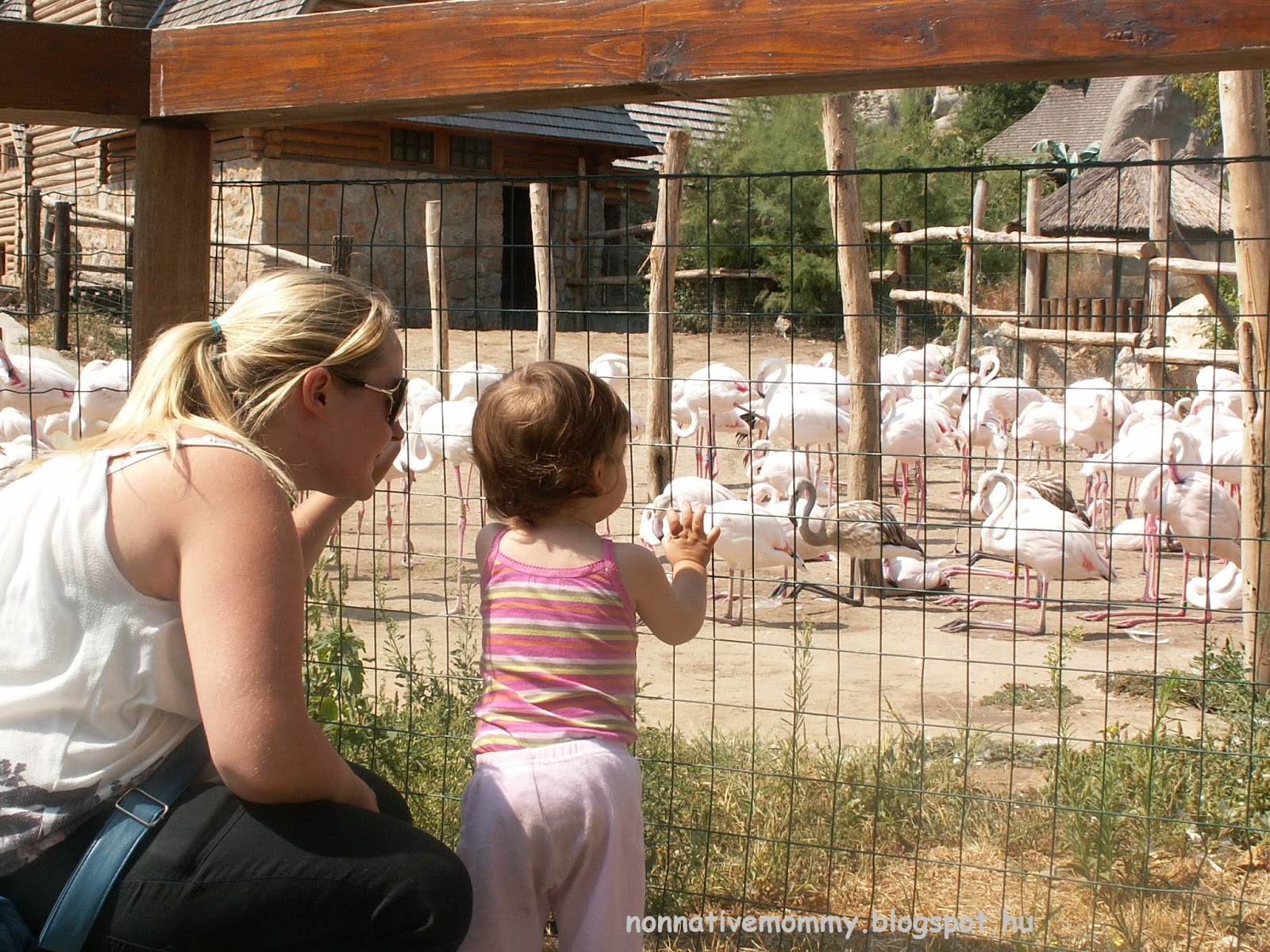
 

Flamingoes

We also went to see the baby elephant, but E. was more interested in a turtle shell:

Another favourite place was the traditional Hungarian farmyard. Rabbits were E.’s favourite. We had to return for a second visit. E. was repeating the words like “rabbit”, “hop”, “carrot” and “apple” all the way through. E. had an incident with the foal, which wanted to eat her shoes.

All in all, we enjoyed ourselves to a great extent and will return to practise our English as well as having fun around “amimals” – as E. says.

Books we are using

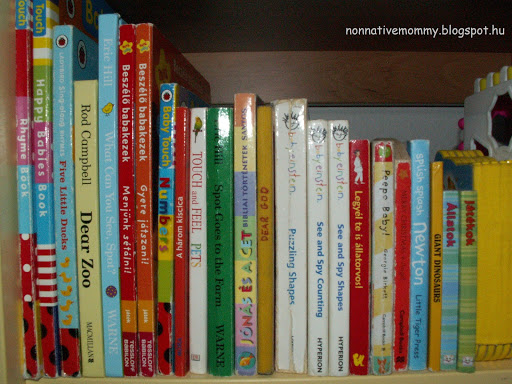
E. is extremely interested in books and  we, as a family, find it important to have a good and varied library at home. If you raise your child bilingual, having great books is essential from the very beginning. Quality counts more than quantity. We also use some Hungarian books in English and vica versa. I would spend my husband’s monthly salary on books if I could. So far I’ve managed to collect a few books both in English and Hungarian:

Our small baby library

The books you can see in the photo above are the ones that are available for E. at any time she wants them. I also have some more rhyme books, fairy tale collections and other stories in paperback format. I rather keep them away from her at present as she is living her life through experimenting (chewing, tearing, hitting, folding etc.) with everything.

Reading out loud to your child, no matter in which language, is a must. Even at a very young age. In our case both in English and in Hungarian.

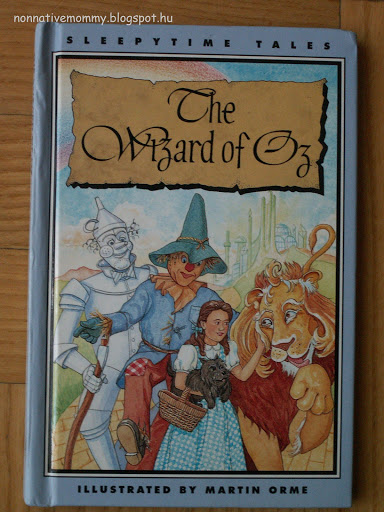
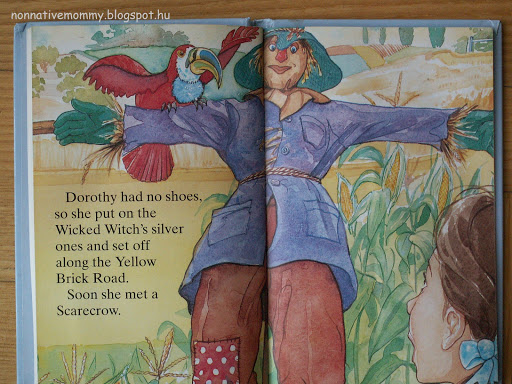
E.’s biggest favourite is The Wizard of Oz at the moment. She is now a year old. And of course, we did not start it with this story. What we have is not a board book so she can’t have it; I take it only when we read it, so it is not available to her 7/11. Probably this is also part of the magic. I bought this book in a second hand Hungarian (!) book shop for 100 HUF:


I try to read it out with sound effects. The characters have different tones of voice, when the storm is coming I say whoooosh or sssssshhhhh, when the lion appears I roar, when the wizard prepares the balloon I imitate the blowing of a balloon etc. E. really loves all the sound effects. After I have read the book, she can get it for a short while. E. tries to turn the pages (it’s not easy for her as she is used to board books) and while we are looking at the pictures I tell her what we see in a few words. Then we put the book back to its place. This is when she starts whining, sometimes crying but it’s quite easy to direct her attention to something else, luckily.

But I should start with the beginning. Let’s go in chronological order:
At the very beginning, from birth to 6 months I used three CLOTH BOOKS.


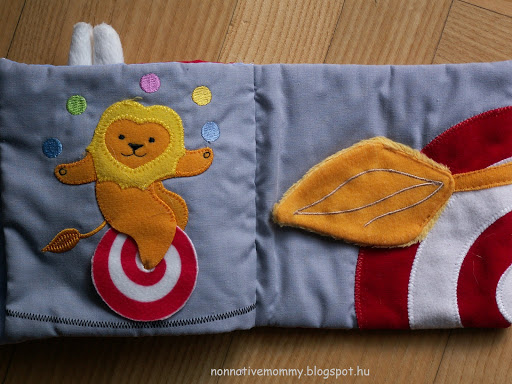
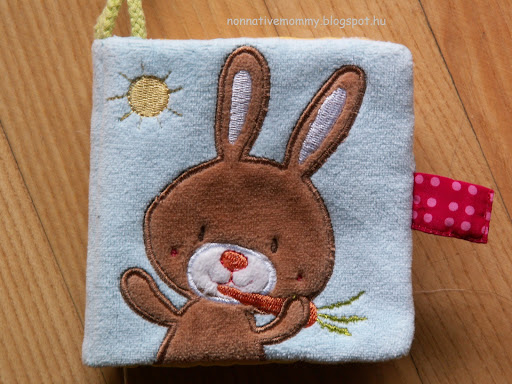
IKEA cloth book – The Giant Elephant’s Circus
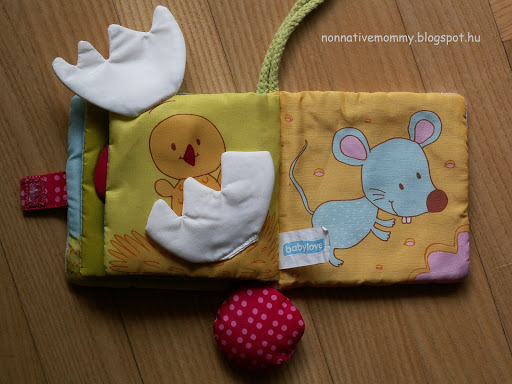
One from IKEA, and two from DM (we got them all as presents). When she couldn’t move around too much and too fast, I just put down the book so she could see it and told a story (The Giant Elephant’s Circus, The Rabbit’s Carrot Garden, The Secret Treasure – the latter is an underwater story with sea animals, alas, I have no pics of it as it landed at one of the Grandmas). She paid really close attention. Then by the time she could touch the book, I described the sounds they made (crackle and rustle), the different surfaces they had (rough, smooth, soft). Later on I stared to name the colours, the very simple sentences got more complex, though the main story line remained the same.


Babylove cloth book -The Rabbit’s Carrot Garden


The first thing E. could do with her hands after grabbing an object is turning the page of these books, and after a while BOARD BOOKS. It was after the age of 6 months, but this time she was just interested in turning the pages. When she was around 8-9 months old she was closly examining certain pages and skipped others.

I, myself, LOVE the Ladybird series. They have so many great books for all ages. The Baby Touch series is what suits a child under 3 the most. We have 2 of these colourful, vivid fun books which can be touched, scratched, pushed and licked:


In case of the Rhyme Book, I say the rhyme or sing the song which is on the given page while E. is touching and licking the different surfaces. I often ask her questions about the pictures (Where’s the Teddy? or Are these flowers the same? What colour is the pussycat?) and then I answer them (There he is, No, they’re different, She’s orange), but nowadays she’s started to answer me babbling or pointing or even saying some wordlike utterances.

In case of the Happy Babies Book, we mostly touch and scratch, or wave hello or bye-bye to different creatures. Also, I say a lot of colours here. If I’m a little bored with it then I sing along a song which could be connected to the pictures. E.’s favourite page is the last one, so we just sit over it and push and lick the squishy, circle and the shiny, silver triangle.

Another number 1. book with small kids is the Spot series by Eric Hill. Here is a video where Eric Hill himself is reading out one of his books, Where’s Spot?. The little hands love turning the flaps (but be careful, they can tear them off in the twinkling of an eye). Spot is very well supported online as well. Have a look at Spot’s homepage.

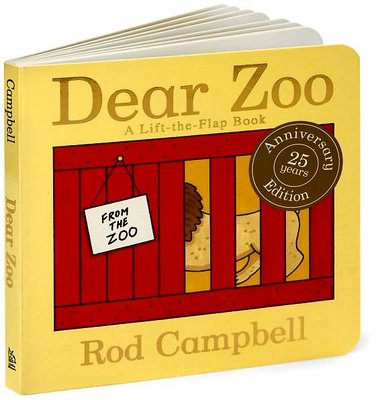
E. enjoys flap books a lot. Another one in our library, which is “read” on a daily bases, is Dear Zoo. You can have a look at the inside in this funny video.

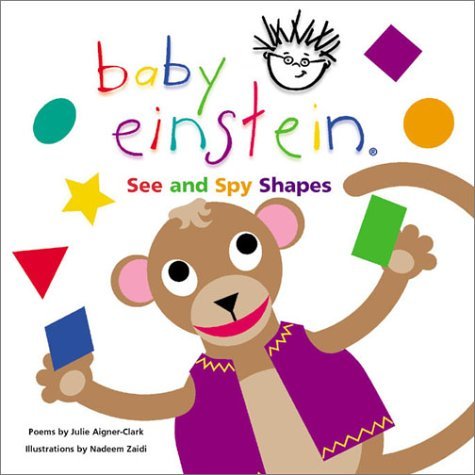
There are some educational books for early learning purposes. The market is vast for these books and there are a great number of them. What we have are some Baby Einstein books about shapes and numbers (I managed to get 3 of them at a mom-to-mom sale in the local youth centre for a few hundred HUF). 
 

I could go on and on listing the books we love using or would love to buy but there would be no point. As far as I’ve experienced it, it doesn’t really matter what books you have, and how many you have as long as you open them regularly, on a daily bases, or as frequently as your child is interested in them. Even if you don’t have a well lined purse (well, well it’s not a surprise that these baby books cost a fortune) you can find discounts and second hand books too.

Check out the following sites:


Angolkönyvek.com

There’s a site (bookdepository.com) where delivery is free. What’s more, you can read to your child online for free (though it’s not really for babies, or at least my little one doesn’t really enjoy it that much yet): wegivebooks.org . Another possibility is to make your own book, but it’ll be another post.

 
And to finish this post, here is a photo of E. reading her favourite book:
 

Singing and signing

I promised a post on singing nursery rhymes together with MAKATON signing. So here it is.

The MAKATON signs can be used while you sing the traditional nursery rhymes as the Signing Hands do. These two ladies sign while singing. Have a look at this song, which is the well-known ‘Ba Ba Black Sheep’ with signs.

Easy to learn, right? Their songs, which are available on the net, give us the opportunity to learn more signs.

Some more common songs with MAKATON signs:
The Wheels On The Bus
Row row row your boat
Old MacDonald Had a Farm
We wish you a merry Christmas Little Peter Rabbit
Something Special, the BBC series, also includes some songs like the Rainbow Song. On the link you can find Mr Tumble singing and signing it.

After you have learnt a lot of signs, you can use them with other songs or rhymes.
Within 1-2 months you can learn 50-70 signs without an effort. Of course, it doesn’t mean you HAVE TO use all of them. You’ll see what the two (three) of you really need.

How we did it when E. was 6-8 months old:

When she couldn’t sit properly, but could only crawl, she got tired easily and became grouchy. This was the time when I made her lie on her back looking at me. Then I sang the songs and a signed along. She smiled and even laughed out loudly. She could enjoy it even for 15-20 minutes. This was enough for her to be refreshed and we could play again, or have her food etc.

Now, when she’s 11 months old it’s changed a little:

E. can stand and cruise (tiptoe along some furniture) so it’s very difficult to keep her in one place. I don’t bother to make her lie down any more. When we play and she sits for a while I sing two or three songs followed with the signs. No more because she moves on quickly and doesn’t really care any longer. But she is screaming and/or flapping her hands with joy during the songs. We do the short singing/signing sessions twice or three times a day.

(Have you noticed how easy to misspell or misread the two words singing and signing? 🙂

From birth to the 6th month

As I have already mention my determination to raise a bilingual child didn’t realise at the very beginning. I did it half-heartedly after E.’s birth. I was singing a lot to E., who really enjoyed it, more than the Hungarian songs. She calmed down more quickly when I sang two of the songs: Lavender’s blue dilly, dilly and Hush little baby. So there was time when she couldn’t calm down and I was singing these two songs for 30-40 minutes without any break.

During this first period I started to read books on the topic: Make your child multilingual by Silke Rehman and 7 Steps to Raising a Bilingual Child by Naomi Steiner and I found both of the books very supporting and practical, still they don’t deal much with a totally monolingual environment, where the second ‘mother tongue’ is a learnt language for the parents, and it’s the parents decision to raise the child bilingual. They mainly focus on mixed marriages, where one parent speaks a language and the other speaks a different one, or monolingual families living abroad and the countries language is the dominating one. Both books  discuss more or less the same topics focusing on determination of the parents, the consistency and a flexible plan. I do not want to go into details and give a review as I’d like to concentrate on what we actually do in our everyday life, but definitely these two books were really good theoretical and practical basis.

The authors emphasise the TIME factor a lot; how much time is spent on the languages. They recommend 30-40 percent of the child’s day to be spent on the minor language, which is English in our case.

So I “wasted” the first 6 months. If I could start it again I would speak English to E. from the very beginning in a natural way as in Hungarian, but I did not. So she heard natural spoken English every now and then for 6 months. The positive side of it is regularity, which is also a very important factor. Every day I sang songs for her or told her rhymes no matter how our days were going.

Around the 3rd month we started to watch videos on youtube, though only for 5-10 minutes per day. I know there are a lot of different views on the topic (whether to let a baby watch moving images at this early age or not, but I found 5 minutes per day won’t do any harm. According to some viewpoints, moving images have a bad effect on the child’s brain, imagination).
She liked watching these videos so slowly we increased the time for 10-15 minutes per day until the end of the 6 months.

The following videos were and still are her favourites by KidsTV123:
The Animal Sound Song
The Shape Song
Red Rabbit Green Gorilla
Phonic song
Twinkle, twinkle little star

Of course, the list has grown by now but I’ll write about it later.

We usually watched the videos 2 or 3 times a day for 5 minutes each occasion. When E. got whiny it was a great way to refresh her, or keep her busy when she was a little bored. From one week to the other she enjoyed it more and started to smile at the characters. She also recognised the song when the first image came up or the song began.

In this period my main focus was on fun and regularity. We didn’t overdo it, just enjoyed being with E. and see how her intellect opens up.