FAQ

In the last couple of weeks I have bumped into a lot of mums who asked me similar questions about raising our daughter bilingual in a totally monolingual environment. So I collected a bunch of questions and my answers to them with some links from earlier blog posts:

  1. Do you speak to her English only?

No, I don’t. I can’t do that. My mother tongue is my mother tongue, no matter how high my level of English is. (High level of language command is relative. I always feel my English is deteriorating.)

I assigned certain times to speak English. When E. was a baby we had a timetable which meant that we used a little bit more English than Hungarian as she spent loads of time with me. Then we needed to change our schedule, still we had 50-50 % balanced language usage. (When she was around 2). Nowadays, (she’s almost 3) we are in trouble with the balance between the two languages as we do not spend so much time together therefore there is less English in her life. BUT! Her English basis is so strong that she asks for changing languages when she feels she misses one of them (it’s usually English)

Even today, whenever there are just the two of us she says: – Uh-uh, Mommy. We need to change into English. We are just two.
or
– I’ve already changed into English, because there is only Mommy and I.


  • When do you speak English to her and when Hungarian?

    There are many methods you can follow. What I use is a special one: I call it the timetable method. By now we don’t have a timetable any more. Whenever we can, we speak English, as the Hungarian input of the environment is too influencing.

  • When did you start talking to her in English?

    When we took her home from the hospital. At first, I was just singing songs and chanting rhymes to her in English. I wasn’t sure about what I was doing and it felt strange. Then I got some inspirations after having read some books and contacted some other moms in the same shoes. From the age of 6 months I’ve been talking to her in English just like in Hungarian.

  • Wasn’t she late with speech development?

    Not at all, although it would have been perfectly normal. She was about 1 year old when she could say 6-8 English words (and Hungarian ones too). Actually, her first word (bib) was in English. Of course, these words were fuzzy and not distinct for the untrained ears. But by the time she turned 18 months these words had become clear and a LOT more had been added to them. Not to mention, she started to build up 2-3 word sentences at that time too.

    I have to admit that the period between the age of 12 and 18 months was filled with more English sessions than Hungarian.

  • Doesn’t she mix the languages?

    She does! At first she didn’t, however, nowadays more and more. I’m not worried about it… okay… I am a little bit concerned, but I know if we keep up the balance between the languages she’ll have all the language tools in both languages to express herself. Most of the time she mixes Hungarian into her English because she doesn’t know a word or she can’t express something due to lacking a structure.

    Though it happens the other way round, too. She makes her grandparents puzzled when she asks for some stories with the telescope in it (mind you, pronounced it with a perfect British accent) or when she says she wants to play on the see-saw at the playground. Sometimes she names some bugs (bumblebees, wasps, ants) or plants (pansies, daffodils, shepherd’s-purse etc) she sees in the park in English. They can sort out this teeny-weeny language problem… for the time being.

  • What do you do when she mixes the languages?

    I keep on talking in the given language. I don’t change. And I do NOT advise you to let your child take the lead (although it is also an option.) I go on talking, let’s say, in English when she says some Hungarian words or sentences here and there. If I know she could say it in English I ask back: – What did you say? or – What’s that in English?

    If I am aware of the fact that she can’t express herself, I simply repeat in English what she said in Hungarian. Some sources suggest not to make your child repeat a word or sentence, yet sometimes I ask her to repeat just to reinforce we use English and help her fix a structure she cannot use (at all, or properly). Nonetheless, I’m not forcing it. Normally, she repeats expressions after me by herself. If she doesn’t want to, we move on.

    Also, you can pretend you do not understand what your child says, but in our case (we do not follow the One Parent One Language -OPOL-strategy; she can hear me talk both Hungarian and English) it wouldn’t work as my daughter knows that I understand and speak both. The other problem with this could be that your child can get frustrated if he or she can’t put an idea or a wish across.

  • What English activities/programmes can you take part in?

    We used to have a native British nanny for almost 2 years. I’m really grateful for her as she meant that I could have some free time (cooking, washing, ironing, shopping, cleaning etc.) while I knew English was still in focus in my daughter’s life. Now we are looking for a new nanny. If you happen to know someone in Budapest who would be interested I would appreciate it.

    I’ve organised a Mums’ English Club (MEC) in the library nearby, where mums gather with their little ones and chat in English while the kids play away. At the end of our sessions we sing some English songs for the kids. An afternoon session of MEC is badly needed but I haven’t had time to find a place where we could go free of charge.

    We’ve been taking part in the well-known Helen Doron School’s programme since E. was 10 months old. We are planning to leave it, but I’ll write about that in a later post.

    For almost a year we took part in a swimming course which was instructed both in English and Hungarian. We met there some non-Hungarian families who communicated mainly in English, so E. could hear during the swimming sessions that English is not just Mommy’s crazy language.

    We also visited Rhyme Time sessions (singing and playing in English) for a few times, but we do not go regularly.

  • Does Daddy speak English to her?

    He does. Daddy speaks a lot of languages, it’s no problem for him at all. What’s more, practising English regularly helps him improve his spoken skills as well. I suppose he also enjoys our English session;

    Again, at the beginning we did it differently. When Daddy arrived home from work we changed into Hungarian, but the whole day was in English. Nowadays, as I’m starting to work, E. is spending more time with the grandparents or she is in the nursery (not to mention that our native nanny, A. has left) we have been trying to fit in as many English sessions as we can.

    We have plenty of dinners, weekend programmes, playground visits, craft activities and bath times in English with Daddy. I’m very lucky, because my husband is very supportive concerning our bilingual project.

  • Can she say sentences?

    Haha. This has been the funniest question so far I’ve received. Sure she can. 🙂 Sometimes very complicated ones. I was really amazed when she said a passive sentence in the playground (– Look, Mommy, the other swing is taken) or when she talks to her soft toy using present perfect (– What have I told you?). One day she was replaying a Berry and Dolly episode (Gingerbread) that we watch in English.

    The following left her mouth: – I’m making gingerbread with the cookie cutter and then I’ll put it out in the winter (sic) to cold (sic). Magpie, (that is me) come and take it away.
    Later in the story: – Don’t take away that belongs to somebody else.

    Here is the episode.

    Not only her sentences but her vocabulary is also outstanding. I’m often surprised at how eloquent words she knows. The other day she called a pan saucepan. I don’t think I have ever used this word with herOr she can name different kinds of onions: leek, garlic, spring onion as well as varied expressions for the eating process: munch, chew, stuff your face, digest, feed, bite


  • How do you “teach” her (sic)?

    This is exactly how this question is asked most of the time.

    And the answer is : I do not teach her.

    What I do is to play with her in English just like in Hungarian. We do the daily routines in both languages. I try to prepare everyday and special activities for her which give us a chance to meet a lot of new situations:

    – experimenting,
    – prepping for holidays of the English-speaking world,
    – doing fun craft activities,
    cooking and baking
    doing housework together
    exploring nature
    reading books and singing a lot as well as watching videos

    These are just a few examples. In short, we LIVE our lives in 2 languages.

    +1. How shall WE start?

“The secret of getting ahead is getting started” – Mark Twain

So just start it.

If you want to get some ideas read through the blog… HAHA. Believe me, it’ll be much easier to find your own ways. But you can get some ideas here. (Feel free to search for keywords if you’re looking for something exact)

Start with some songs that you sing to your child while changing nappies or waking him/her up.

Search some videos online around a topic (cars, shapes, animals, numbers, planets etc.) that your child is interested in and watch them together. You can also explain what you see in the videos.

Learn some rhymes/songs with sign language and play with your munchkin.

Flashcards are almost always fascinating for children, but rather time-consuming to prepare your own home-made ones. On the other hand, our own flashcards are much more attractive to my daughter. You can find really good flashcards online, which you only need to print (and perhaps laminate).
If you don’t mind spending some money, you can buy some beautiful ones.

And I haven’t mentioned the endless opportunities that books offer to speak and practise a foreign language.

Again, these are some very basic ideas to start with your little one from an early age.

If you have any questions, do not hesitate to contact me either in the comments or via email. You can come and visit  my facebook page as well.

Enjoy!
Easter egg crafts

There’s no Easter without eggs. Egg painting, egg making, blowing out eggs, eating eggs, sticking egg, decorating with eggs and so on.

Here are a few things we’ve been doing with eggs lately.

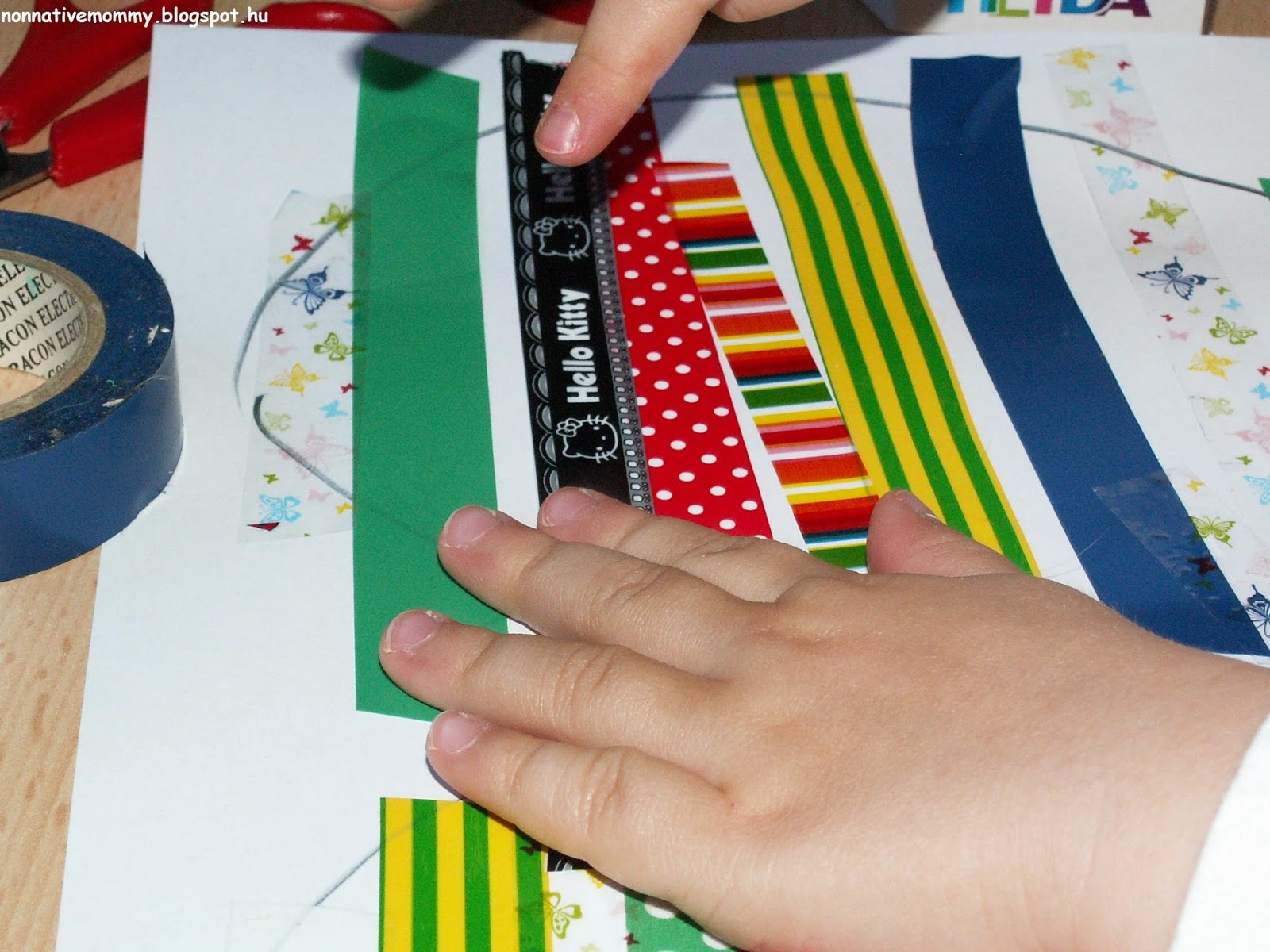
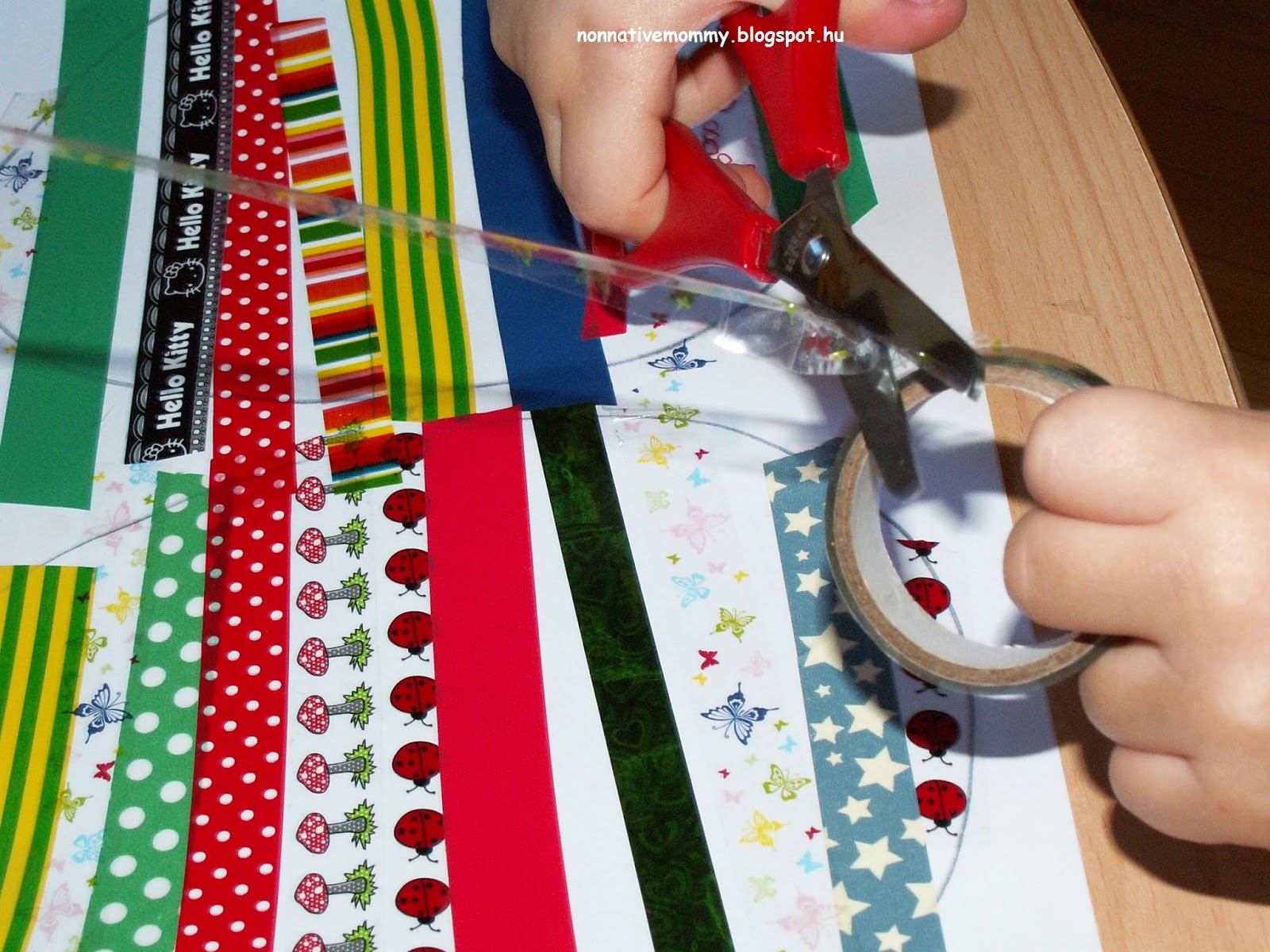
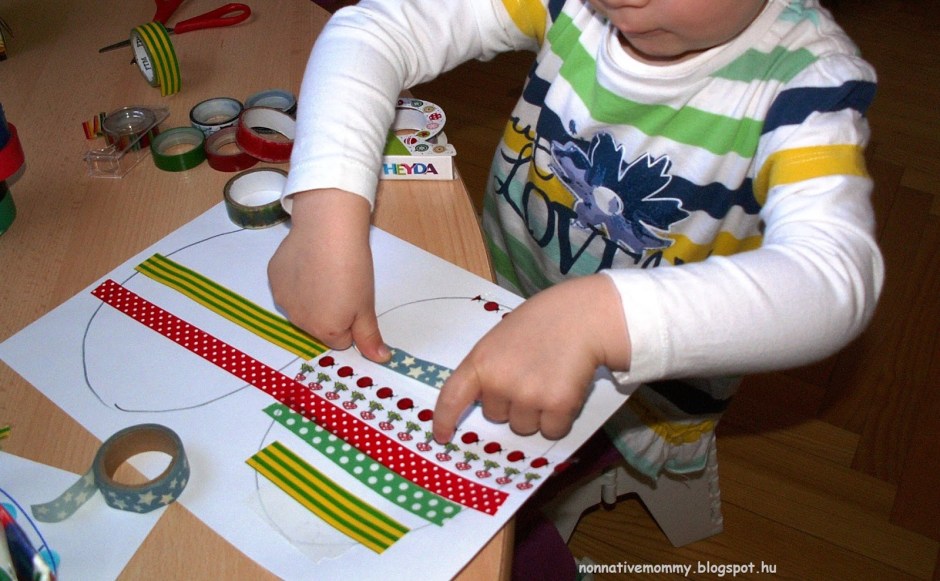
Decor tape eggs

Just draw an egg and supply your little one with some decor tape or washi tape. Be prepared: tape will be everywhere. In hair, on clothes and some on your drawn egg, too. If you want to save a pretty decor tape, do NOT give it into the hands of a 3 year old (or below).

A lot of cutting is involved, which is great practice for little hands.
If you put it around the house all your guests can admire the final product.


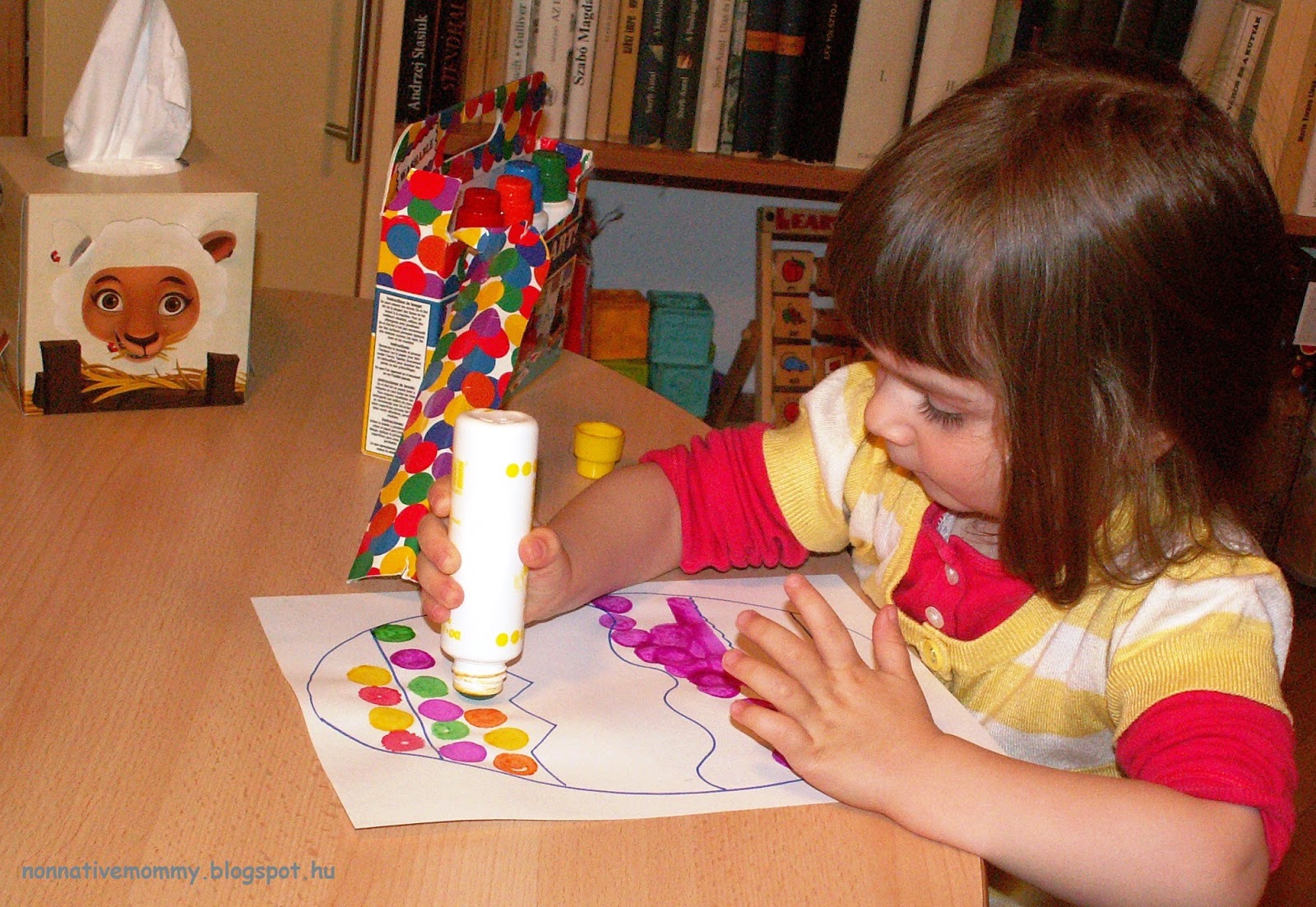
Dot marker eggs

The original plan was to follow some patterns (ABAB or ABBABB), but it didn’t work that way. I plan something and E. thinks differently. So we went with the flow. Some hand painting, making fingerprints, drawing lines, colouring freely etc.

You can print or draw and egg shape and provide your child with dot-markers

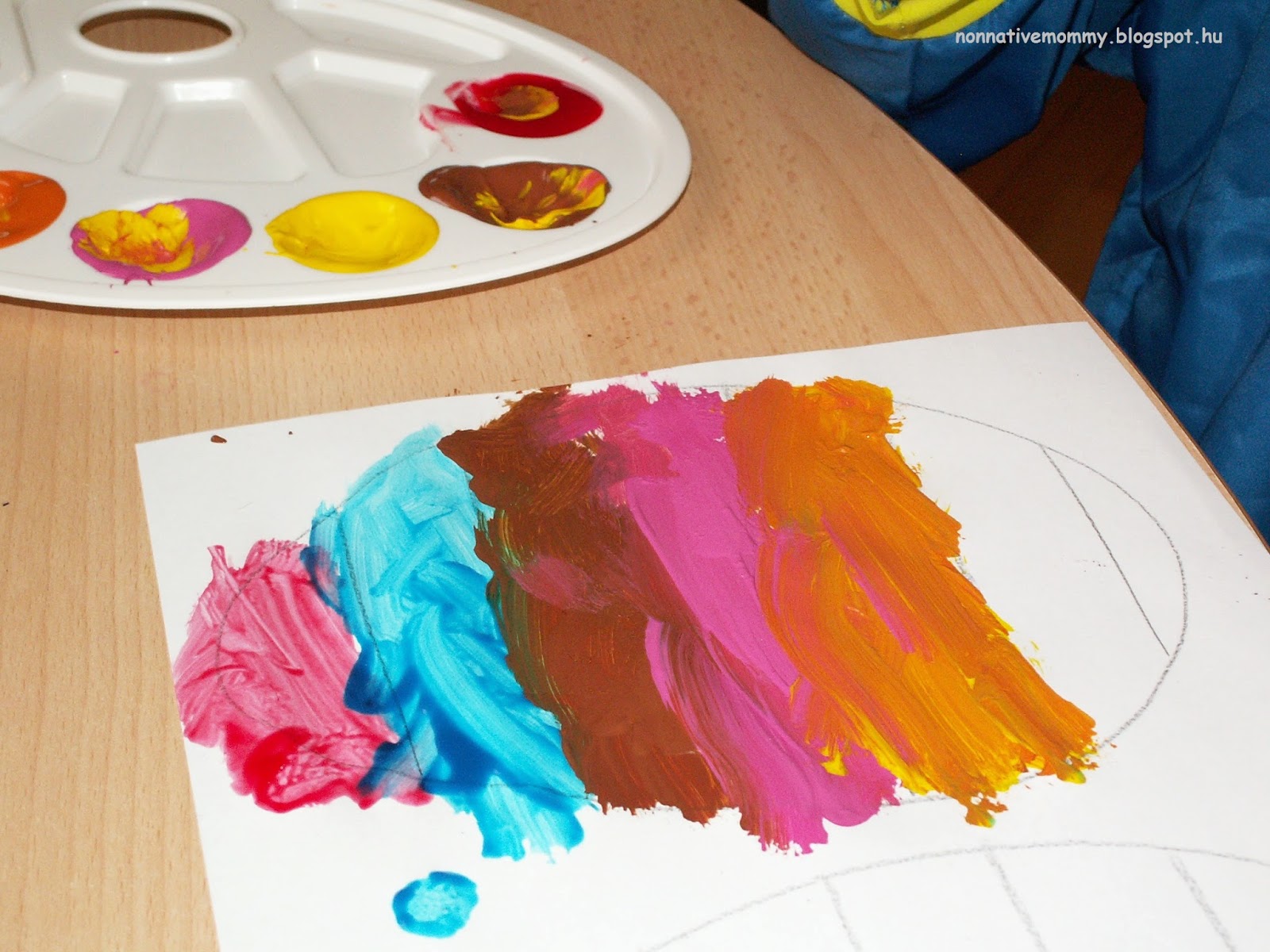
Pom-pom painting 

This is a variation of the dot marker painting. If you don’t have dot markers use pom-pom and clothes pegs.

First, E. started to use the colours one by one (although she was drawing with the pom-poms like with a paintbrush; she refused to make dots like with the dot marker)

Then colour mixing kicked it

I was crazy enough to let her sprinkle a little glitter over the wet, painted eggs (well, never again, it’s more than MESSY). I must admit she helped me happily with the cleaning up.


After they have dried I cut them out, added a ribbon and stuck the on the door frame in our living-room.

Of course, we had some traditional egg painting (with blown out eggs and acrylic paint, which E. calls “the big girl paint”). On Sunday during church time, children could paint eggs. There and then we tried wax crayon drawing and painting on eggs for the first time which is beautiful. I have a plan for next year’s egg painting.

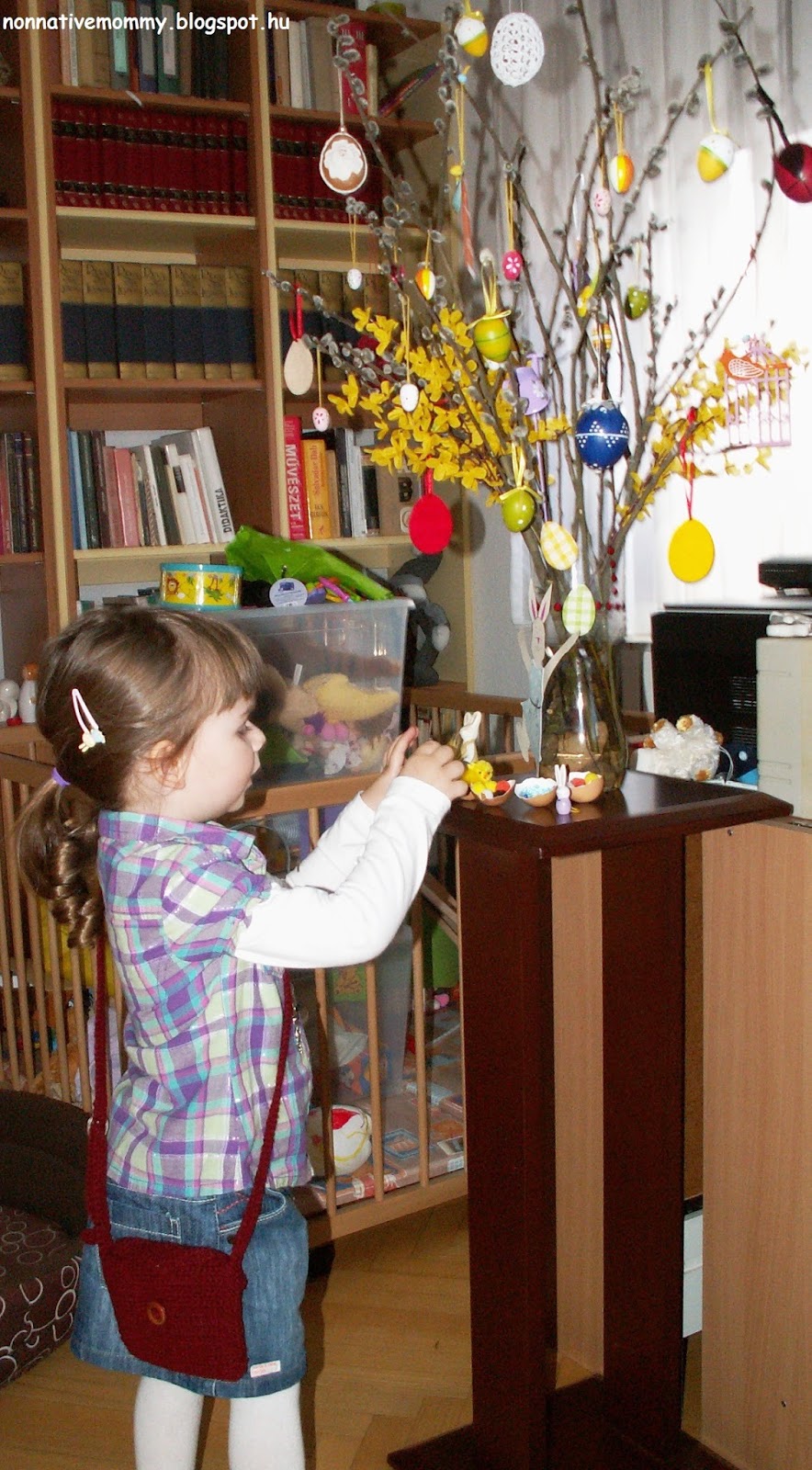
According to the Hungarian tradition, we also decorated a bunch of pussy willow (which we simply call catkins) with eggs and other ornaments.

I hope you’ve had an EGG-cellent Easter!
 

Easter Bunny and chick craft

This year I have hardly any time to prepare with Easter activities. My main focus was to find fun crafts that are easy to prepare and I can find the necessary supplies here at home. (okay, okay, I did a little shopping for eggs and other decorations.)

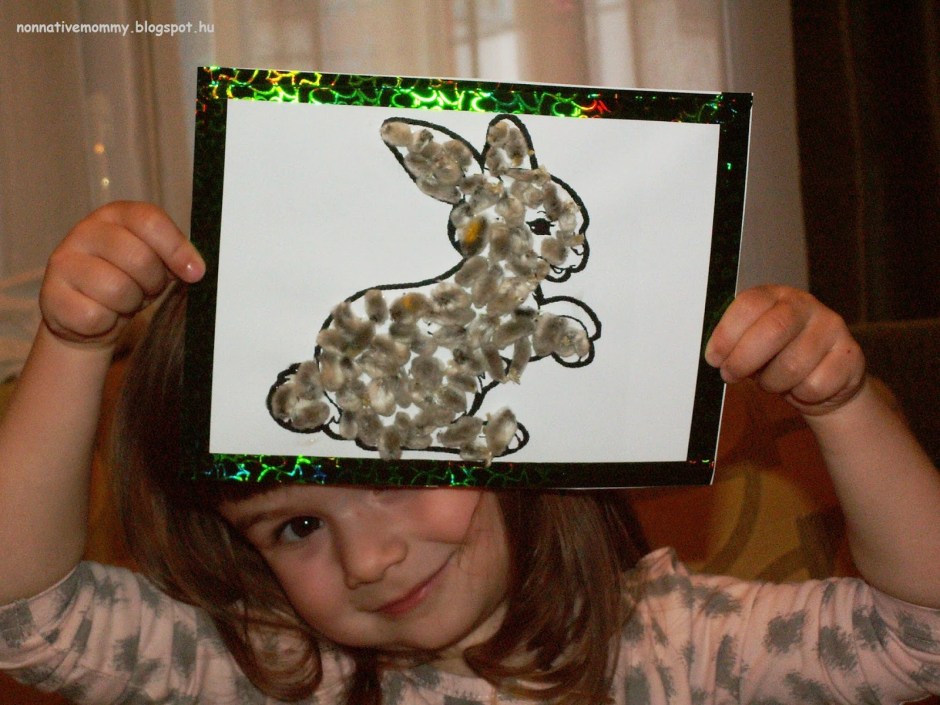
Pussy/goat willow (Barka in Hungarian) Easter Bunny 

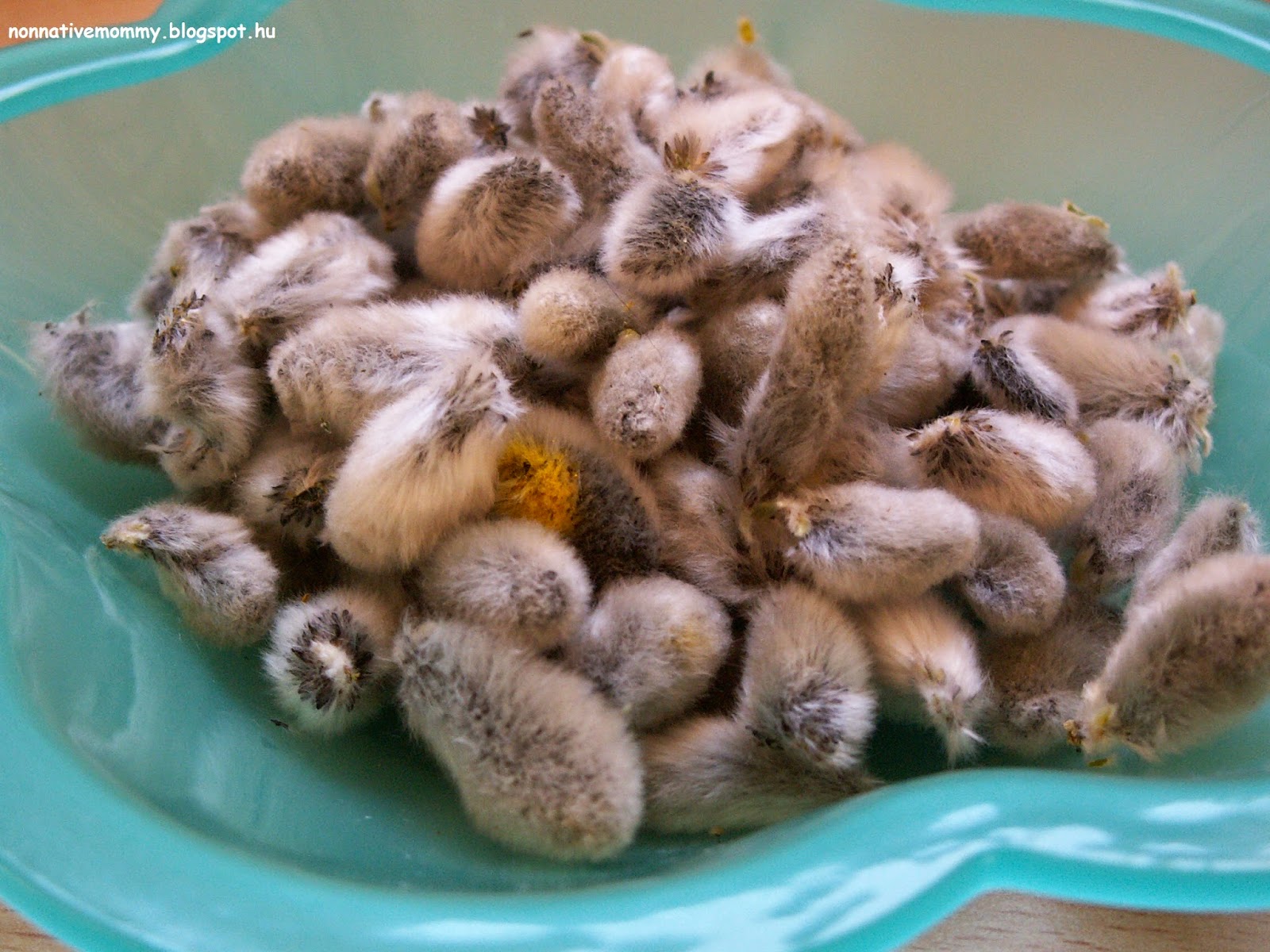
I bought some branches of pussy or goat willow. Honestly, I hate the English name of this beautiful plant, so we just call it catkin, the name referring to this kind of flower.

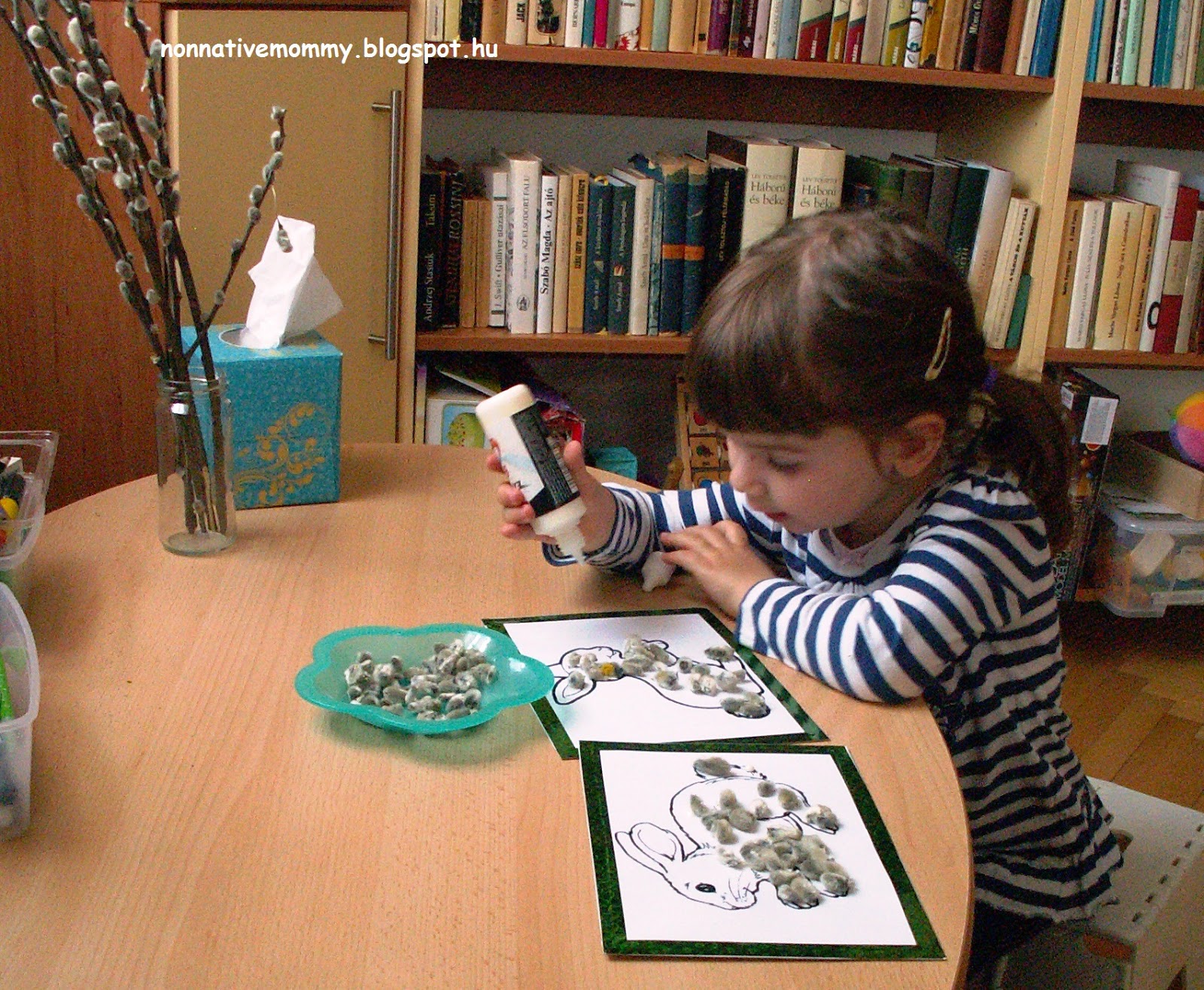
Anyway, I picked the catkins off the branch, placed them in bowl. I printed a bunny (more precisely 2 types of rabbit colouring pages) from the net and stuck it on card stock. I also added some glue and the fun could begin.

My daughter’s idea of fun was different. After having stuck 8-10 catkins on the body of the bunny she told me: – Let’s do it tomorrow.

Then she left. She tried it with Daddy the next day and they finished the rabbits more or less. The heads were missing.


We are almost there

So on the third day we managed to finish the whole rabbit.


Split pea chick (Sárgaborsó csibe in Hungarian)

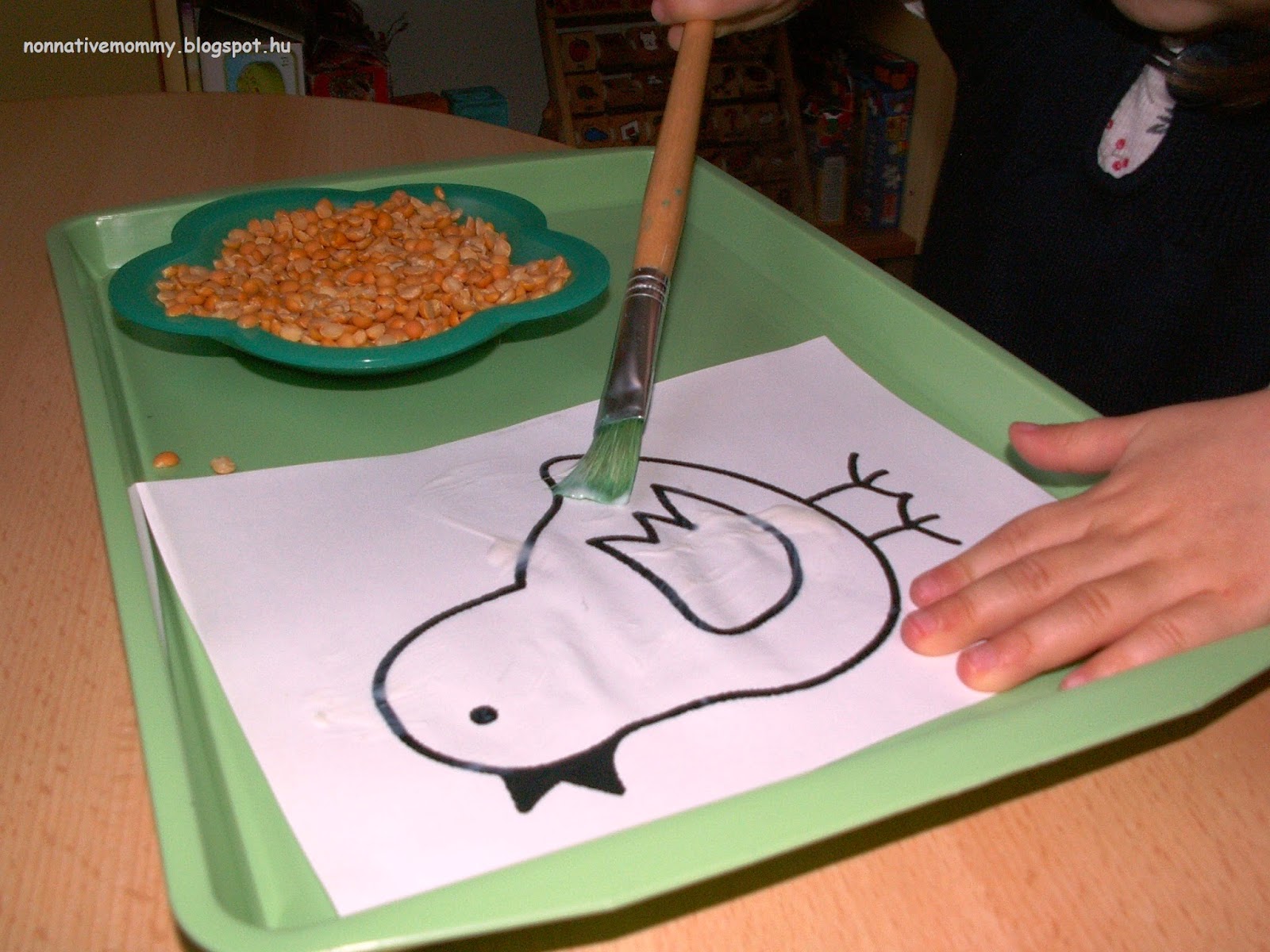
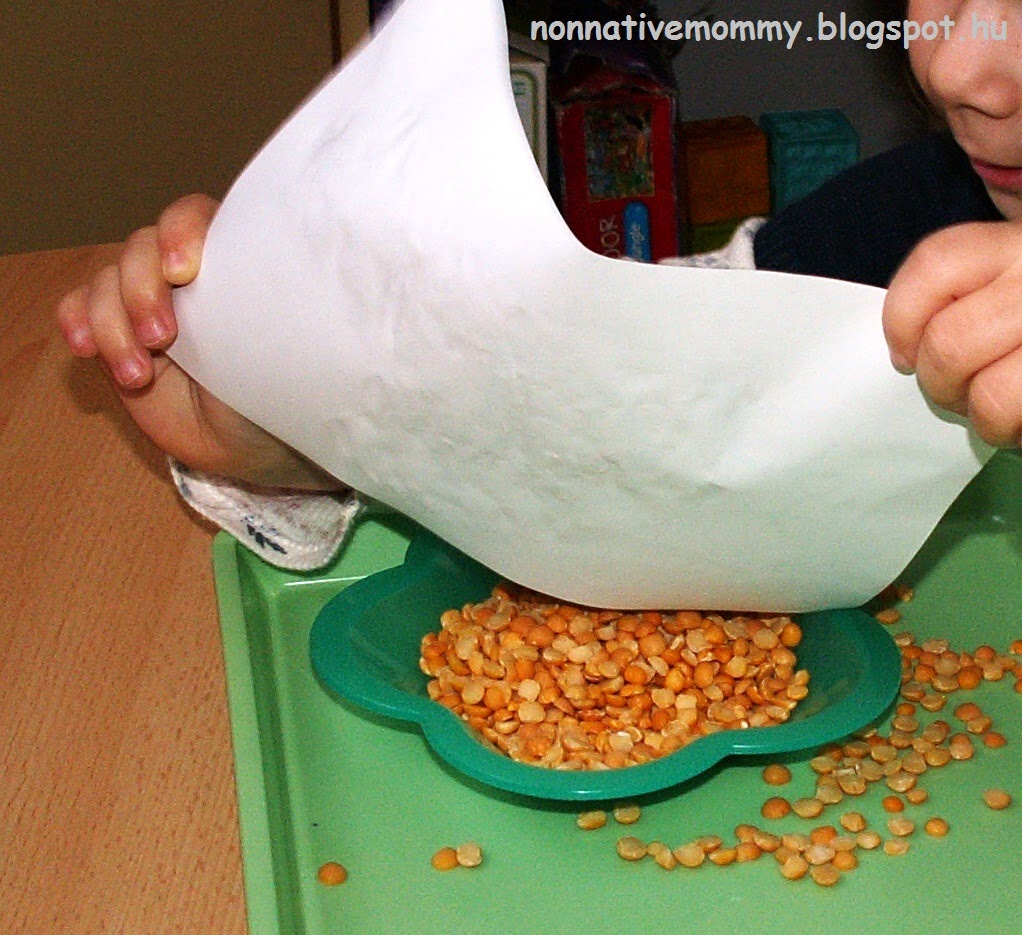
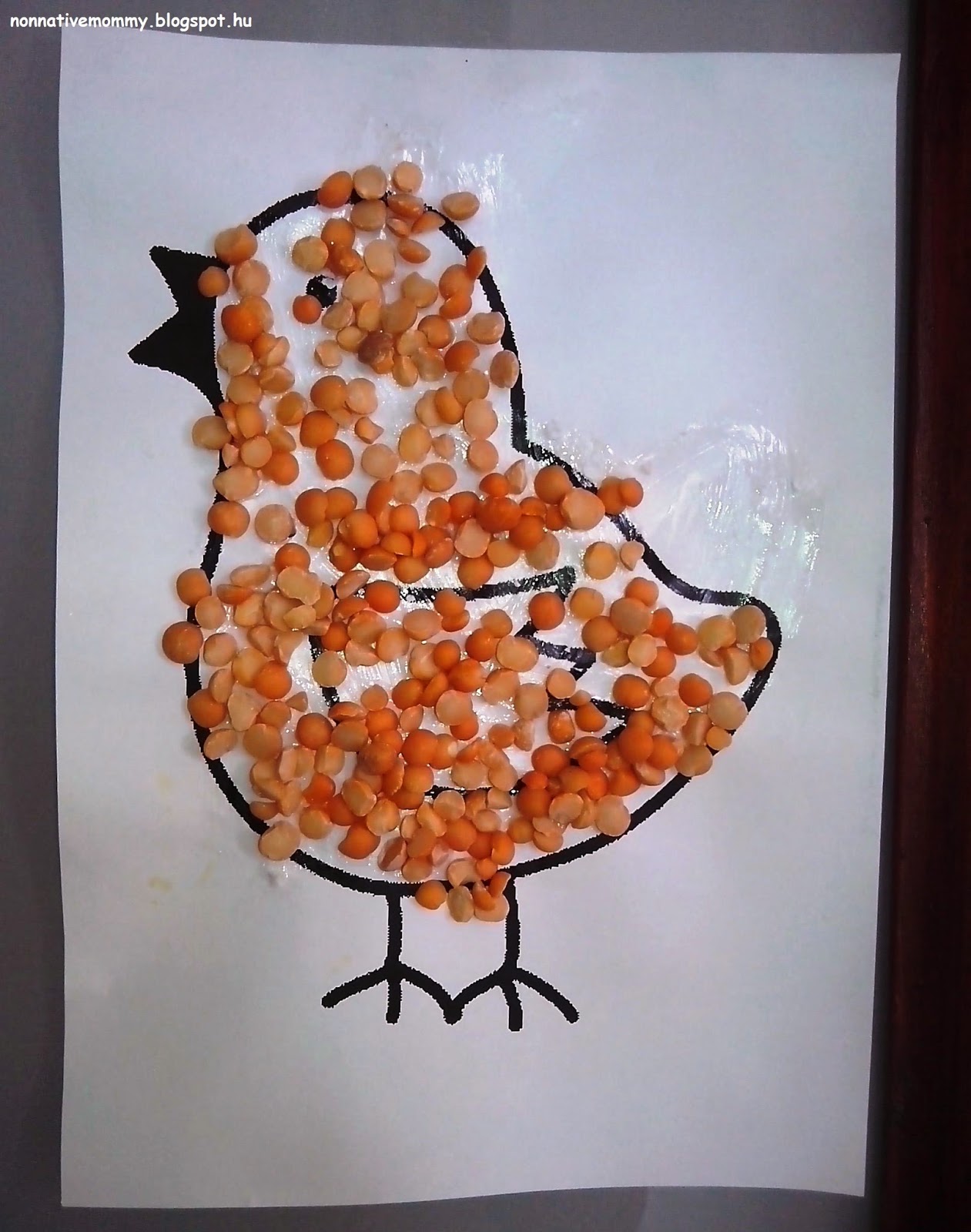
On our usually grocery shopping I picked up a bag of split peas forgetting that E. won’t eat it, so I used some of the split peas in our craft. Again, I just printed a chick from the net served E. with the split peas (raw) and glue.

After applying the glue all over the chick she enjoyed throwing the split peas on the chick, then pouring the excess back into the bowl.

The final art pieces have been stuck on our living-room door.

I took the ideas (Catkin Bunny, I couldn’t find the Split Pea Chick idea again) from Pinterest collections on Easter crafts.

HOPPY EASTER, EVERYONE!

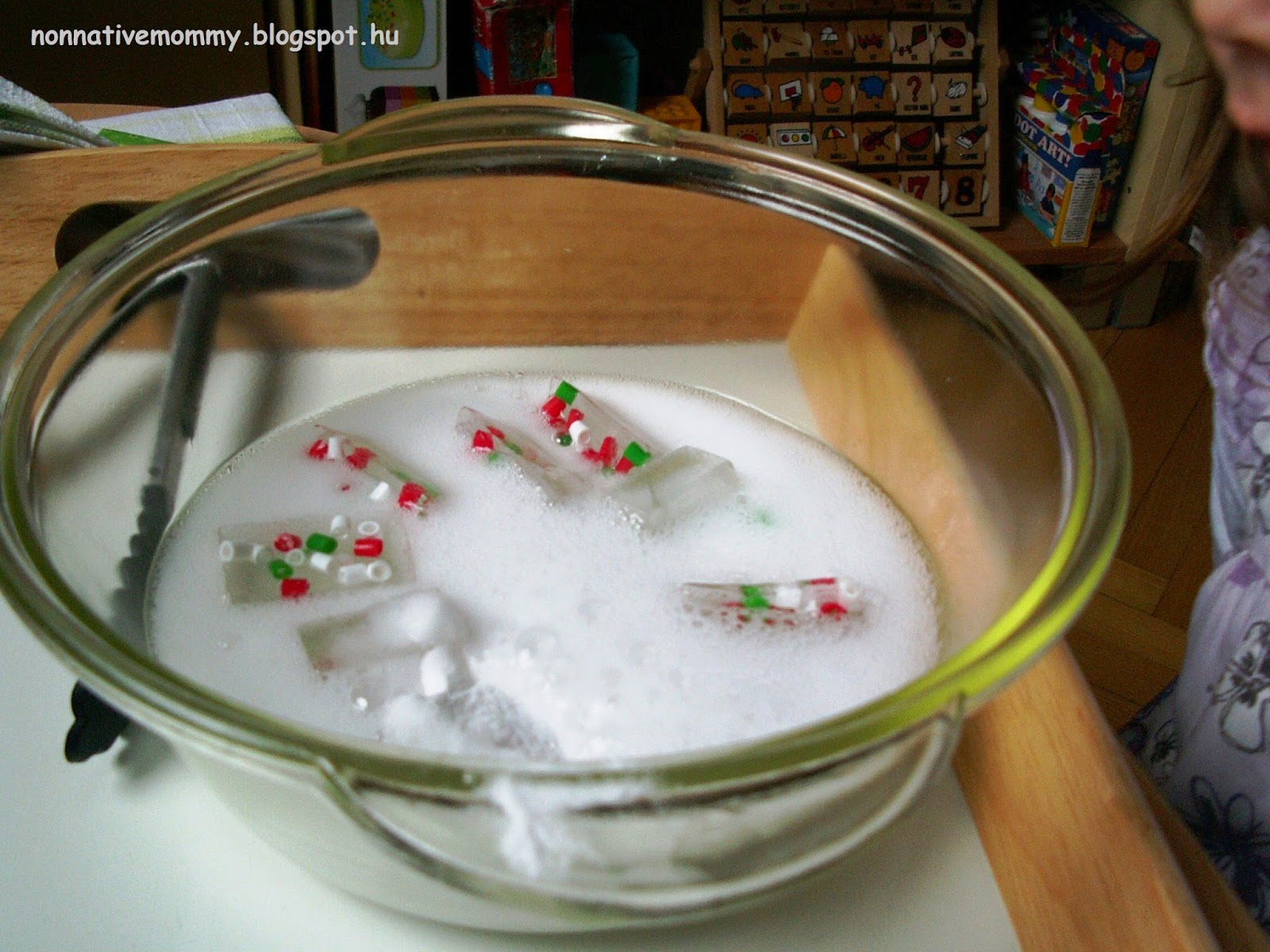
Ice experiment with tricolor beads

During winter time we had some ice fun I didn’t write about as it wasn’t really planned. But now, inspired by Yuliya, the writer of Welcome to Mummyhood, I decided to go for it again.

We’ve altered the task she introduce on her blog to suit our Hungarian National holiday and I used red, white and green IKEA beads instead of sequins.

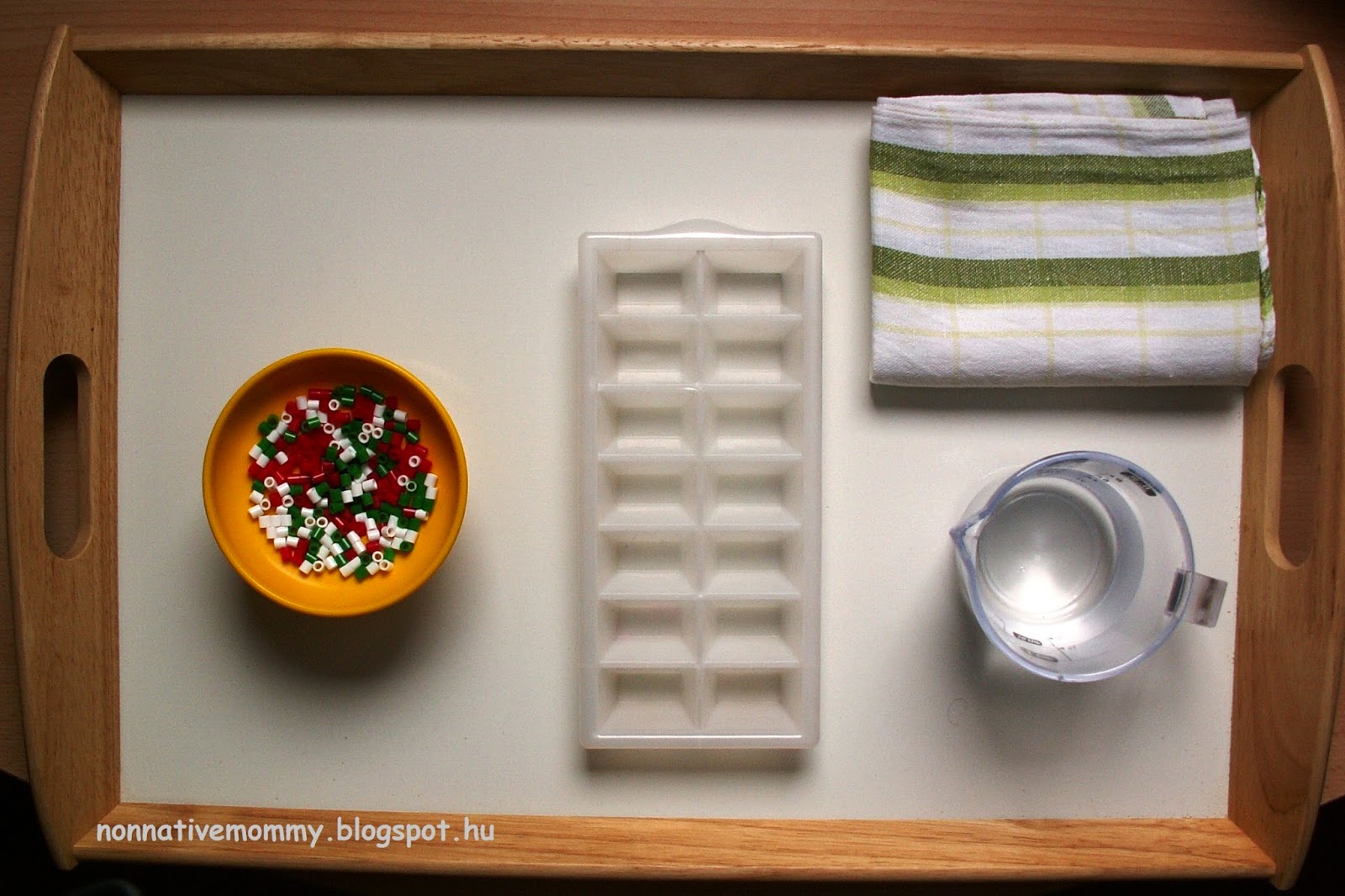
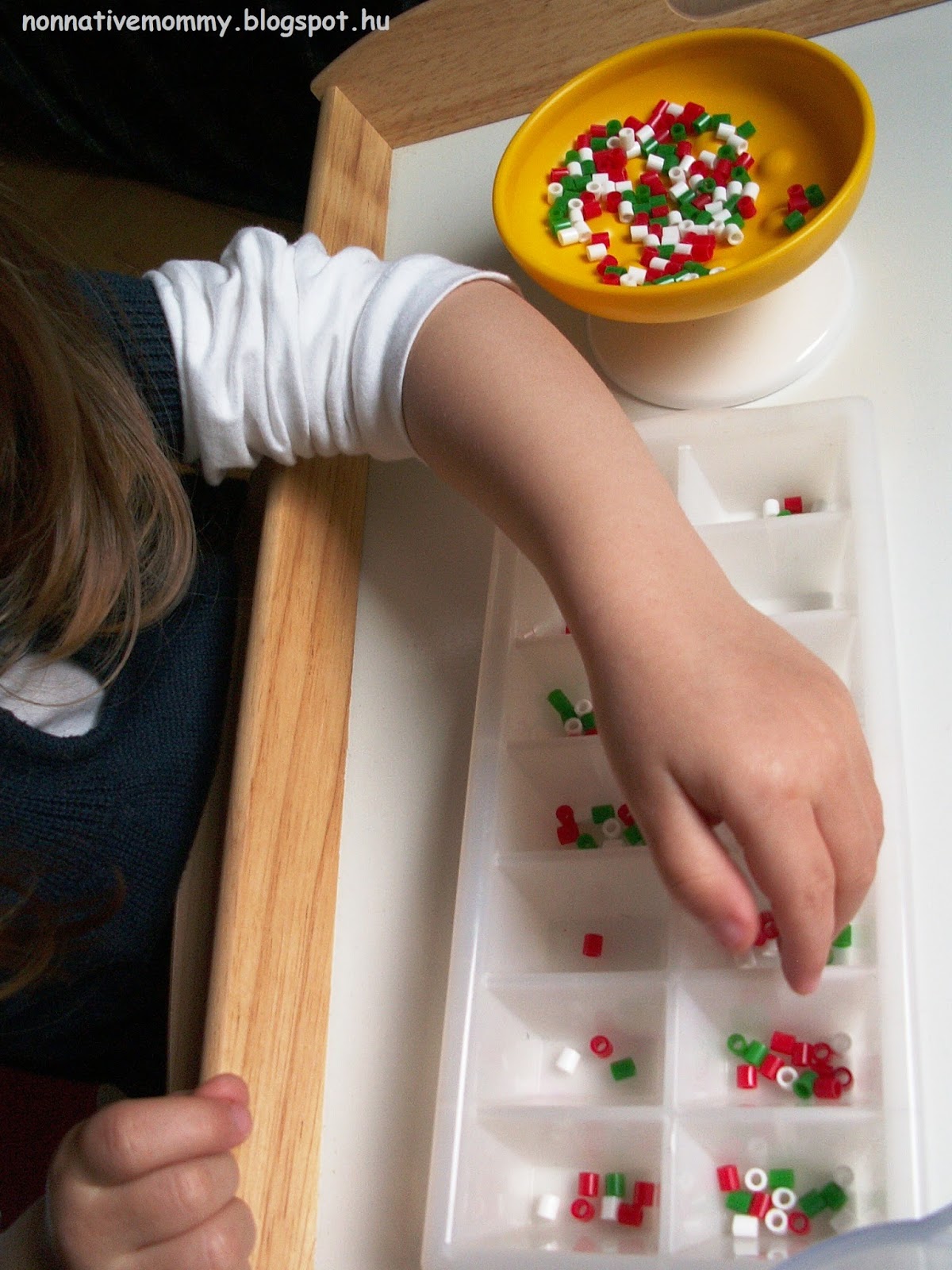
E. filled up the ice cube tray with the beads.

Then she poured the water (the beads are so light that they were floating on the top.)

After that we put the tray into the freezer. We checked it on the same day whether it was frozen or not, but we had no luck.

We did this preparation in Hungarian and talked about the colours of the Hungarian flag and how water turns into ice under 0 Celsius degree. She listened closely and asked questions about what liquid is and what frozen means. I gave her a basic explanation.

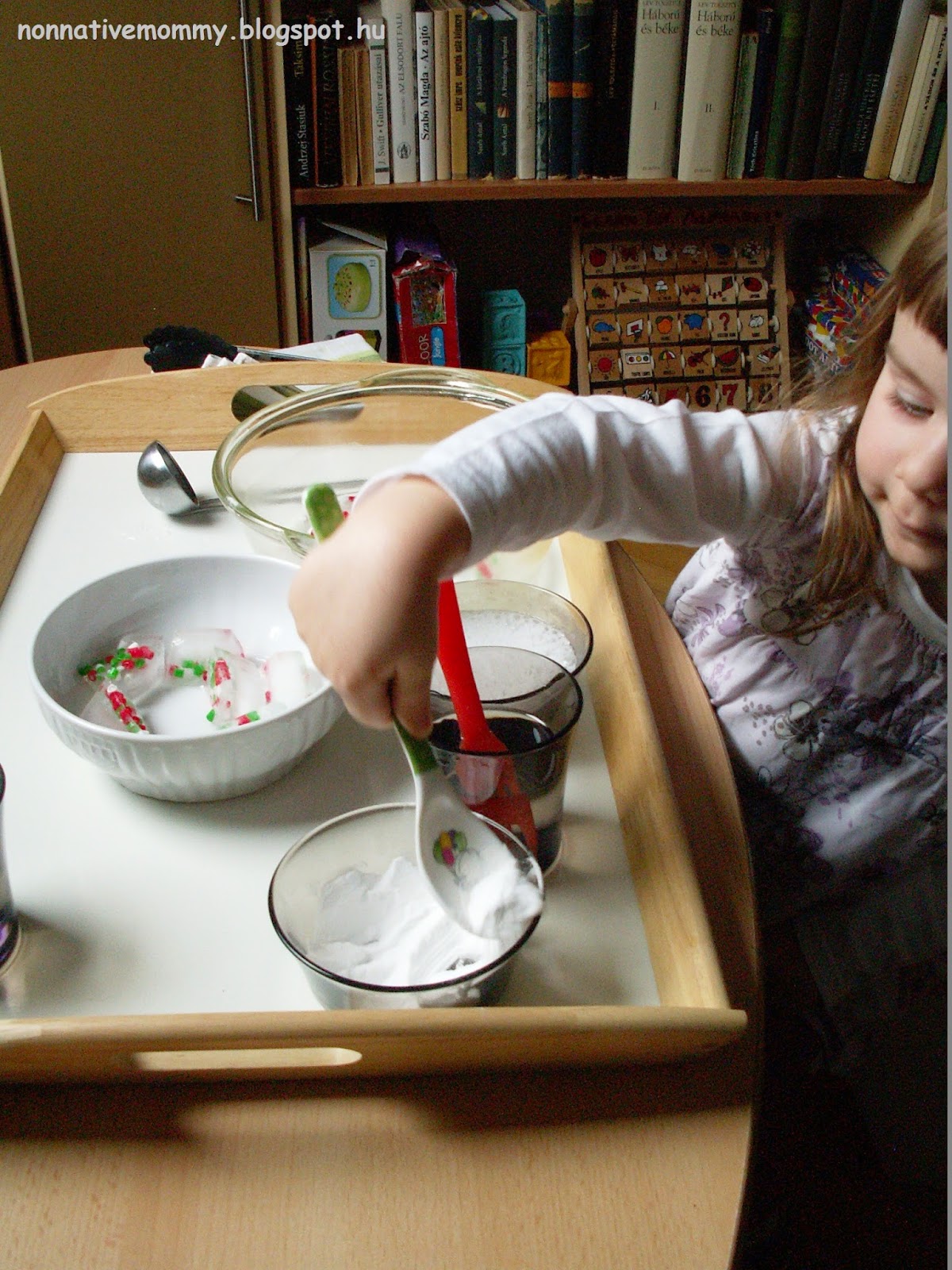
The next day we took it out of the freezer and I set up this tray for E. We were in English this time.

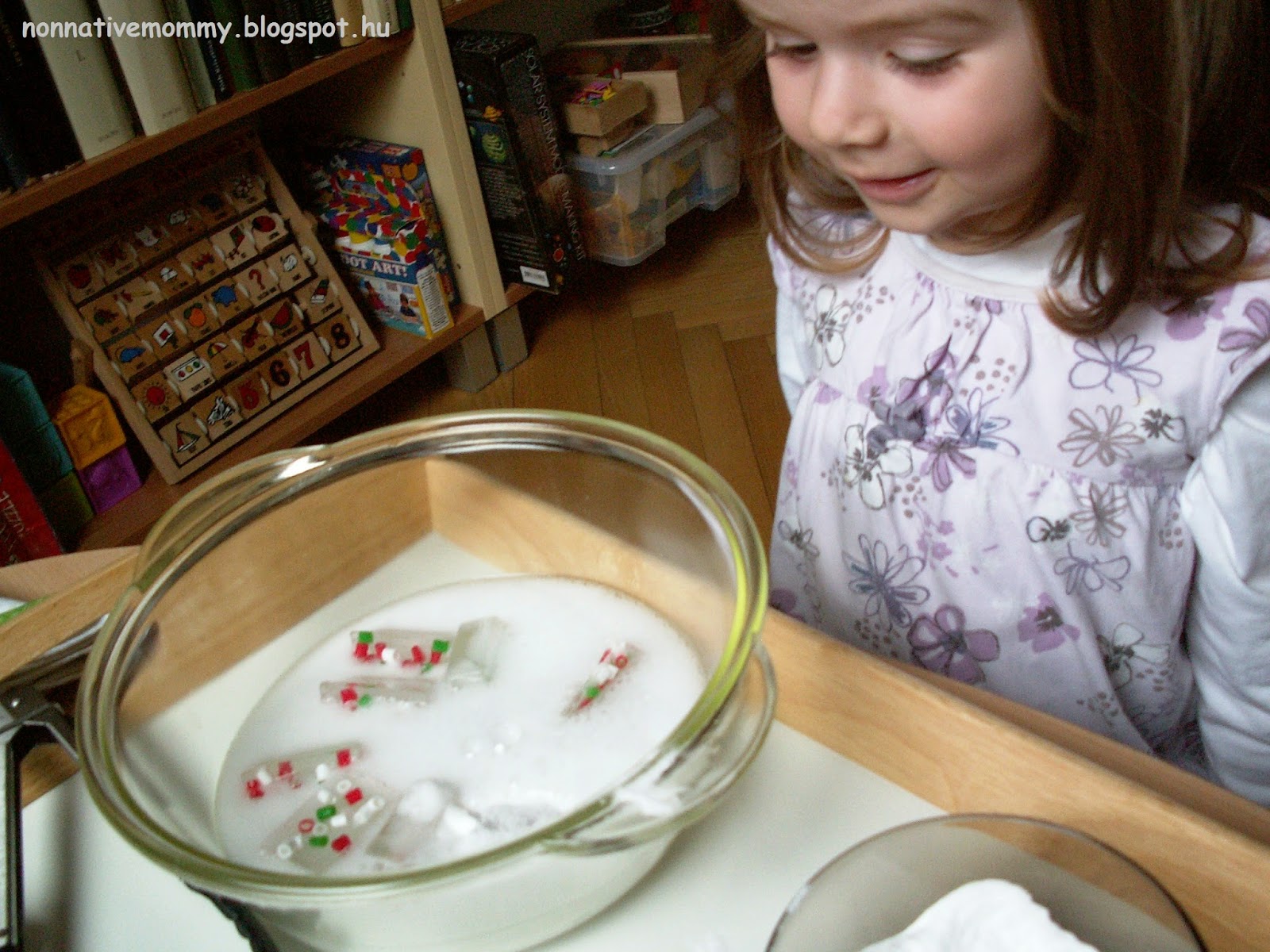
She was amazed as soon as she saw the tray.

First, she was a little hesitant what to do. But then she got the hang of it.

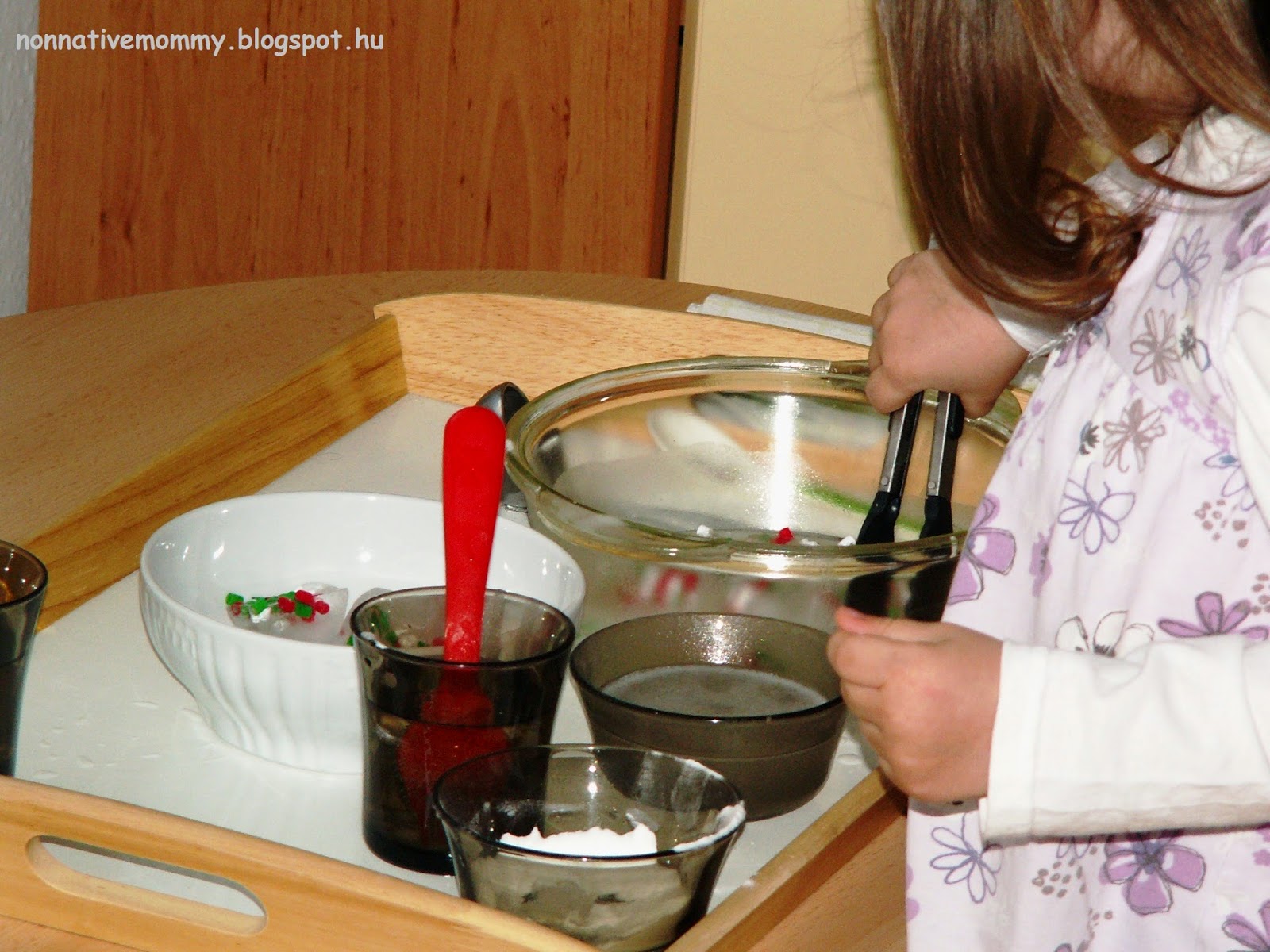
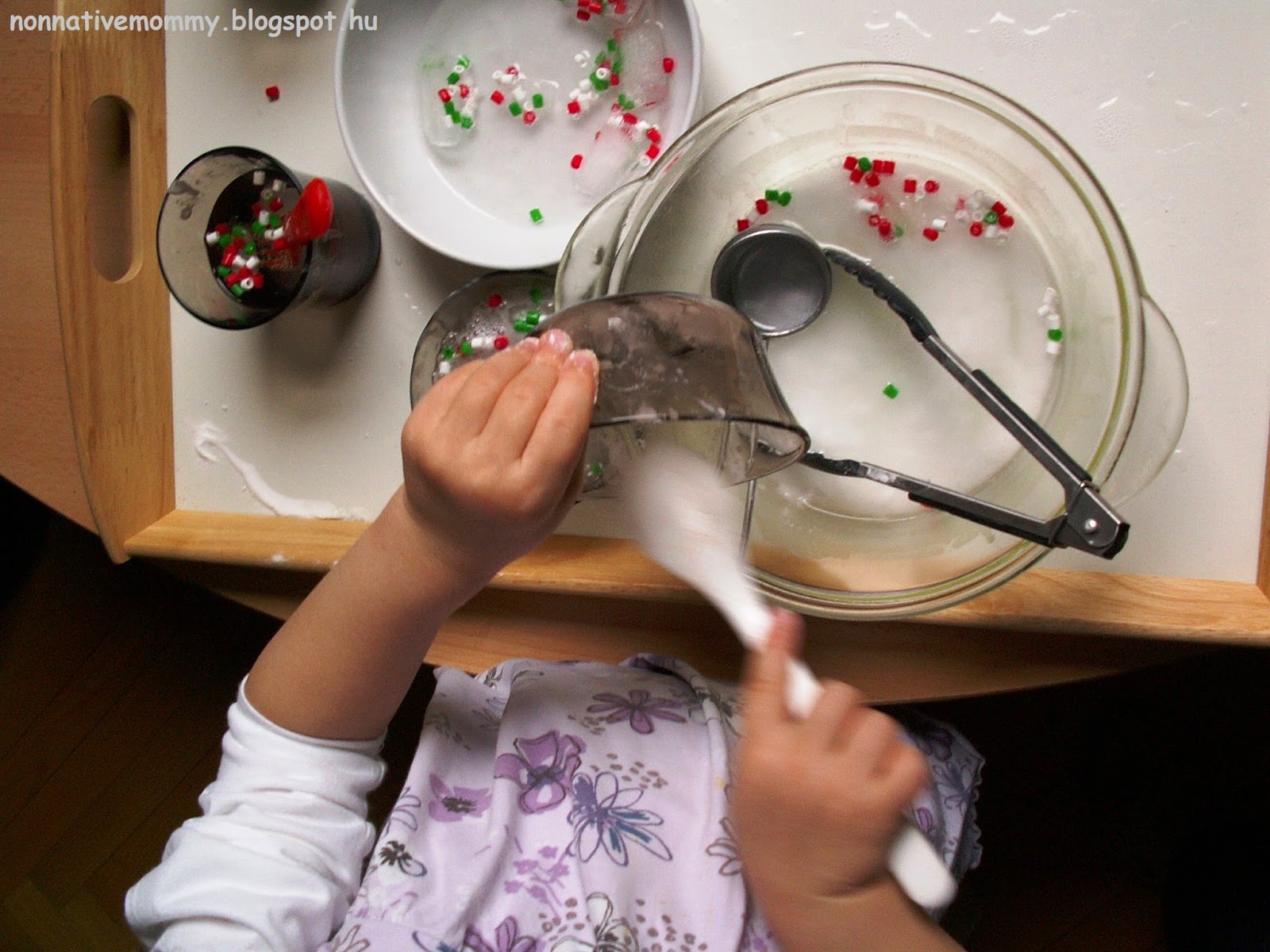
She used all the tool (tongs, fork, spoon and ladle) I prepared for her. Picking, spooning, ladling. First, she was touching the ice cubes with her hands. Abruptly, she said: – It’s cold and wet. I don’t want to be wet. 

And she picked up her favourite tool, the tongs.

And she was bewildered by the chemical reaction.

She was playing with it for 40-45 minutes. Mostly alone or with very little assistance.

Once she tasted the baking soda. Nothing happened, of course, and when I asked her if it tasted nice, her answer was positive. Luckily, she didn’t try it again.

Before her nap time, she was asking about the ice experiment (vinegar and experiment are words that gave her a hard time to pronounce. Once she said ligament instead of vinegar… haha. So cute!)

All in all, it was a wonderful experiment, loads of fun and a lot of new vocabulary learnt in both languages. We’ll definitely do something similar again. I was thinking of volcanoes…

Here are some vocabulary/phrases connected to our experiment:

Ice experiment.pptx

Hungarian National Holiday- March 15

One of the biggest national holidays in Hungary is the commemoration of the Hungarian Revolution of 1848. As it is filled with national feelings and politics I won’t go into details about history and other stuff but I’d like to show how we prepare for it in our home (this year together with St. Patrick’s Day)

The activities we have done are in mainly Hungarian.

How do we prepare for a Hungarian and an Irish celebration at the same time? We are sharing time between English and Hungarian. Let’s say in the morning we do tasks in English concerning St. Patrick’s Day. In the afternoon we spend time in Hungarian doing some fun activities around the Hungarian Revolution. Or the other way round.

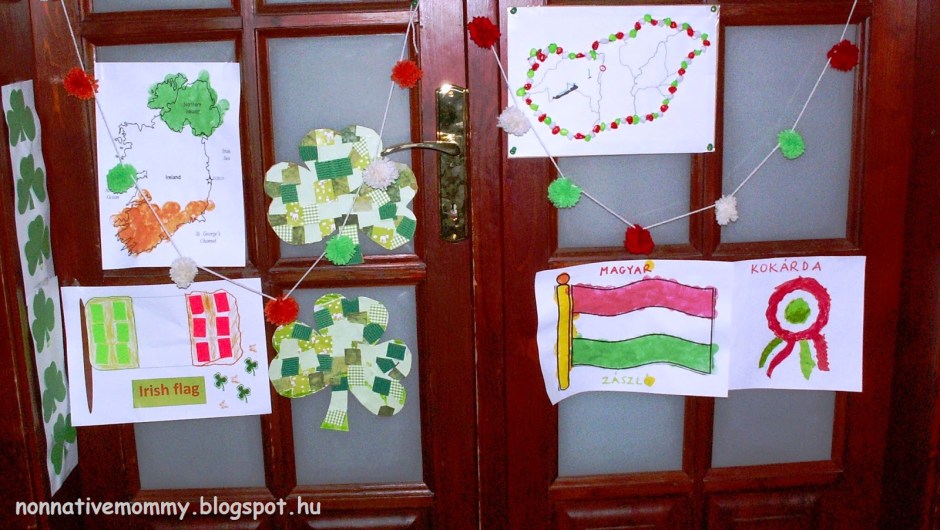
We display the art E. makes on our double doors in the living-room.

One wing is dedicated to the Hungarian Revolution, the other one to St. Patrick’s Day.
St. Patrick’s Day door wing on the left, Hungarian Revolution door wing on the right


In this way she is not confused at all.

I’d like to list some ideas I found online or we made up ourselves concerning our national holiday. This blog wouldn’t be complete without Hungary/the Hungarian language related happenings.

Luckily, last year I made our own button cockade. There’s nothing to do with it this year. We’ll just pin them on our coat on 15 March. (I hope I’ll find them)

E.’s coat and cockade from 2014

It is made out of 3 buttons: a big red, a smaller white and a little green button. I sewed them together with a pin like these:

60-150Pcs-Brooch-Back-Safety-Catch-Bar-Pins-Jewelry-Findings-Accessories-basis-for-brooches-Assorted-Sizes.jpg

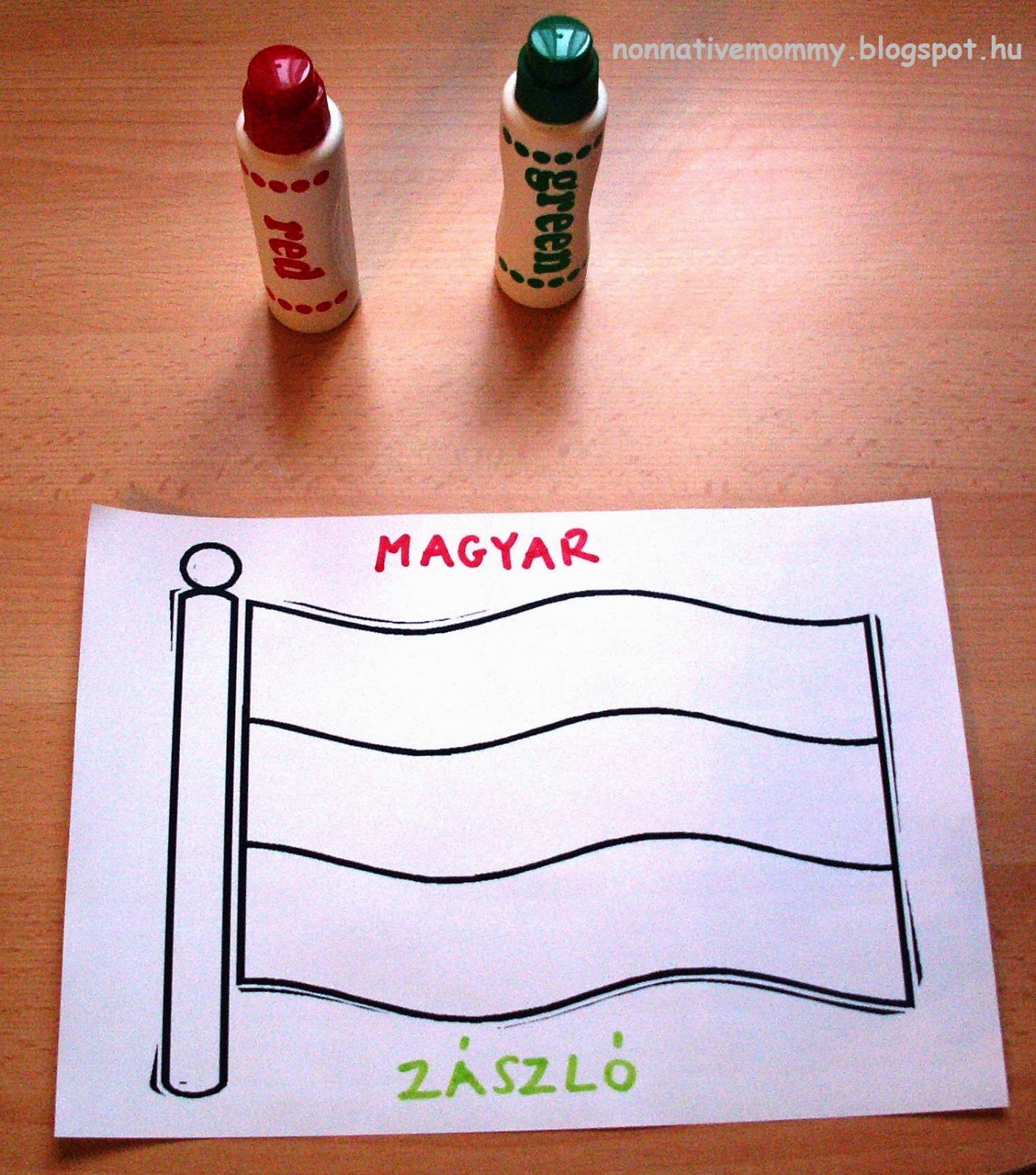
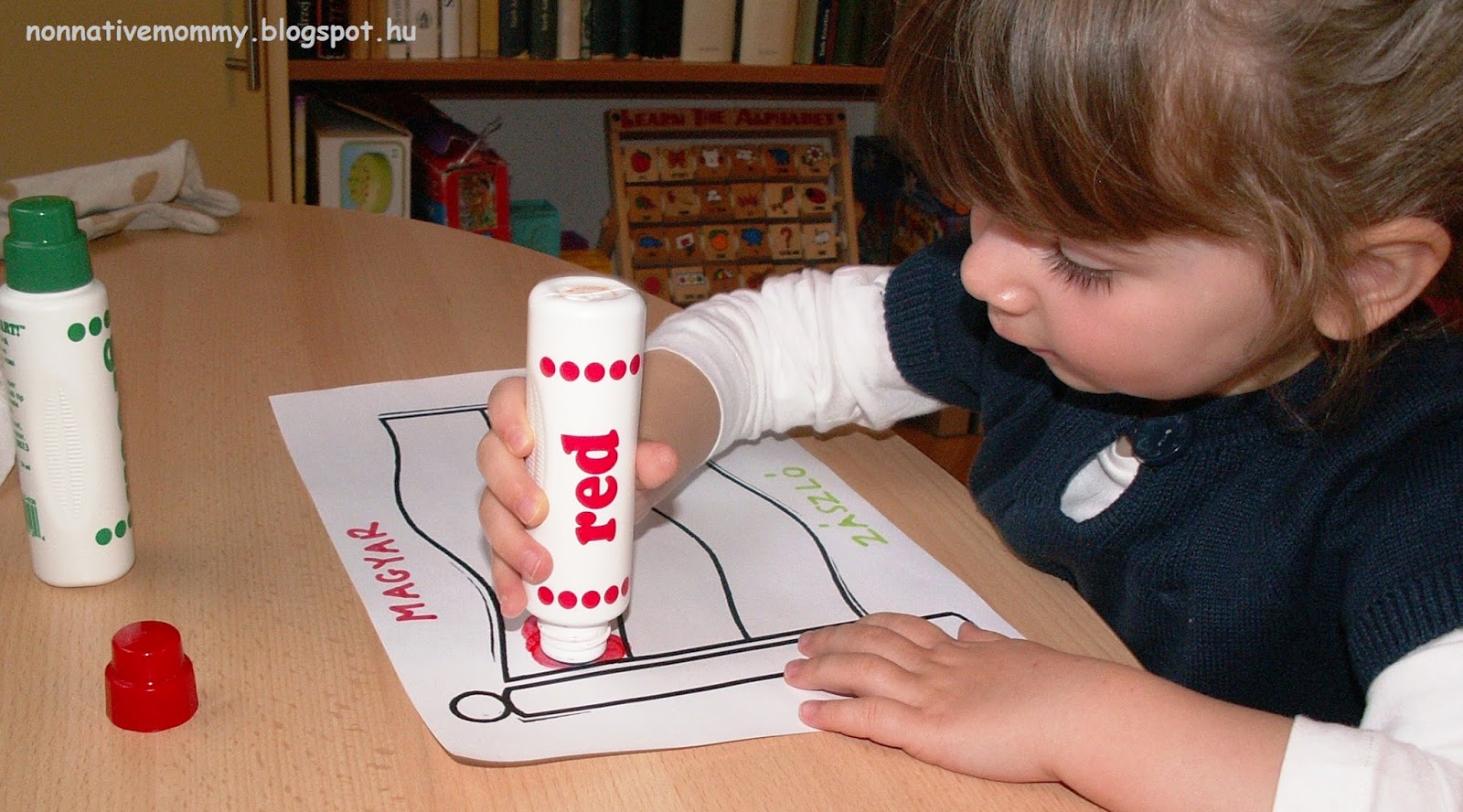
Colouring the flag is the most traditional way children prepare for this holiday. We put some fun into it. Thank Goodness for dot markers!

When she saw the sheet E. asked me who wrote there “MAGYAR ZÁSZLÓ” (=Hungarian flag)


With dot markers all kinds of colouring is more fun. E. did some more of it (colouring a KOKÁRDA=cockade, for example)

Daddy and E. were colouring in full fling so I printed them a map of Ireland and they coloured it too. You can see it in the top picture on the St Patrick’s side. (They didn’t really care about Northern Ireland. We’ll put things to rights next year, when she’ll be more capable of understanding it.)

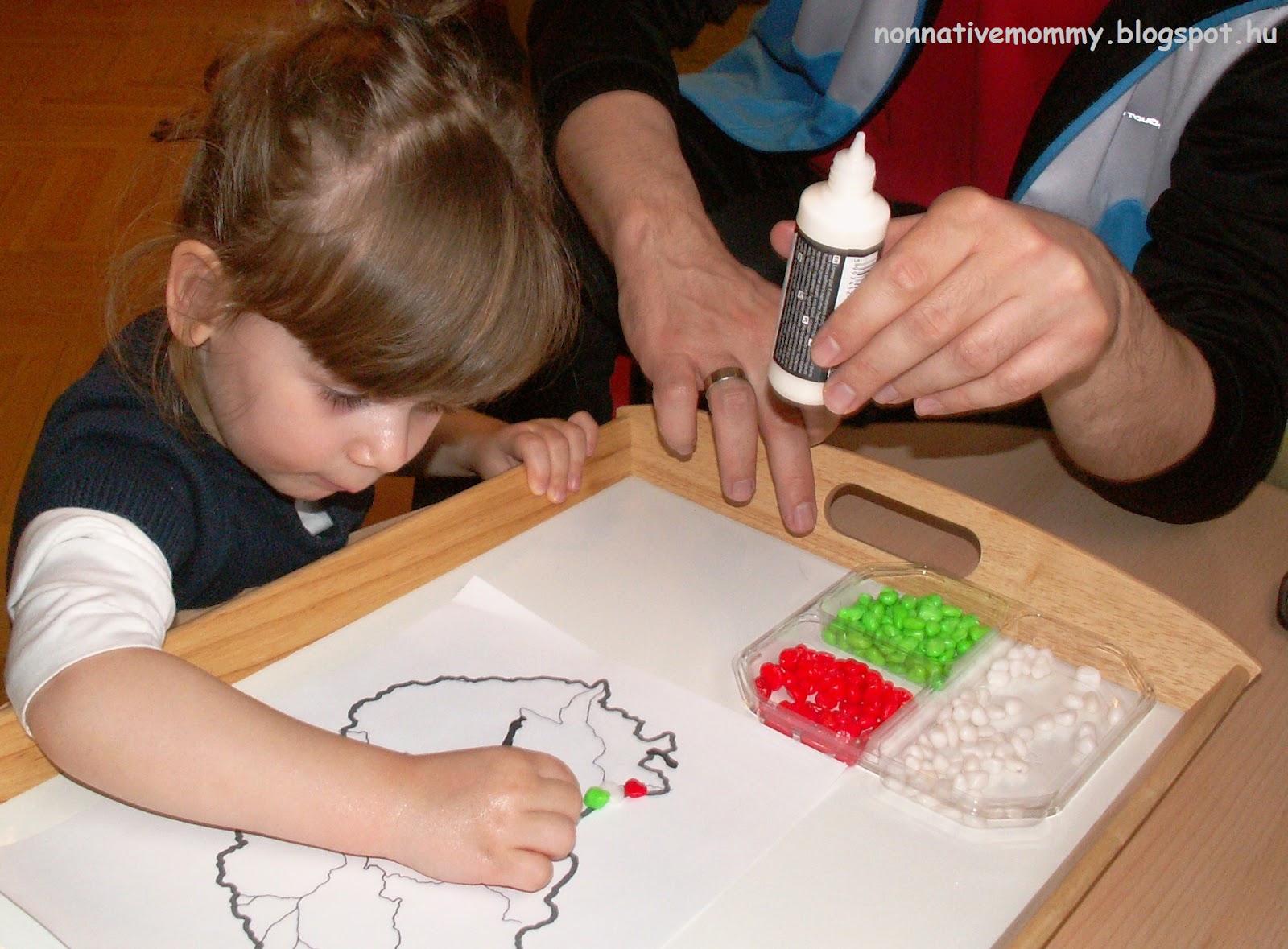
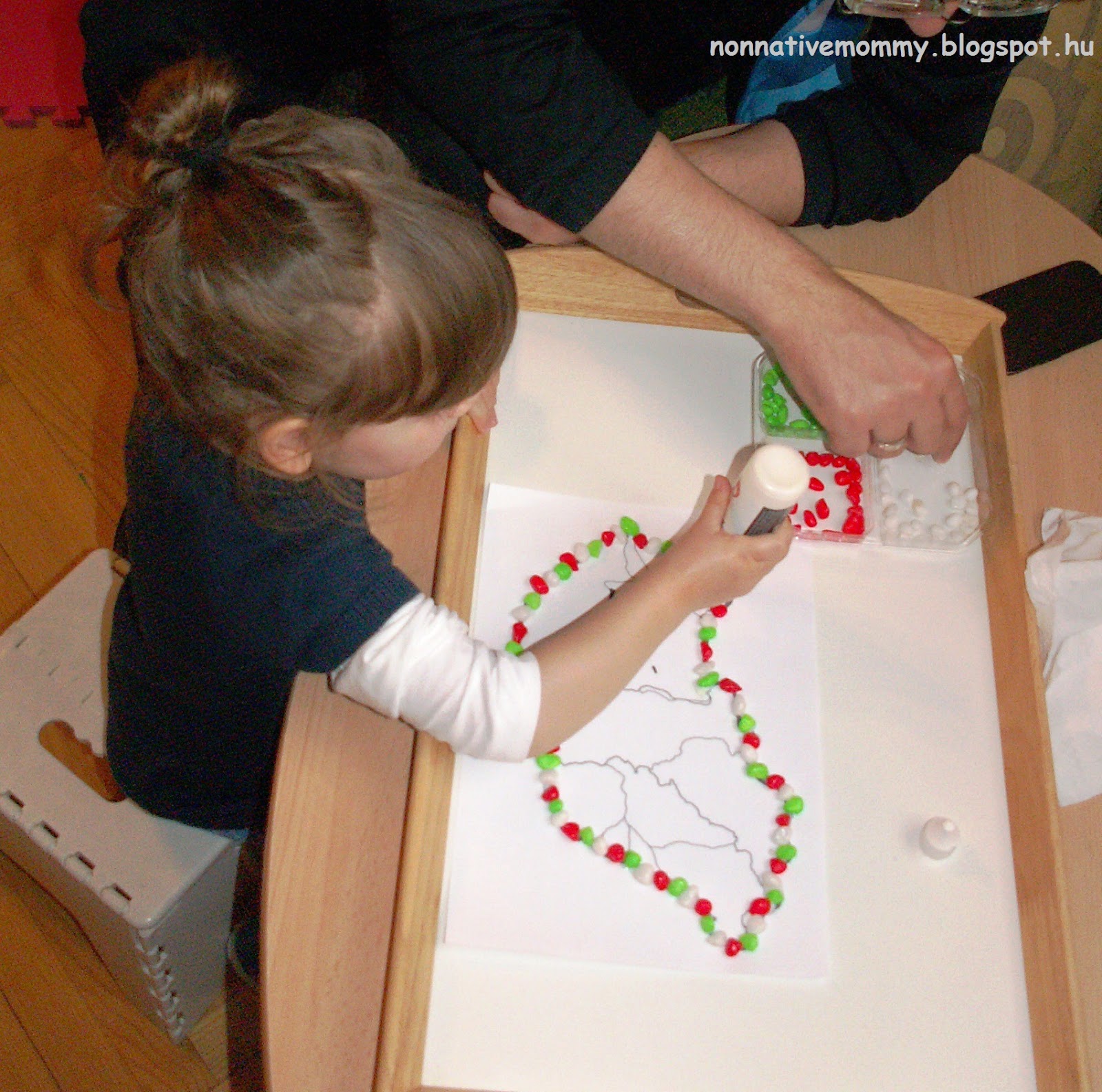
Red, white and green are used in almost all of our activities. I bought some decor stones in a One Euro Shop (I had to separate the red, white and green stones from many other colours)
We printed the map of Hungary and made up a kind of patterning activity.

The stones had to be placed along the borderline as on the Hungarian flag (red, white, green) making a pattern ABCABC. This pattern is difficult for my daughter to follow so it was quite a strenuous exercise for her.

I’m concentrating like there’s no tomorrow


It was a long activity and towards the end it was difficult for her to concentrate. This is quite understandable, she’s not even 3. But Daddy was there for her.

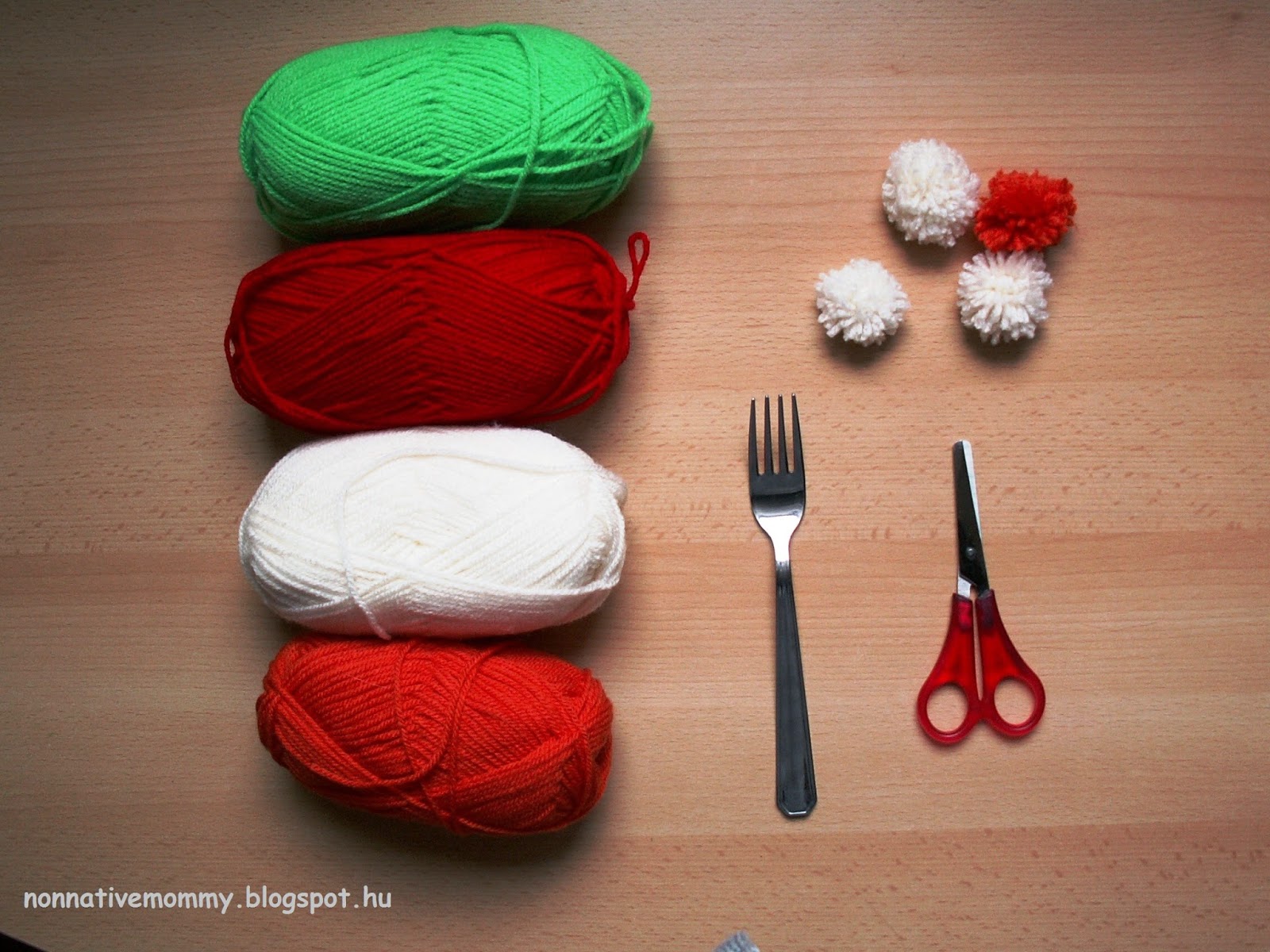
Pinterest offers a lot of wonderful ideas for the occasion. For instance, this pom-pom garland with the national colours. (Through the link you can read about the detailed explanation how to make a pom pom with the help of a fork). If it is too much for your little one just buy some pompoms and

What you need:

  • red, white, green (and orange) yarn
  • a fork
  • scissors

E. tried to make a pom-pom, but she couldn’t. Maybe half a year later she’ll understand how to do it and will be able to make it. We’ll give it a try again.

So I made the pom-poms myself….


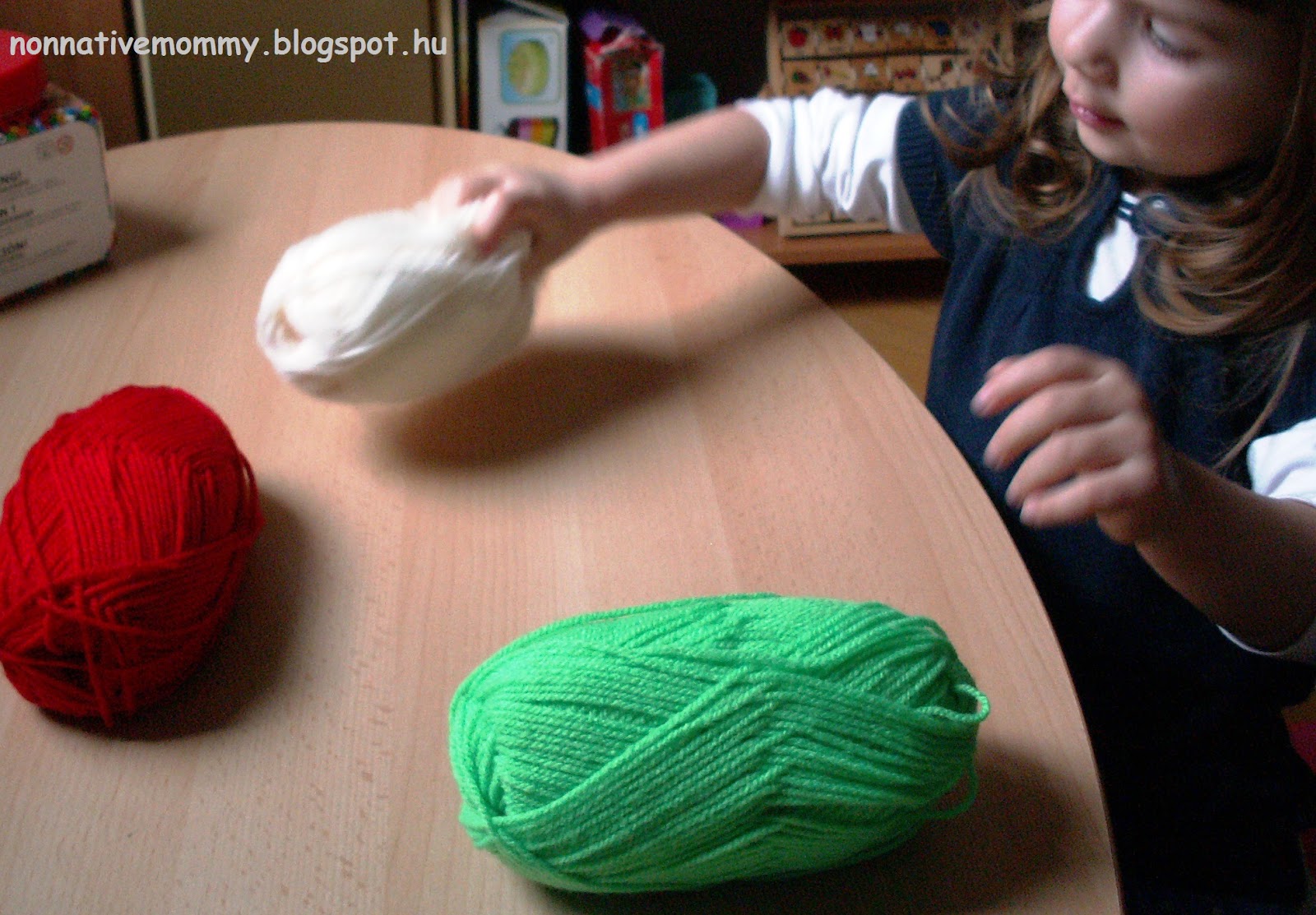
At first, she was just playing with the yarn.

then she was cutting the yarn like a maniac 🙂

She cut the yarn for 25-30 minutes and I could finish the garland with the Hungarian colours only.

The next day I made the pom-poms for the Irish garland and she was …. *surprise, surprise* cutting the yarn. She can’t get bored of it. E. kept asking: – What I’m doing? which I rephrased:- What am I doing? And then she answered her own question after having repeated it correctly. – I’m cutting yarn. 
This short conversation was repeated for 8-10 times without any alternation.

We’ve hung our pom-pom garlands (with the Irish and the Hungarian national colours) on the double doors.

Tricolour Pizza

Your toddler ALWAYS wants to help you with cooking, not to mention the great excitement if you make pizza. Why not in tricolour? Everybody loves pizza and it’s easy to make it with a toddler.

Ha még nem tudod mit ebédeljetek holnap, akkor íme egy ötlet. A pizzát mindenki szereti, nem? A nemzeti ünnep tiszteletére egy kis átalakuláson ment keresztül, és zászló lett belőle!
It’s not our pizza, but it’s coming soon

Red= tomato sauce with some basil and oregano (minced meat if you wish)
White= loads of grated cheese
Green= broccoli, spinach or any other green vegetables in our case it’ll be ruccola

The lollipop stick is optional, too… but don’t they look cool? Like real flags 🙂

We are making our own on the 15th so I can upload photos of the process later.

I still have some activities up my sleeve, however, I’m not sure we’ll have time for them. Anyways, I’ll have to share some ideas next year too.