FAQ

In the last couple of weeks I have bumped into a lot of mums who asked me similar questions about raising our daughter bilingual in a totally monolingual environment. So I collected a bunch of questions and my answers to them with some links from earlier blog posts:

  1. Do you speak to her English only?

No, I don’t. I can’t do that. My mother tongue is my mother tongue, no matter how high my level of English is. (High level of language command is relative. I always feel my English is deteriorating.)

I assigned certain times to speak English. When E. was a baby we had a timetable which meant that we used a little bit more English than Hungarian as she spent loads of time with me. Then we needed to change our schedule, still we had 50-50 % balanced language usage. (When she was around 2). Nowadays, (she’s almost 3) we are in trouble with the balance between the two languages as we do not spend so much time together therefore there is less English in her life. BUT! Her English basis is so strong that she asks for changing languages when she feels she misses one of them (it’s usually English)

Even today, whenever there are just the two of us she says: – Uh-uh, Mommy. We need to change into English. We are just two.
or
– I’ve already changed into English, because there is only Mommy and I.


  • When do you speak English to her and when Hungarian?

    There are many methods you can follow. What I use is a special one: I call it the timetable method. By now we don’t have a timetable any more. Whenever we can, we speak English, as the Hungarian input of the environment is too influencing.

  • When did you start talking to her in English?

    When we took her home from the hospital. At first, I was just singing songs and chanting rhymes to her in English. I wasn’t sure about what I was doing and it felt strange. Then I got some inspirations after having read some books and contacted some other moms in the same shoes. From the age of 6 months I’ve been talking to her in English just like in Hungarian.

  • Wasn’t she late with speech development?

    Not at all, although it would have been perfectly normal. She was about 1 year old when she could say 6-8 English words (and Hungarian ones too). Actually, her first word (bib) was in English. Of course, these words were fuzzy and not distinct for the untrained ears. But by the time she turned 18 months these words had become clear and a LOT more had been added to them. Not to mention, she started to build up 2-3 word sentences at that time too.

    I have to admit that the period between the age of 12 and 18 months was filled with more English sessions than Hungarian.

  • Doesn’t she mix the languages?

    She does! At first she didn’t, however, nowadays more and more. I’m not worried about it… okay… I am a little bit concerned, but I know if we keep up the balance between the languages she’ll have all the language tools in both languages to express herself. Most of the time she mixes Hungarian into her English because she doesn’t know a word or she can’t express something due to lacking a structure.

    Though it happens the other way round, too. She makes her grandparents puzzled when she asks for some stories with the telescope in it (mind you, pronounced it with a perfect British accent) or when she says she wants to play on the see-saw at the playground. Sometimes she names some bugs (bumblebees, wasps, ants) or plants (pansies, daffodils, shepherd’s-purse etc) she sees in the park in English. They can sort out this teeny-weeny language problem… for the time being.

  • What do you do when she mixes the languages?

    I keep on talking in the given language. I don’t change. And I do NOT advise you to let your child take the lead (although it is also an option.) I go on talking, let’s say, in English when she says some Hungarian words or sentences here and there. If I know she could say it in English I ask back: – What did you say? or – What’s that in English?

    If I am aware of the fact that she can’t express herself, I simply repeat in English what she said in Hungarian. Some sources suggest not to make your child repeat a word or sentence, yet sometimes I ask her to repeat just to reinforce we use English and help her fix a structure she cannot use (at all, or properly). Nonetheless, I’m not forcing it. Normally, she repeats expressions after me by herself. If she doesn’t want to, we move on.

    Also, you can pretend you do not understand what your child says, but in our case (we do not follow the One Parent One Language -OPOL-strategy; she can hear me talk both Hungarian and English) it wouldn’t work as my daughter knows that I understand and speak both. The other problem with this could be that your child can get frustrated if he or she can’t put an idea or a wish across.

  • What English activities/programmes can you take part in?

    We used to have a native British nanny for almost 2 years. I’m really grateful for her as she meant that I could have some free time (cooking, washing, ironing, shopping, cleaning etc.) while I knew English was still in focus in my daughter’s life. Now we are looking for a new nanny. If you happen to know someone in Budapest who would be interested I would appreciate it.

    I’ve organised a Mums’ English Club (MEC) in the library nearby, where mums gather with their little ones and chat in English while the kids play away. At the end of our sessions we sing some English songs for the kids. An afternoon session of MEC is badly needed but I haven’t had time to find a place where we could go free of charge.

    We’ve been taking part in the well-known Helen Doron School’s programme since E. was 10 months old. We are planning to leave it, but I’ll write about that in a later post.

    For almost a year we took part in a swimming course which was instructed both in English and Hungarian. We met there some non-Hungarian families who communicated mainly in English, so E. could hear during the swimming sessions that English is not just Mommy’s crazy language.

    We also visited Rhyme Time sessions (singing and playing in English) for a few times, but we do not go regularly.

  • Does Daddy speak English to her?

    He does. Daddy speaks a lot of languages, it’s no problem for him at all. What’s more, practising English regularly helps him improve his spoken skills as well. I suppose he also enjoys our English session;

    Again, at the beginning we did it differently. When Daddy arrived home from work we changed into Hungarian, but the whole day was in English. Nowadays, as I’m starting to work, E. is spending more time with the grandparents or she is in the nursery (not to mention that our native nanny, A. has left) we have been trying to fit in as many English sessions as we can.

    We have plenty of dinners, weekend programmes, playground visits, craft activities and bath times in English with Daddy. I’m very lucky, because my husband is very supportive concerning our bilingual project.

  • Can she say sentences?

    Haha. This has been the funniest question so far I’ve received. Sure she can. 🙂 Sometimes very complicated ones. I was really amazed when she said a passive sentence in the playground (– Look, Mommy, the other swing is taken) or when she talks to her soft toy using present perfect (– What have I told you?). One day she was replaying a Berry and Dolly episode (Gingerbread) that we watch in English.

    The following left her mouth: – I’m making gingerbread with the cookie cutter and then I’ll put it out in the winter (sic) to cold (sic). Magpie, (that is me) come and take it away.
    Later in the story: – Don’t take away that belongs to somebody else.

    Here is the episode.

    Not only her sentences but her vocabulary is also outstanding. I’m often surprised at how eloquent words she knows. The other day she called a pan saucepan. I don’t think I have ever used this word with herOr she can name different kinds of onions: leek, garlic, spring onion as well as varied expressions for the eating process: munch, chew, stuff your face, digest, feed, bite


  • How do you “teach” her (sic)?

    This is exactly how this question is asked most of the time.

    And the answer is : I do not teach her.

    What I do is to play with her in English just like in Hungarian. We do the daily routines in both languages. I try to prepare everyday and special activities for her which give us a chance to meet a lot of new situations:

    – experimenting,
    – prepping for holidays of the English-speaking world,
    – doing fun craft activities,
    cooking and baking
    doing housework together
    exploring nature
    reading books and singing a lot as well as watching videos

    These are just a few examples. In short, we LIVE our lives in 2 languages.

    +1. How shall WE start?

“The secret of getting ahead is getting started” – Mark Twain

So just start it.

If you want to get some ideas read through the blog… HAHA. Believe me, it’ll be much easier to find your own ways. But you can get some ideas here. (Feel free to search for keywords if you’re looking for something exact)

Start with some songs that you sing to your child while changing nappies or waking him/her up.

Search some videos online around a topic (cars, shapes, animals, numbers, planets etc.) that your child is interested in and watch them together. You can also explain what you see in the videos.

Learn some rhymes/songs with sign language and play with your munchkin.

Flashcards are almost always fascinating for children, but rather time-consuming to prepare your own home-made ones. On the other hand, our own flashcards are much more attractive to my daughter. You can find really good flashcards online, which you only need to print (and perhaps laminate).
If you don’t mind spending some money, you can buy some beautiful ones.

And I haven’t mentioned the endless opportunities that books offer to speak and practise a foreign language.

Again, these are some very basic ideas to start with your little one from an early age.

If you have any questions, do not hesitate to contact me either in the comments or via email. You can come and visit  my facebook page as well.

Enjoy!
Our Advent – 2014

Daddy’s birthday always goes together with the start of our advent. This year there’s a little extra. The Book advent Calendar.

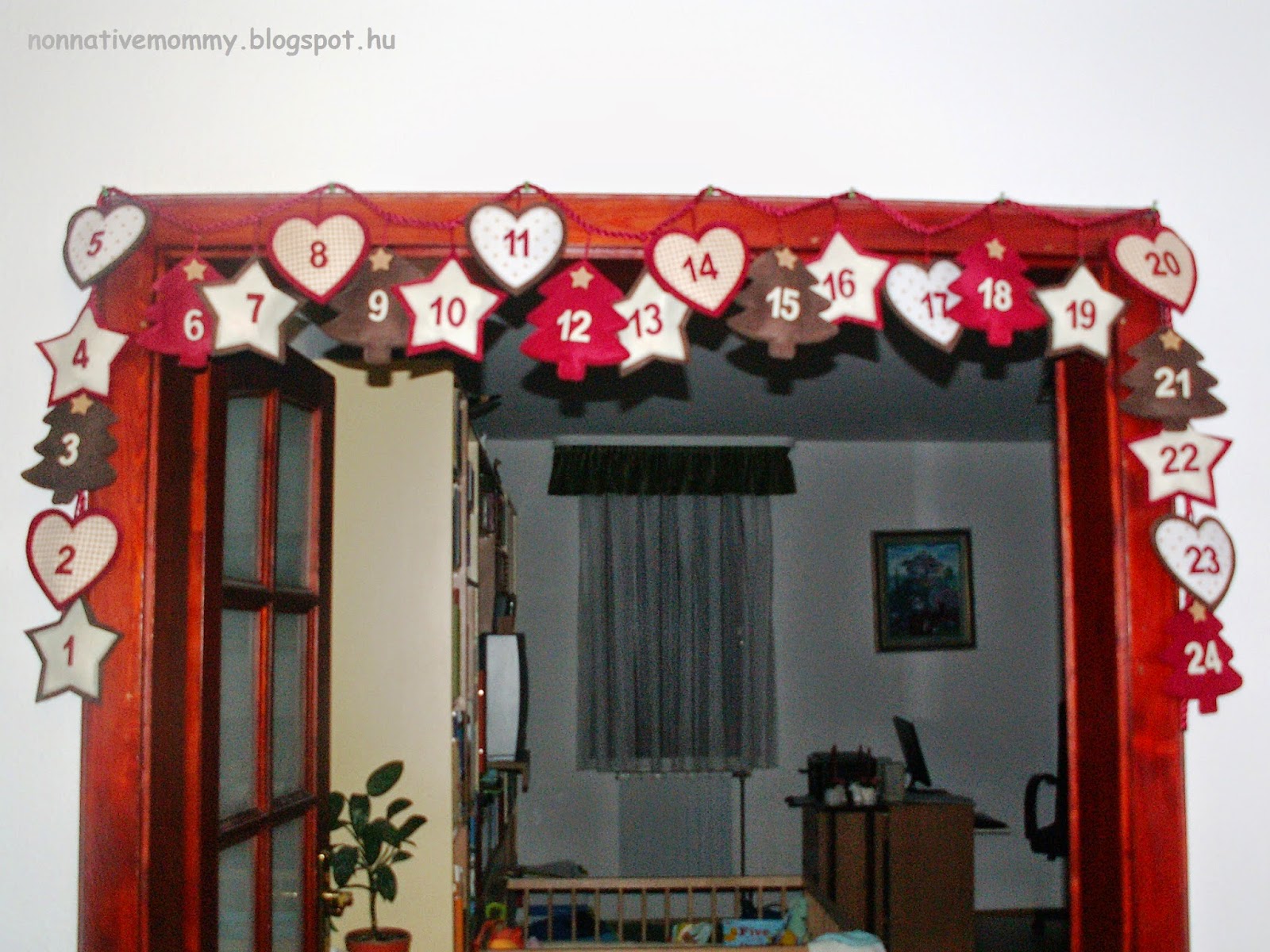
First of all, here is our traditional, bought in a shop (Tchibo) advent calendar:

horrible photo, but I don’t have any other

I always put it on the door frame. Each shape has a pocket and I put in some surprises:

  • some treats (dried fruit, nuts, crackers, marzipan – E.’s favourite, etc.)
  • advent activities from Időtetrisz  (you can download the cards for free – Christmassy crafts, acts of kindness, gift giving, funny. If you want something similar in English you can download Jen’s advent calendar activity cards from this link. Időtetrisz offers some blank cards, so I wrote some of my own in English. E. can’t read yet anyways, so I can read the Hungarian cards in English if she is in an English mood)
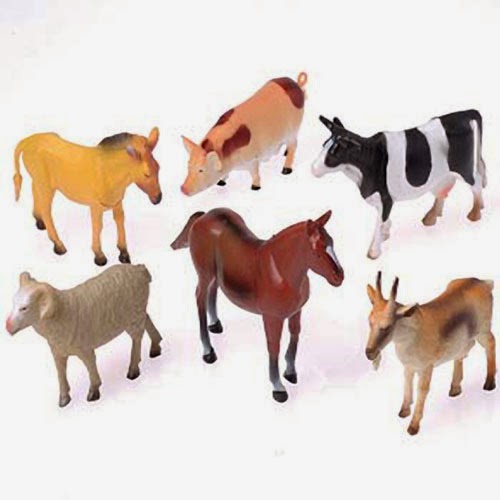
  • a small animal (I bought these last year in a secondhand toy shop – they were really inexpensive)
The animals are for putting together the stable where baby Jesus was born. We’ve just stated it, but I’ll add a photo of it when you can see what it looks like.
Extra advent book calendar – a book a day

I saw plenty of great advent present ideas on Pinterest, however, the best is the 24 books wrapped up. Your child can open one a day up to Christmas. It’s great if you can collect 24 Christmas stories. I couldn’t. I had about 12-15 book I’d bought earlier but there was no occasion to give them to E. So I bought some more discounted books, and some more new ones from Book Depository (if you order from them there’s no delivery fee). This is how I collected 24 books. (The cost of the books altogether was between 6-10 thousand HUF = 19-33 EUR)

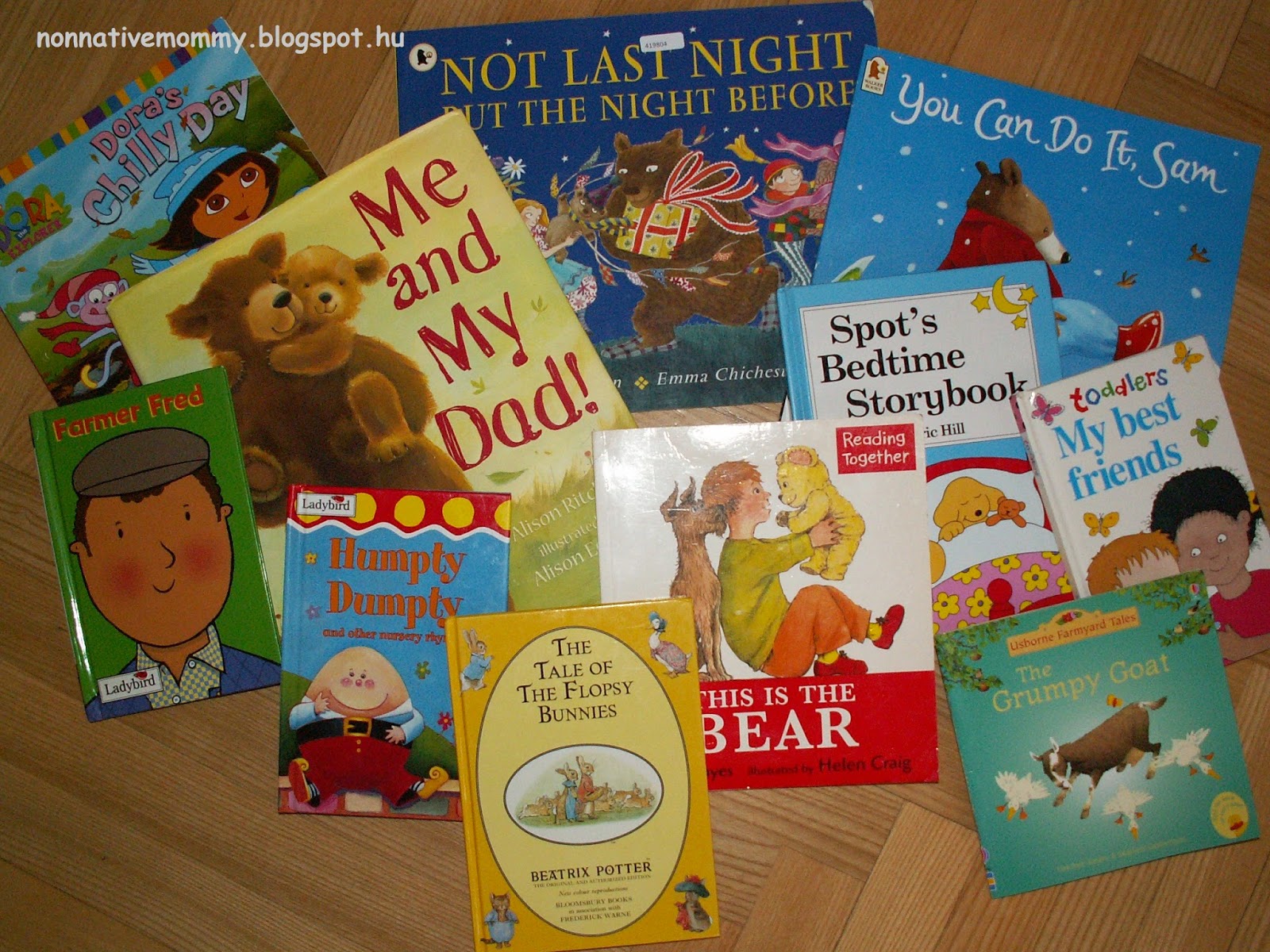
Here is about half of the books:
I didn’t take a photo of the other half but I will after we have opened all of them. I’ll also put together a list of the titles, authors and E.’s reaction to them. This post will come after Christmas.
My Mum helped me wrap all the 24 books. I made the stickers out of cheap, circle-shaped post-its and a white gel pen. (It took a while until the white gel dried on the post-its)

We’ve already read two of the books:

  • Me and My Dad 
  • Dora’s chilly day
Both of them were bullseye. 

Let’s not leave out our unconventional advent candles. I can’t call it an advent wreath because they are made up of 4 porcelain cups, Christmassy washi  tape, fake grass, 4 Christmas tree decorations stuck on the cups, 4 sparkly, red balls and 4 long, claret candles. No wreath whatsoever.

But it’s easy and fun to make it even with a smaller child.

Last year E. helped me make it
So our advent has begun and we are very excited about opening little pocket on our advent calendar and reading a new book every day. Only Christmas Eve can be more exciting than this.

Story box – Vet Vicky with props

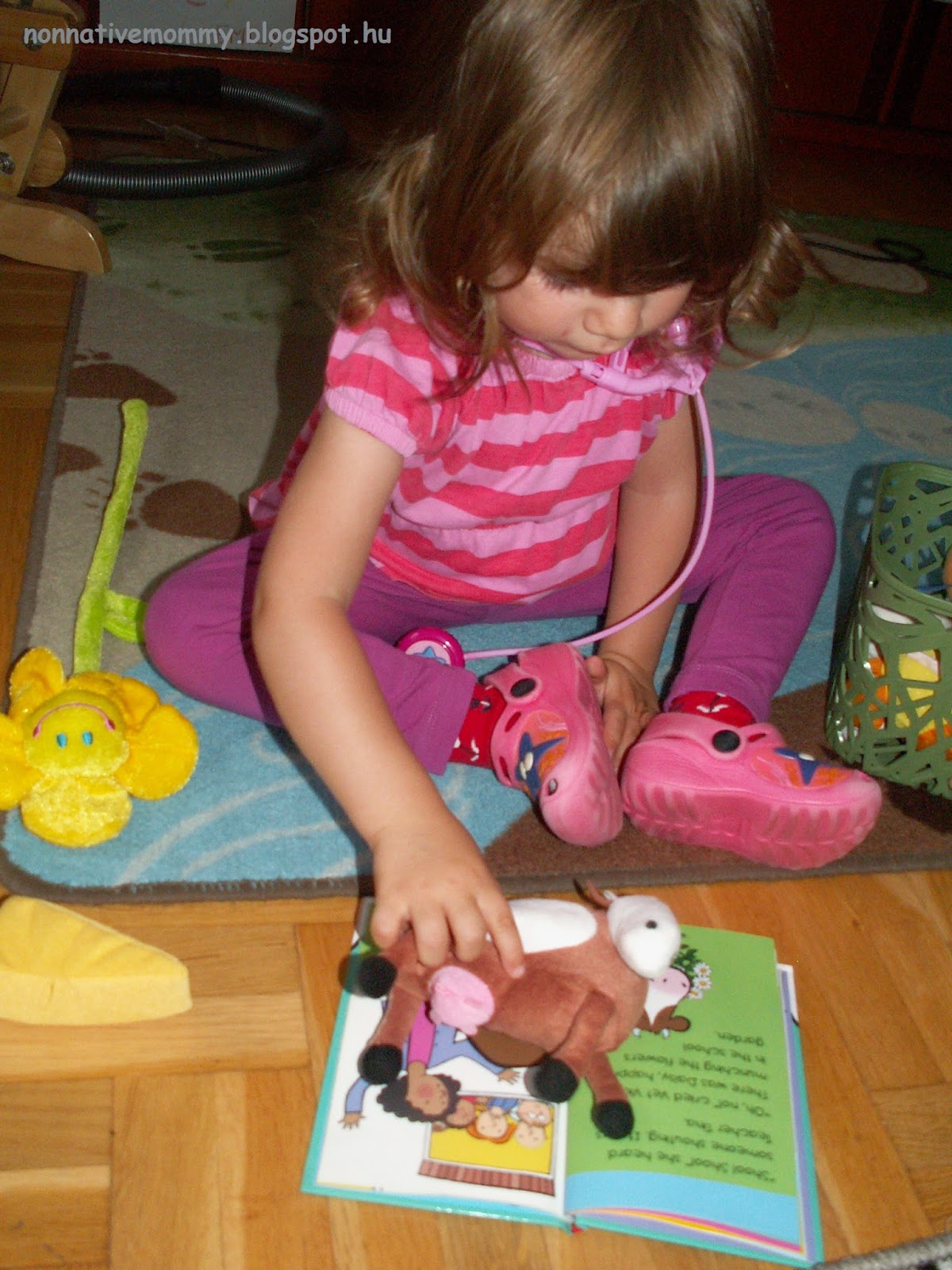
A green box with stuffed animals, a stethoscope, some gauze, a medicine box, a rope, cheese and a flower. Story box – reading fun.

I can’t remember where I found the idea but Pinterest’s story box ideas are endless.

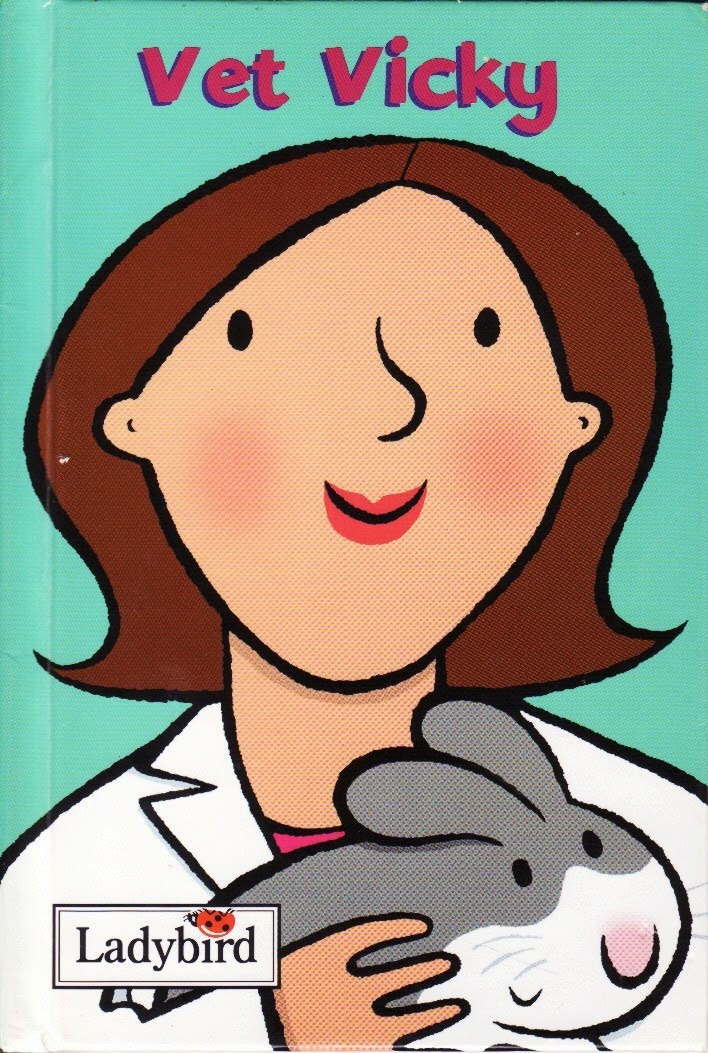
I picked a book from the Ladybird series (Little Workmates) – Vet Vicky, which later became one of E.’s favourite.

The story is about Vet Vicky’s day in her surgery treating a dog, a cat and a mouse. Then she goes to Farmer Fred’s to have a look at Daisy, the cow, who is not eating well, but the cow has gone. Vicky finds her near the school munching on some flowers. Vicky takes Daisy back to Farmer Fred and suggests feeding Daisy with some flowers every now and then.

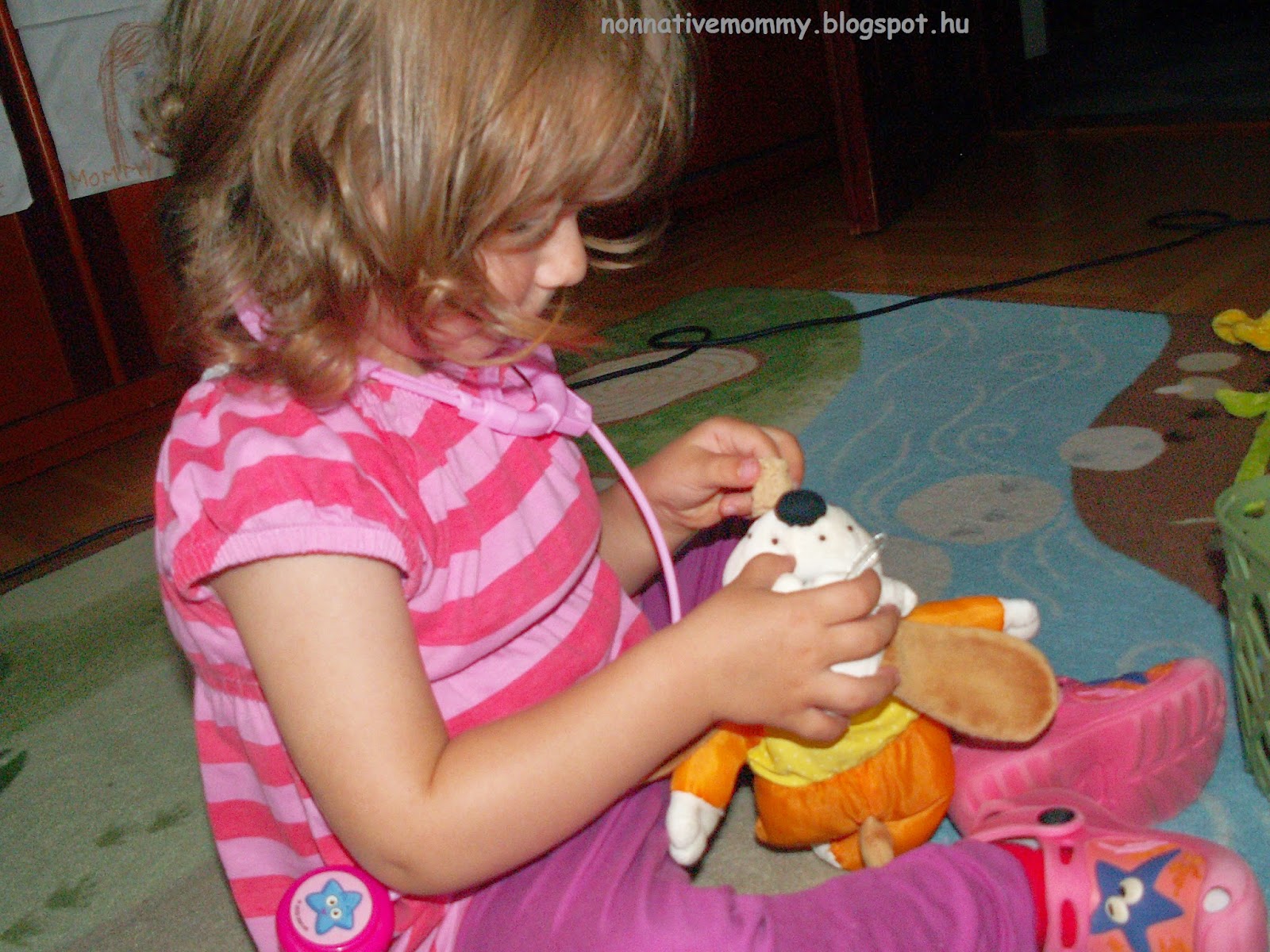
It was a hit at once. E. likes playing doctor, and loves animals, so even without the story box she would have loved the story. However, with it she was thrilled and did everything like Vicky in the book.


checking the dog over


giving him a pill
checking the cat over

She enjoyed following the activities in the book – five times in a row. At least I could take some photos…

Finally, she matched all the characters with their images in the book.

We’d spent nearly an hour reading the book, playing the story, when our nanny arrived.

E. wanted to do it with her too.

Ssssh! – showed Vicky to the school children when she went behind Daisy with a rope

Some body parts, like the udder, the hooves and the horns, were identified on the cow.

What’s this? – This is the cow’s udder.
E. is very interested in the other booklets of the series.

We have some of them, like Farmer Fred, Builder Bill, Hairdresser Hanna. Unfortunately, the stories are not the best for the story book idea as there can’t be so many easily available and varied props.

Dem bones – the skeleton craze

Let me start with THE song, the small pebble that started the avalanche
Dem bones

(Around Halloween it is quite relevant)

E. got crazy about bones and skeletons. So it’s time for us, parents, to learn a little too.
I didn’t have the faintest idea about the names of the bones. I used to have problems with them in my native language, not to mention English. However, I did everything to satisfy my little one’s hunger for knowledge.

Flashcards
I made skeleton cards for her. I found a blog (montessoriworkjobs) where there are black and white skeletons with the major bones highlighted in red. So I printed them and made flashcards.

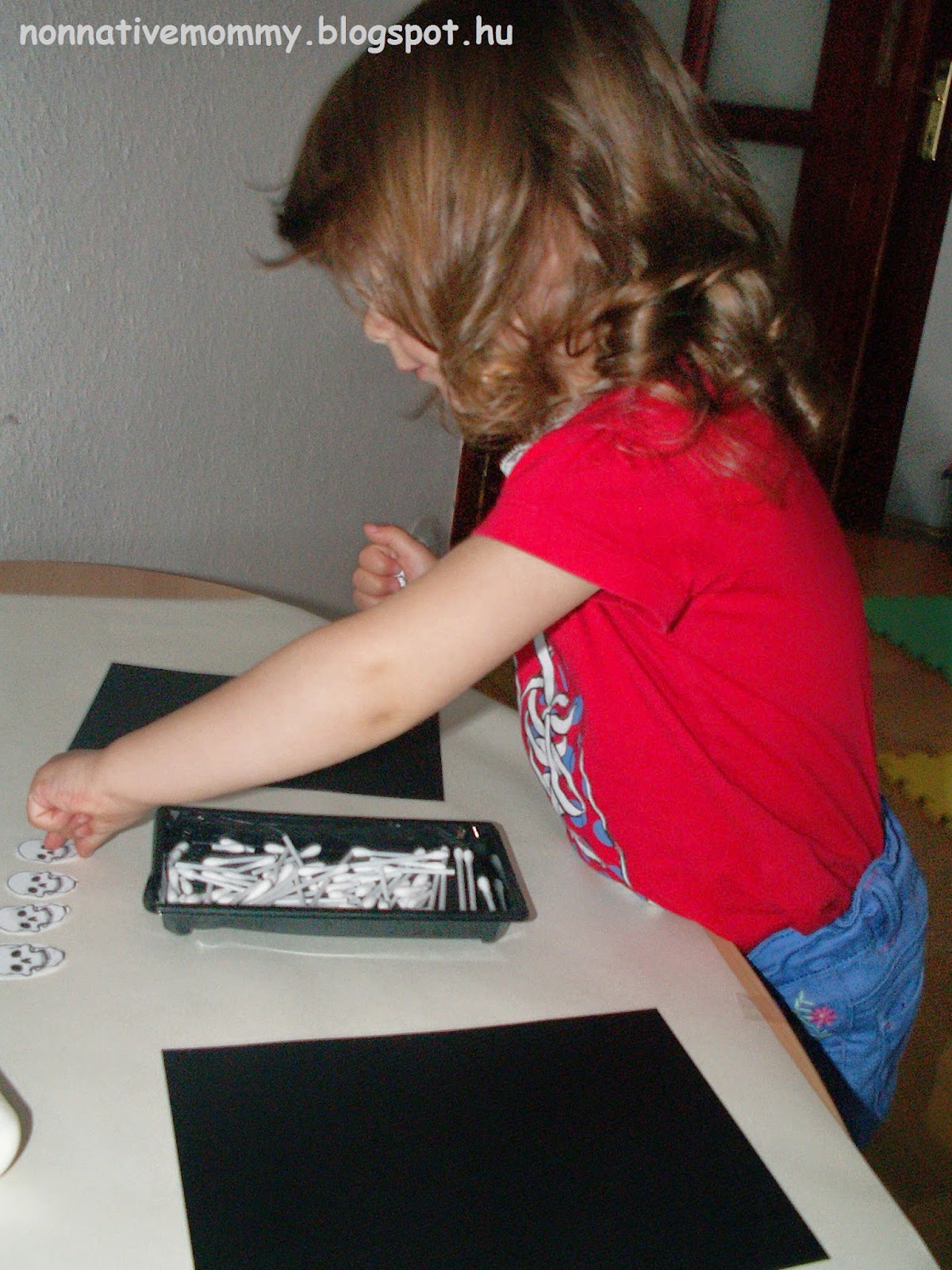
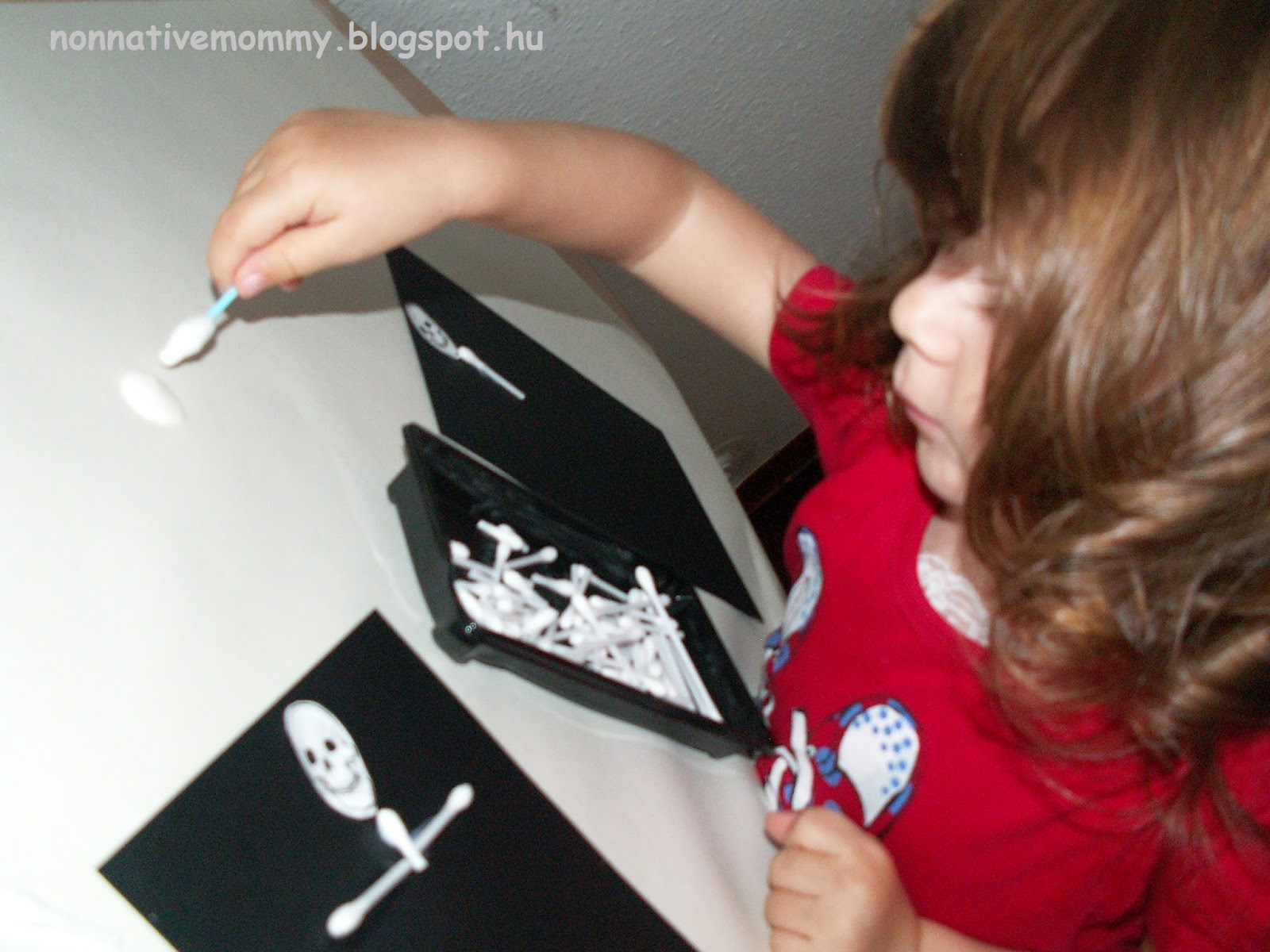
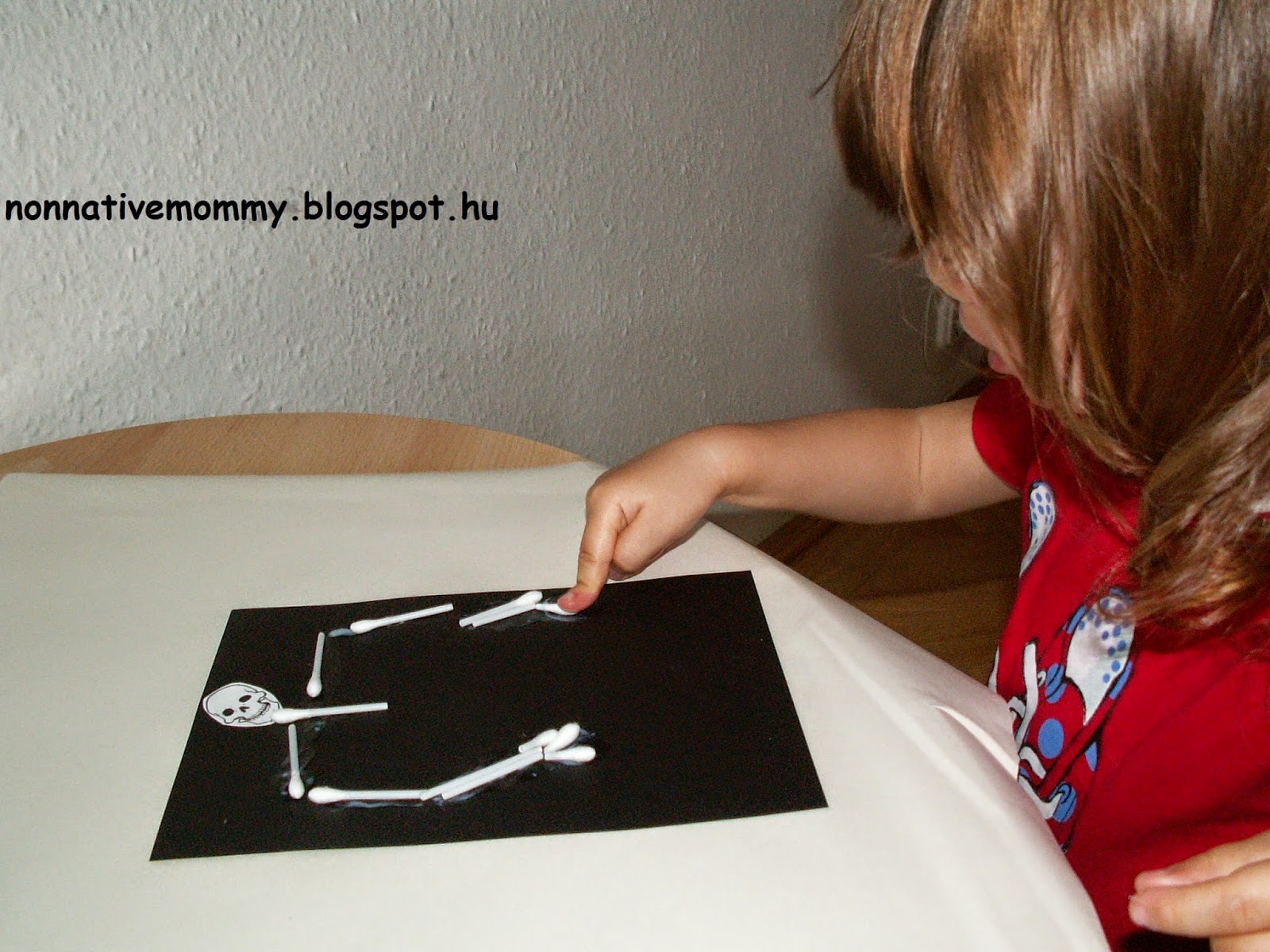
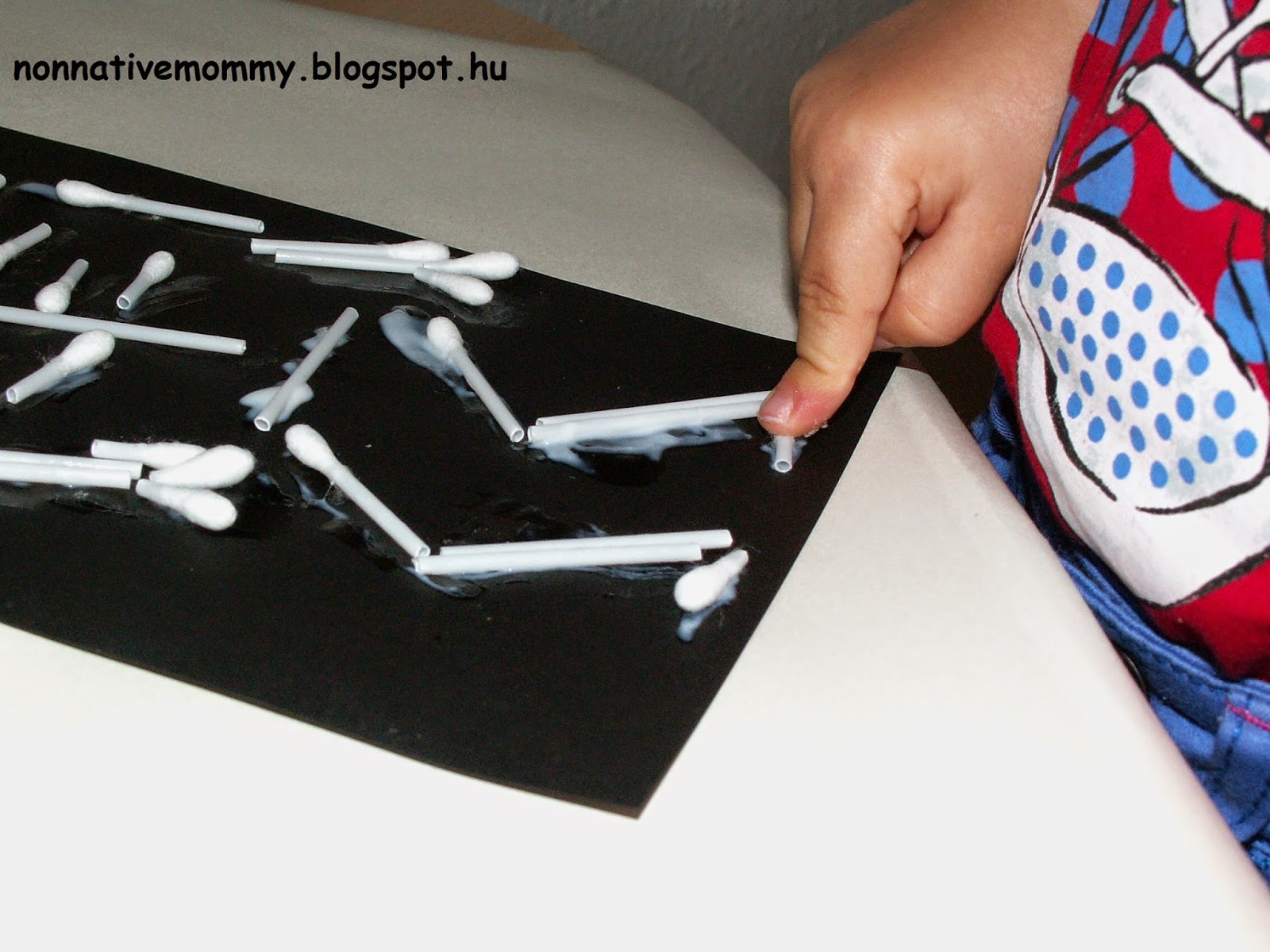
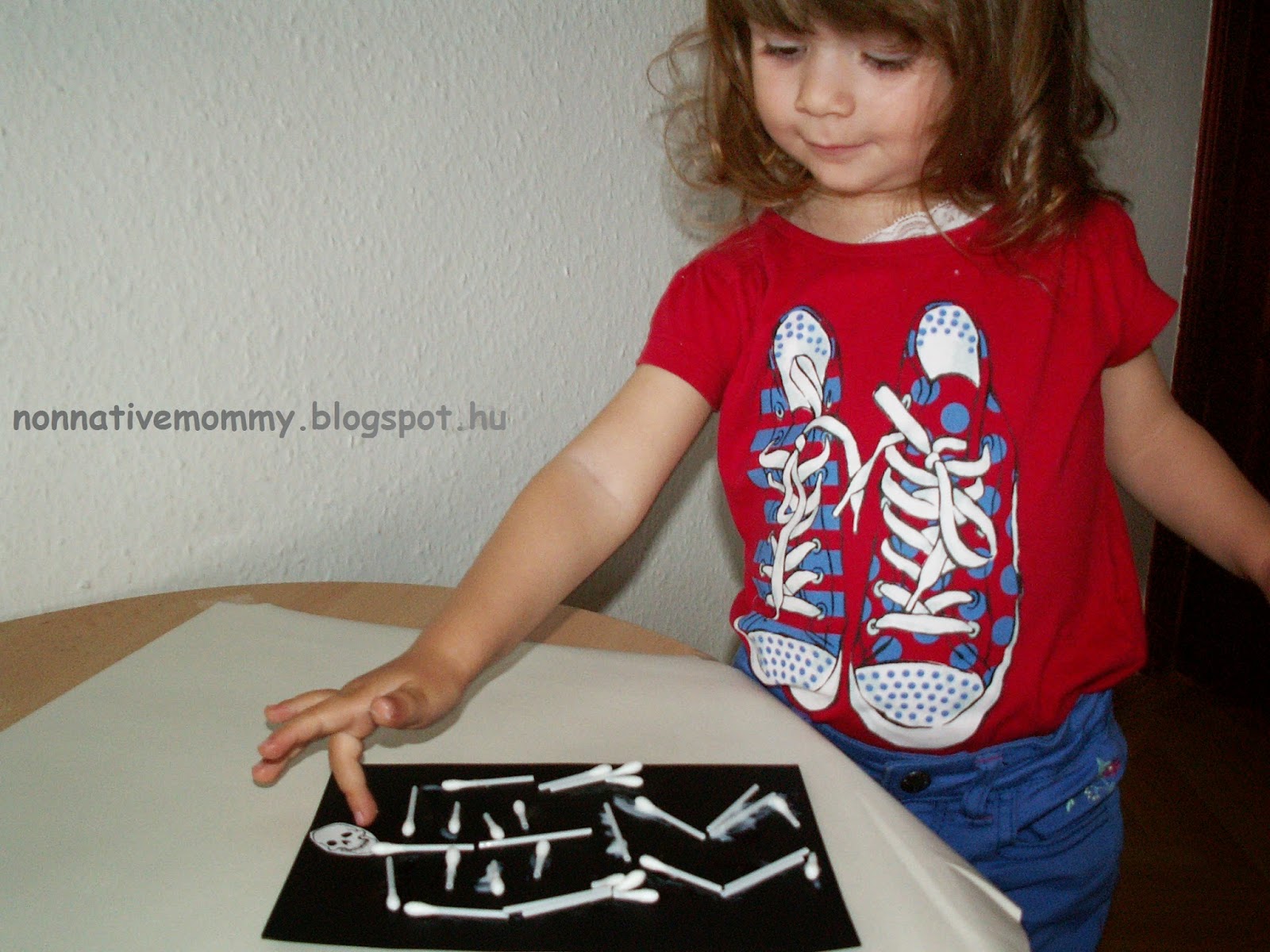
Cotton bud skeleton – craft
Cotton bud skeleton craft can be reached in another post in more details.

fascinated by the skulls


gluing


sticking and pushing


final touch
finished

Child size skeleton puzzle
I found a child-size printable skeleton on a colouring site. You need to print about eight A/4 pages. You do not need much colouring 😉 I laminated the bones as I want to use them next year too.

the skeleton puzzle
after mixing the puzzle E. put the bones in place


“I’m a skeleton”

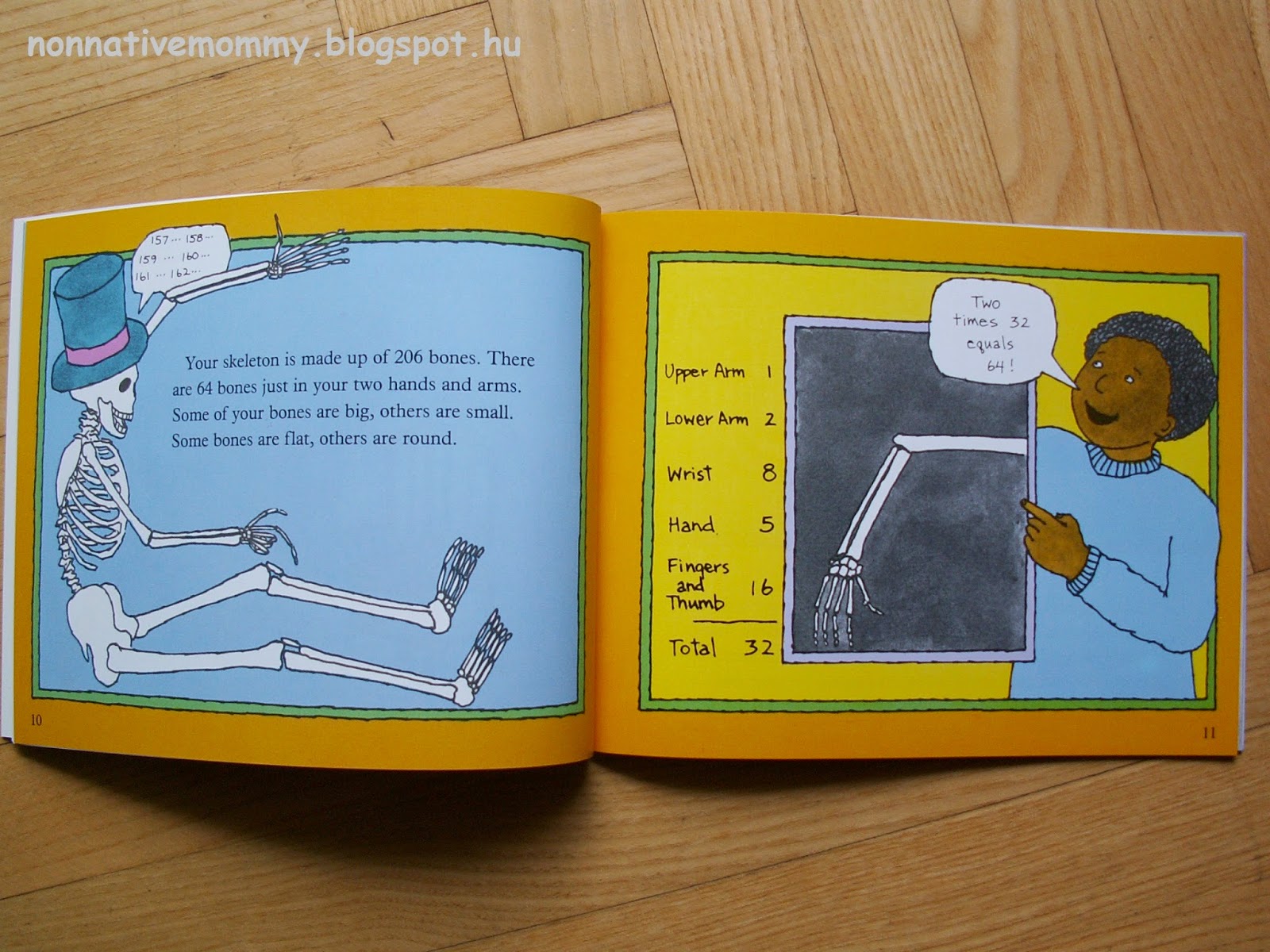
The book – The skeleton inside you

It’s a funny book with a lot of information on bones. When it says “your skeleton helps you run, jump and stand”, I added some more actions (squat, walk slowly, sit, roll, make a bridge, kick, clap etc.) and E. needed to do what I said. She enjoyed it a lot.

You have 32 bones in your arm


the rib cage and the skull protect important organs


Halloween costume skeleton


“Look Daddy, this is the femur”

Skeleton as food
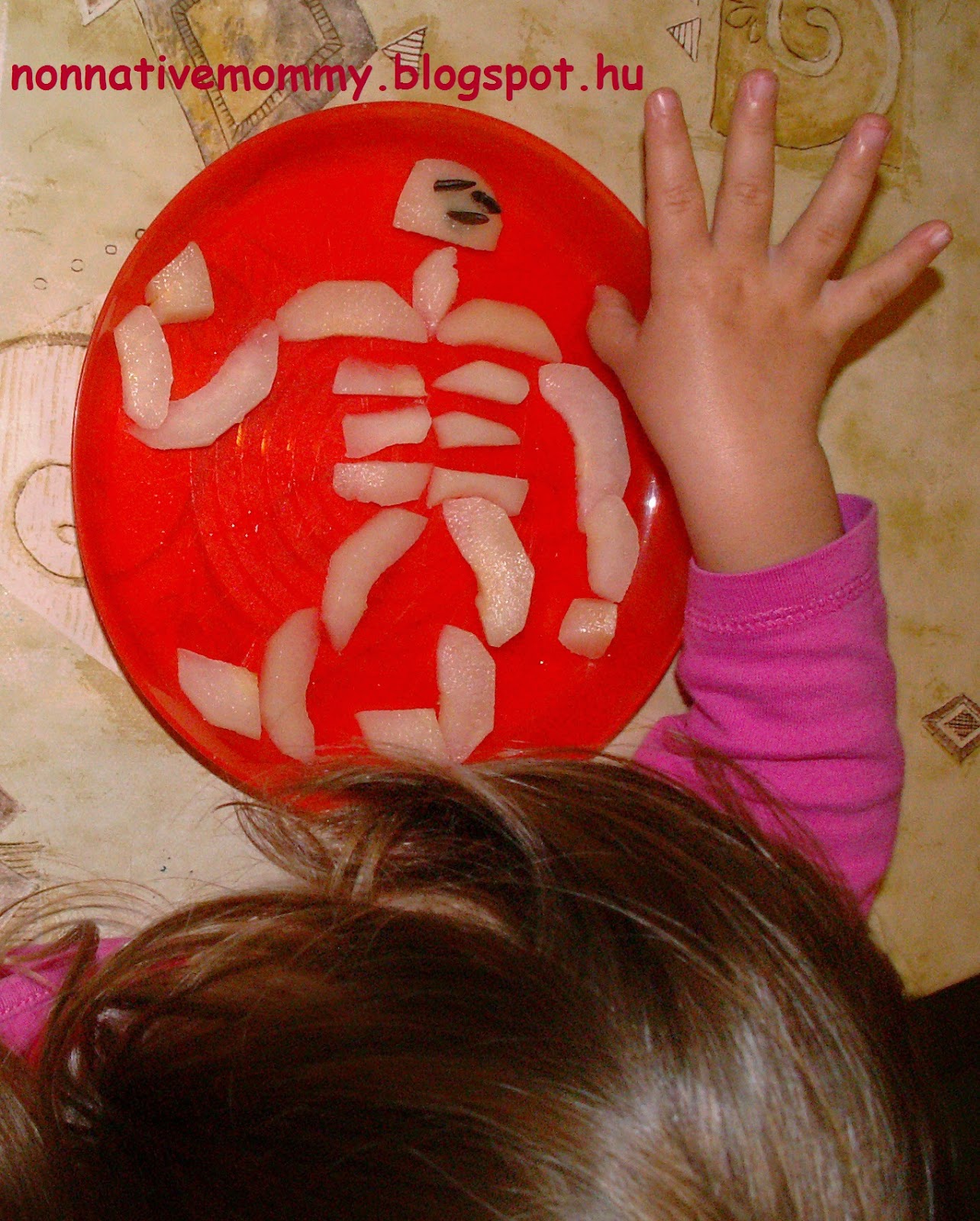
E. was absolutely amazed when she saw this snack on her plate. Since then I need to cut skeletons out of everything.

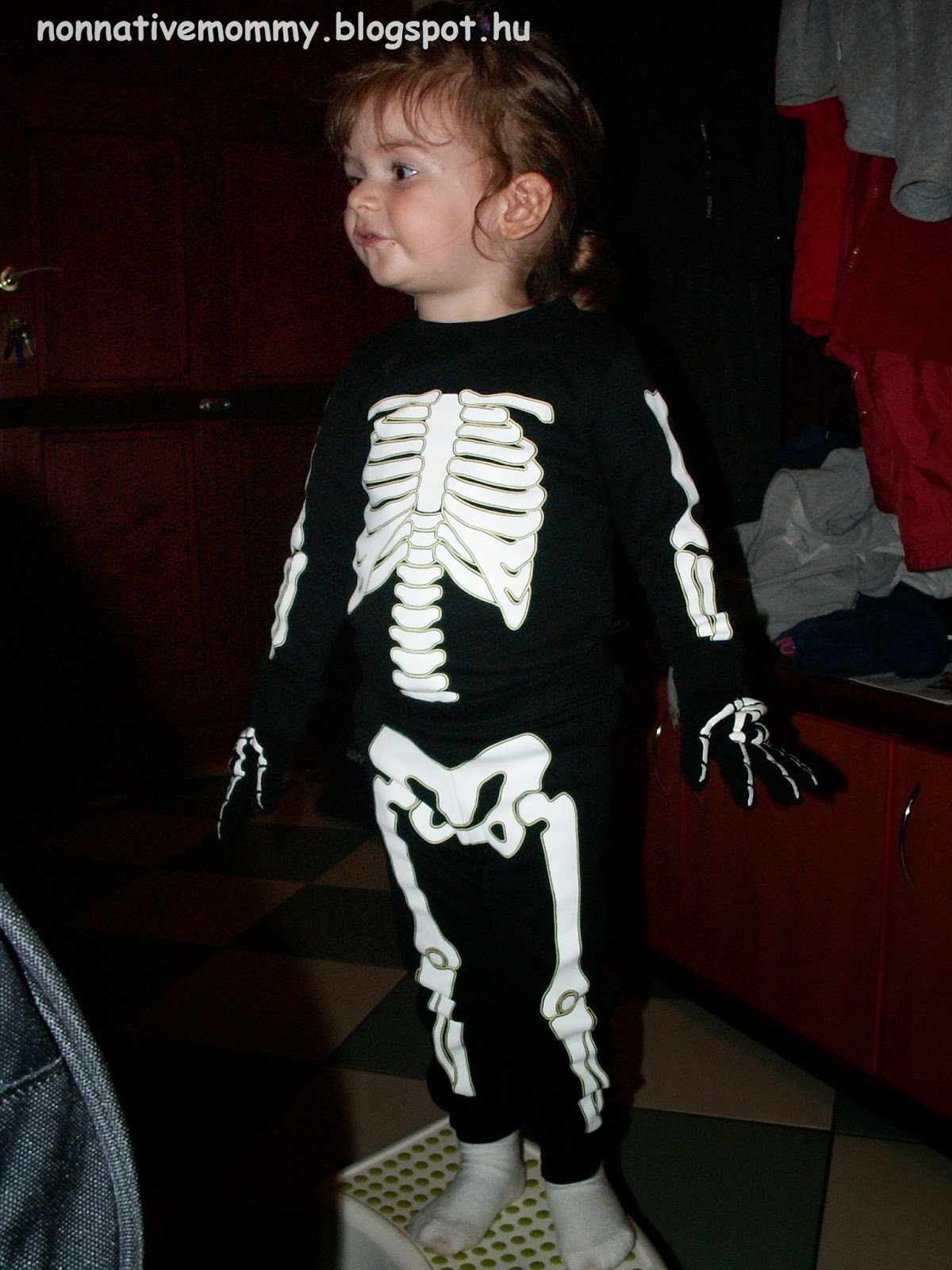
Last but not least: Skeleton costume for Halloween

These are H&M skeleton pyjamas and gloves


I do not need to comment this. Or if you wish you can read about our MEC Halloween party we had.

I hope you found some ideas useful if your little one is also obsessed with bones and skeletons.

Fun with Flupe – the new Helen Doron package

It’s been a while since we started the new Helen Doron Early English package: Fun with Flupe. Now I have the time to review it a little.

The whole story is based on 3 main characters:

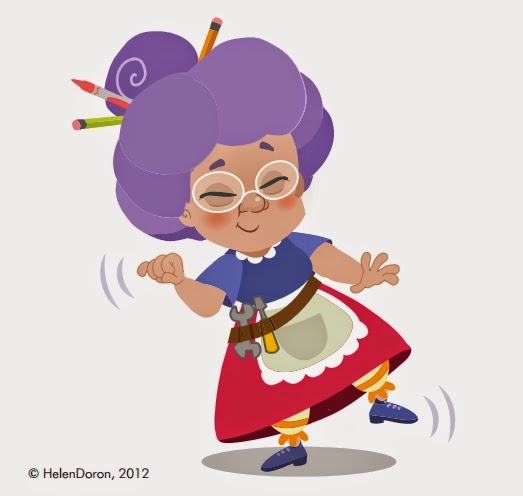
Granny Fix


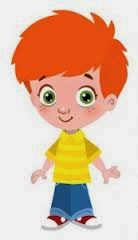
Paul

Granny Fix – who solves all the problems and speaks in rhymes

  • Paul Ward – I guess he is Granny Fix’s grandson. He helps Granny sort out the problems
  • Flupe or Flupie – a purple alien, who does not speak much apart from some words (it is very funny to see Flupe sad – turns blue – or frightened – turns yellow)


Flupe

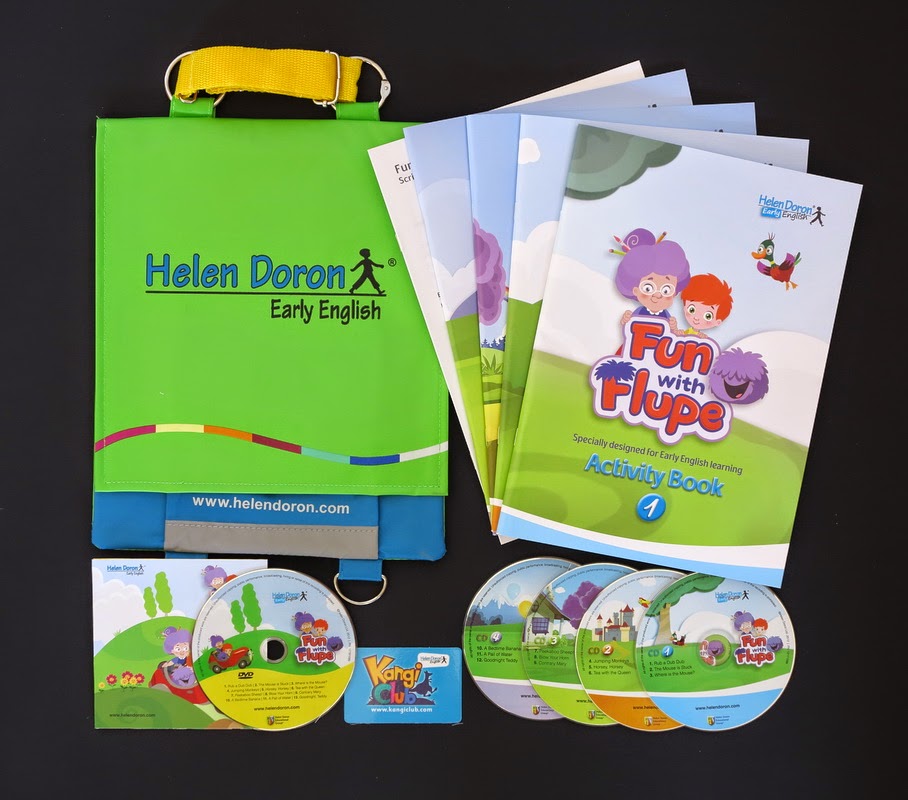
This is what our package looks like:


Content:

  • A bag – it’s similar to the previous, but the colour of the straps are yellow while in case of the first package they were green
  • 4 activity books – not just picture books and rhymes, but proper workbooks. One can colour, stick stickers. Now we are working with the second one. During the lesson we work in the booklets, but no longer than 4-5 minutes


Rub-a-dub-dub – we coloured the tub and the animals, then had to put 5 carrot stickers on the holes
Skill development: Find and circle the same animal as you can see in the front
  • Booklet with the words for parents – quite useful for those parents who do not speak and/or understand much English (in the picture it is behind the 4 activity booklets)
  • 1 DVD – with short stories
  • 4 CDs – with all the conversations from the stories. My problem with the CDs is that the songs themselves cannot be listened to separately, only as a part of the whole story

I know it is officially not allowed but I asked our teacher to give us the teacher’s CD and I uploaded the songs on our PC, so we can listen to the songs only.

I feel very strongly about this package. Very good material from many aspects. The workbooks are strong and good quality. The tasks are suitable for kids between 2-5 years of age.

Not only does this course develop a child’s language skills but also their movements (dancing, jumping, crawling, running and hopping), fine motor skills (sticking, colouring, matching, craft activities). The five senses are in focus again.

There are 25 songs to listen to. They are mainly traditional nursery rhymes/songs with some change in the tune or in the lyrics. The songs appear in 12 animated stories in which Granny Fix talks in rhymes. (Certain lines of her return from episode to episode.) These episodes can be seen on the DVD.

Have a look at one episode (Rub a dub dub):

Our teacher, Zs., always involves some eating and drinking during the sessions if it is somehow connected to the topic. (E.g.: biscuits were hanging by the window on a rope. – I can’t reach it. – she said and all the kids tried to reach the biscuits. Then they needed to ask for it: – Can I get a biscuit? But a similar situation is created when asking for water to drink etc.) And this is just one example how well the kids are involved and encouraged to use the language in real life situations.

There is a Helen Doron Song Club on youtube where you can find videos connected to this material and to other courses too.

Five Little Monkeys has always been a favourite:

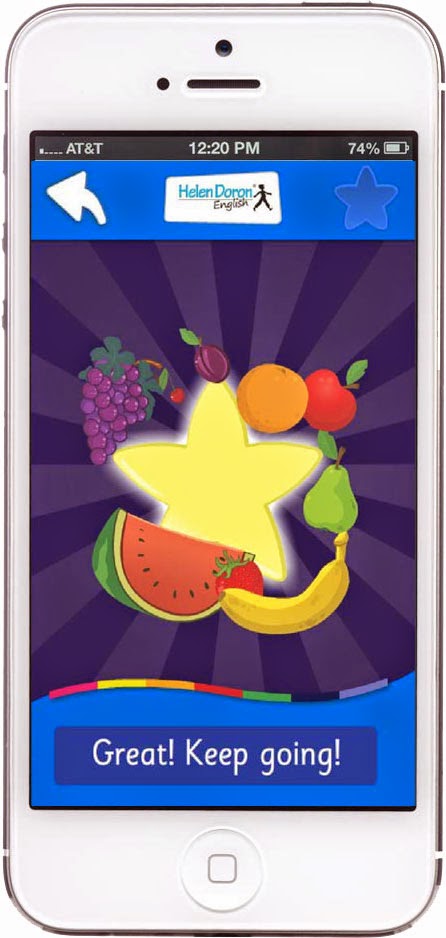
You can find Fun with Flupe as an application in the Google Play Store. Have a look at what it looks like. When I installed it, it was free of charge.


All in all, this set is just as professional, well-designed and full of fun as the previous, Baby’s Best Start.