Swinging up and down – games in the playground

Swinging and seesawing

When we go to the park, we always visit one of the playgrounds nearby.
As I didn’t know a good swing song in English, I asked a good friend of mine, K. and she recommended the following:

Swinging up and down in my great big swing,
Won’t you be my darling?

Looking all around in my great big swing,
Won’t you be my darling?
Swaying back and forth in my great big swing,
Won’t you be my darling?
Swinging up and down in my great big swing,
Won’t you be my darling?

By the way K. is on facebook with her Rhyming nursery. She’s got lots of great ideas to have fun in English with kids.

Another playground game that an 11-month-old can enjoy is the seesaw. Here is a song to sing along:

See Saw Margery Daw,
Johnny shall have a new master;
Johnny shall earn but a penny a day,
Because he can’t work any faster.


I really like the Gracie Lou character, so here is a version of it.

This song has been made into a swing song by Helen Doron. I don’t want to breach any copyrights so here is the lyrics only:


See Saw Margery Daw,
Johnny is swinging with granny;
He is swinging and it’s lots of fun
And it can be very funny.


Well, I sing it with “mommy” instead of “granny” and I, of course, replace “Johnny” with E.

I also know some other seesaw rhymes:

See-Saw Sacradown,
Which is the way to London town?
One foot up, the other foot down,
That is the way to London town.
or
See-Saw, up and down,
Tommy goes up, Tommy goes down.
I’ll be back with more playground stuff.

Walking in the park in Enlgish – birds, trees and flowers

Every morning we go out for a walk. E. is the most attentive at this time of the day. At the beginning I was rather tense talking in English while we were walking and meeting other people, but by now I’ve got used to it.

On our way I name whatever we see. I try to pay attention to which direction she looks and what she sees. As I’m behind her, it’s not easy. So what I say is:

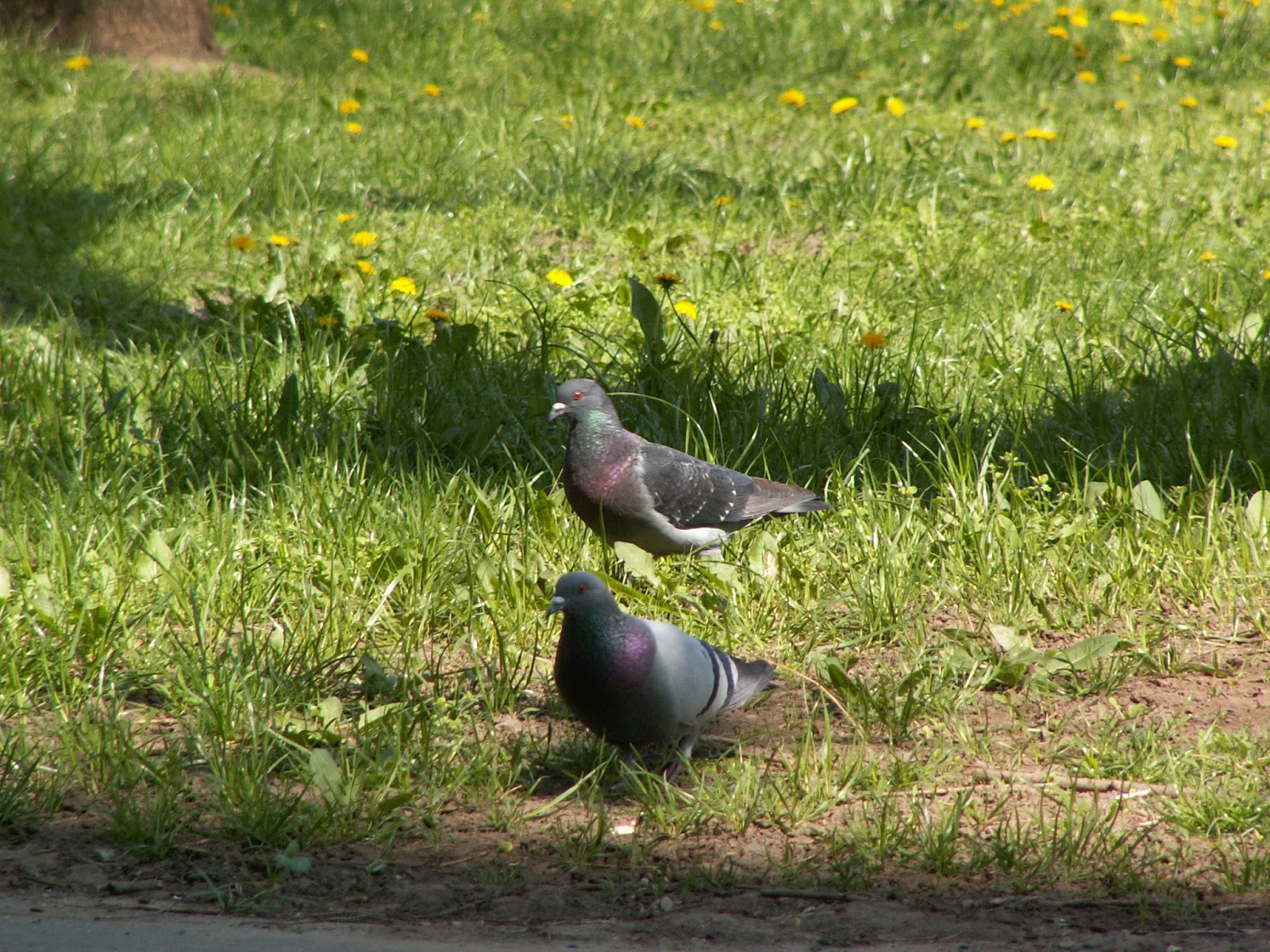
“Look, there’s a pigeon. She’s eating.” or “The pigeons have flown away.”
“The pigeons have flown away.”

“Can you see that big tree? The leaves are all green.”

Pansies in the flowerbed
“Let’s smell the flowers. Atishoo. Atishooooo.” (Here she smiles or even laughs at this.)
“Look, this flower is purple, and this one is white. And your favourite colour is here. It’s yellow.”
“What is buzzing? It’s a bee, flying from one flower to the other.”
We were blowing dandelions: “Look, mommy’s blowing the dandelion.” (minimum 10 times 🙂 )
“I’ll taste this blowball.”

If we see a dog: “Look, what’s coming? A doggy. (She screams or says da-da)

If we go on a bumpy road I make it even bumpier and shake the pushchair a little: “Bumpy, bumpy, bumpy” (She enjoys it as well and grabs the sides of the pushchair hard)


Two pigeons

Today we have counted three pigeons and two doves: “One pigeon, two pigeons, three pigeons.””Are those pigeons? Nooooo. They’re doves. One dove, two doves”

These are some of the example, but as usual I’m talking to her continuously about what we see around us. She likes touching (and picking) leaves from the bushes. She is pointing at things so I name them (flowers, animals, people etc.)

Of course, I don’t know a lot of flowers and tree types, but I’m working on collecting some of the most common ones, which can be found in our area. I don’t like the long lists of vocabulary which include ALL the plant names. We need a small part of them only. The other thing is that I, myself, really need to learn them.

I don’t believe saying only “flower” or “tree” when we name plants is natural. In Hungarian I name them exactly (the ones I know, as I have deficiency in this field even in my mother tongue).

So here is a small collection of useful vocabulary concerning nature or rather wildlife in Budapest parks:

Birds:

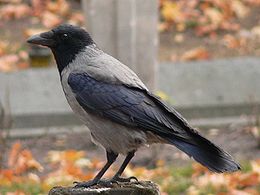
crow
dove


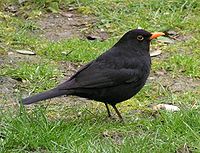
blackbird
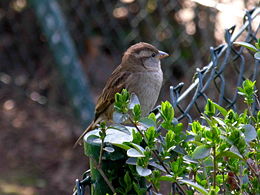
house sparrow
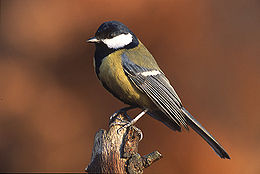
great tit 😉
swallow
woodpecker
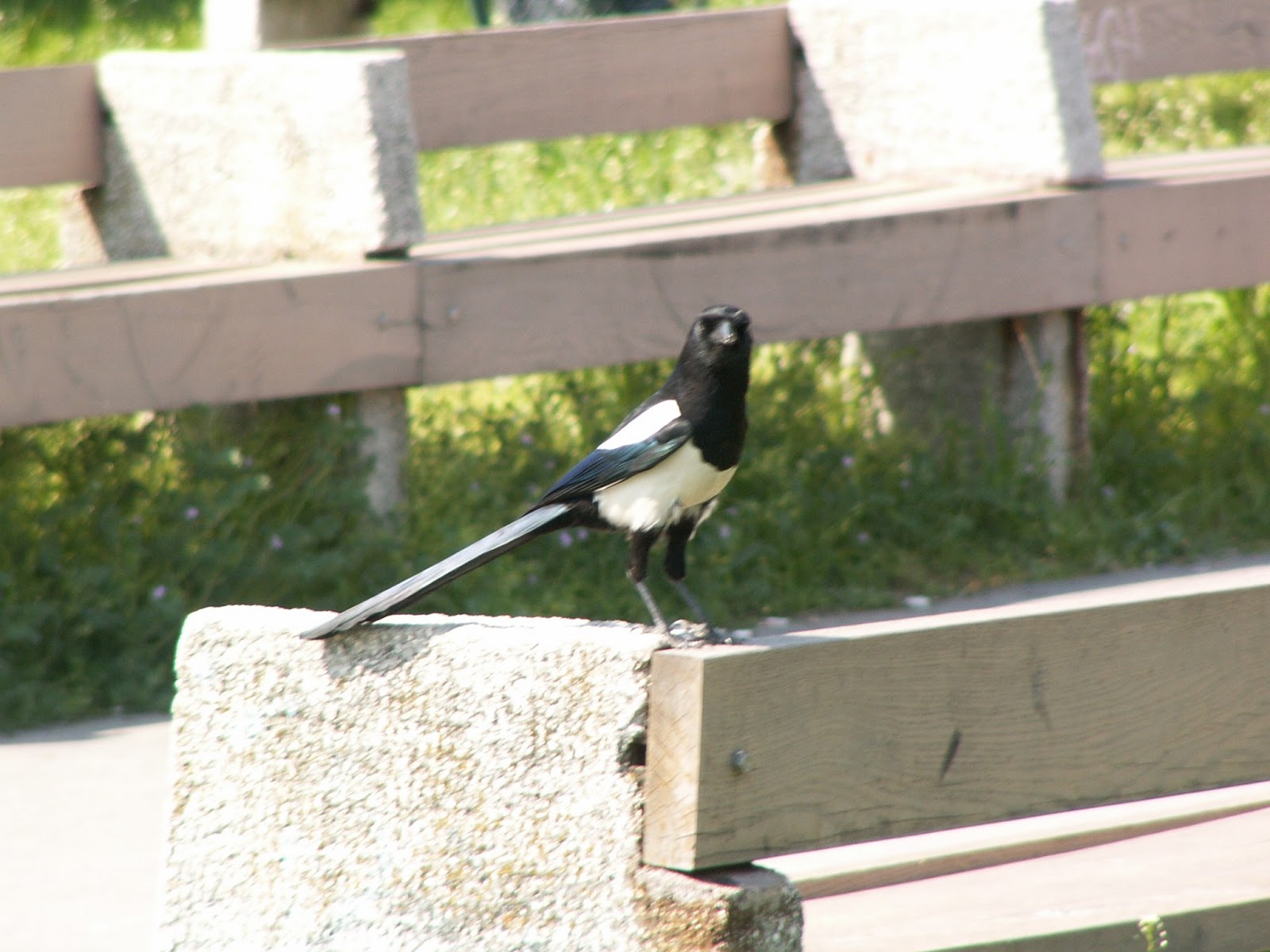
magpie


English
Magyar
magpie
szarka
sparrow
veréb
crow
varjú
swallow
fecske
pigeon
galamb
dove
gerle
blackbird
feketerigó
great tit
széncinege
woodpecker
fakopáncs
warbler
énekesmadár

Trees:

acacia
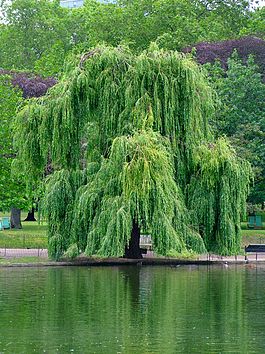
willow
horse-chestnut
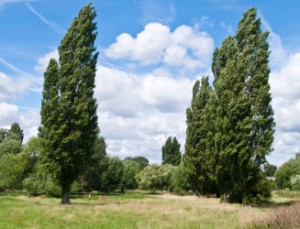
poplar
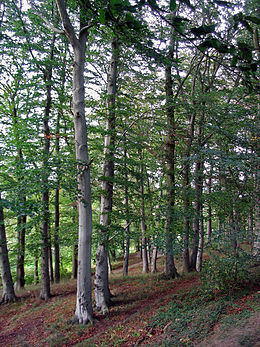
beech tree
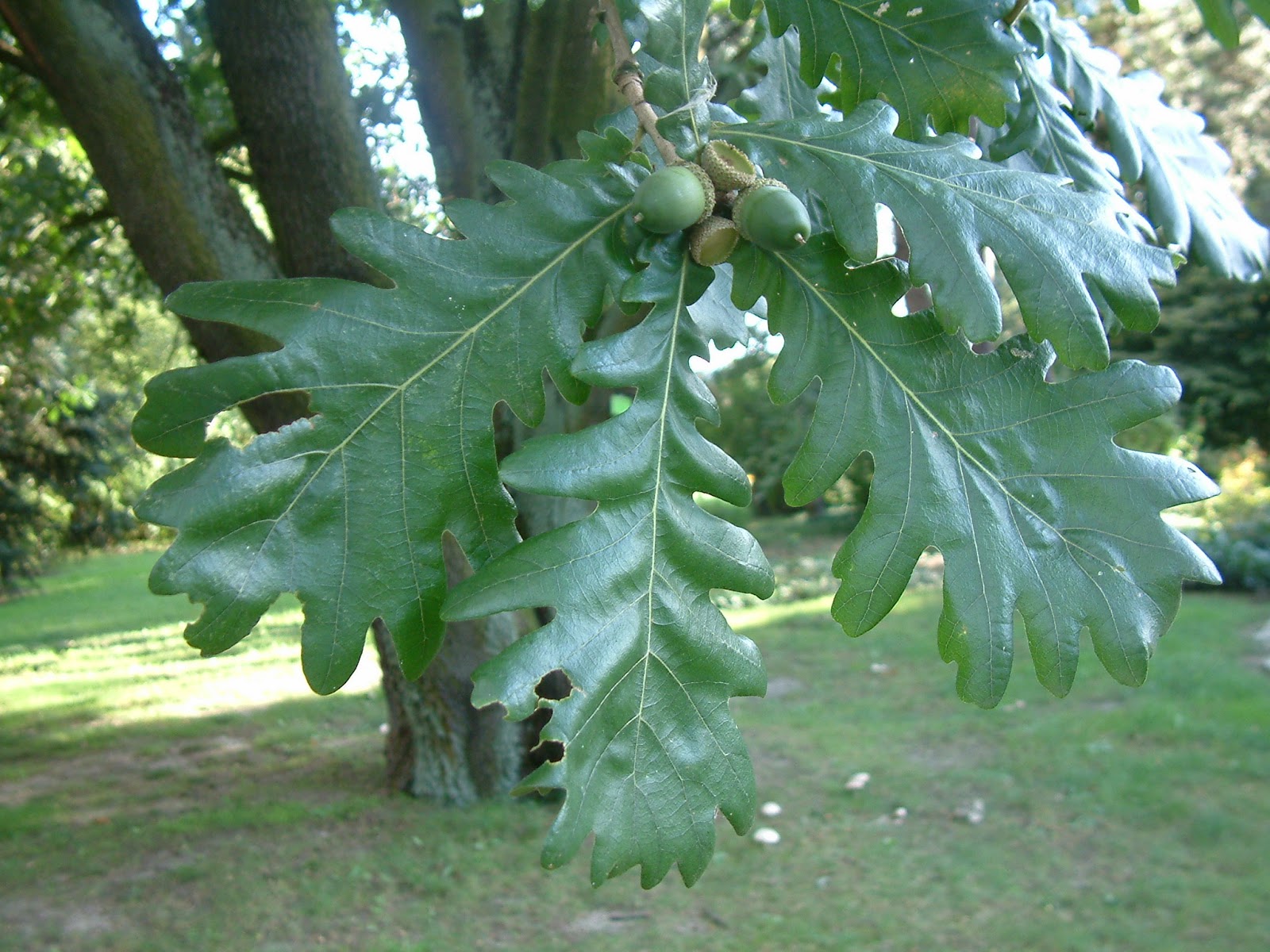
oak
sycamore
English
Magyar
chestnut tree
vadgesztenyefa
acacia
akácfa
  beech tree
bükkfa
oak tree
tölgyfa
willow
szomorúfűz
sycamore
platán
pine
fenyő
birch tree
nyírfa
poplar
nyárfa

Flowers:

forget-me-not
daisies
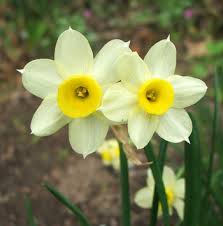
daffodils


dandelion or the so-called “blowball” or “clock”
dandelion in full bloom
geranium
flowering almond
golden chain
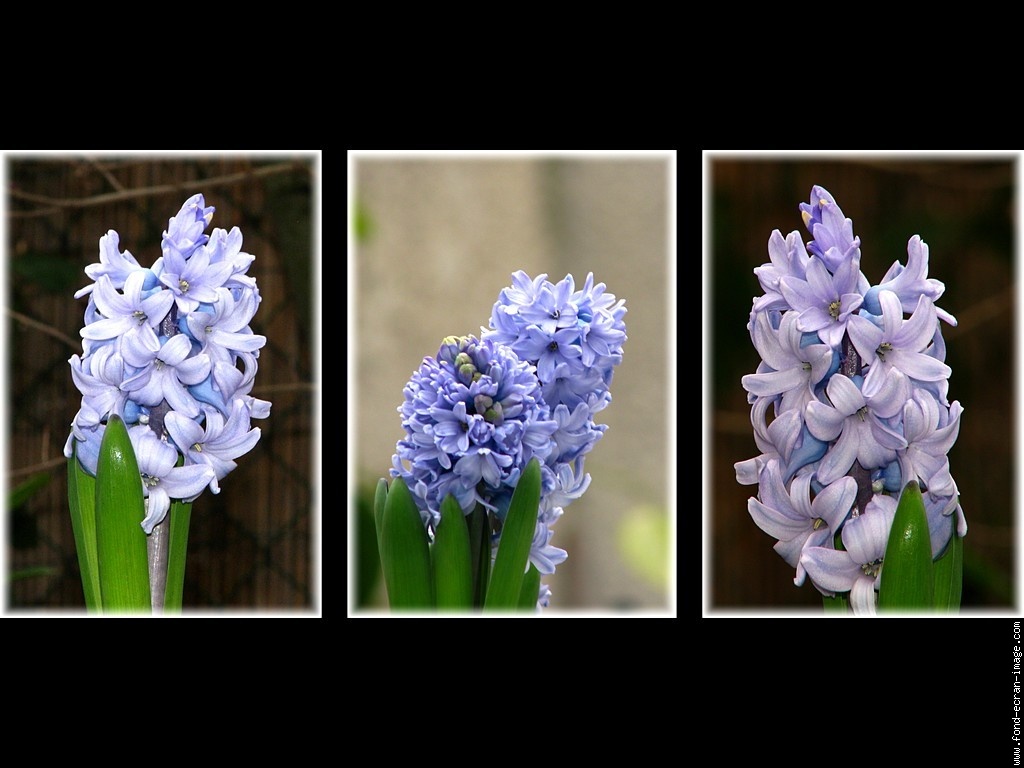
hyacinth
lavender
grape hyacinth
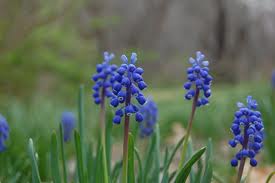
violet pansy
peony
of course, tulips
lilac
English
Magyar
lilac
orgona
golden chain
aranyeső
dandelion
gyermekláncfű, pitypang
daisy
margaréta
forget-me-not
nefelejcs
pansy
árvácska
begonia
begónia
tulip
tulipán
flowering almond
babarózsa
daffodil
nárcisz
hyacinth
jácint
geranium
muskátli
peony
pünkösdi rózsa
lavender
levendula
grape hyacinth
fürtös gyöngyike

Our daily activites – mornings and changing table time

When E. has woken up in the morning and I go into her room singing the following song while pulling up the blinds:

Good morning, good morning, good morning to you
Good morning Ms E…. cock-a-doodle-do
Good morning, good morning, good morning to you
Good morning Ms E…. cock-a-doodle-do
Cock-a-doodle-do, cock-a-doodle-do
Good morning to you.


In the original song there’s Mr Rooster, but I changed it to Ms E.’.
Even if D. goes in to her first he sings this song too. Though he continues talking to her in Hungarian.

If E. wakes up late and D. has already gone to work we start the whole day in English. So, for instance, I change her nappy and night clothes while talking in English to her:

  • asking about what she dreamt (I always wait a little for her answer)
  • what the problem was during the night (if she was up)
  • tell her milk is on the way
  • while changing the nappy we have a rhyme that I always chant several times:

    Baby’s got a dirty nappy
    What shall we do? (What shall we do?)
    Clean it up, clean it up
    For Mommy and for you

    She likes it a lot and smiles, what’s more, stays on her back patiently instead of turning onto her tummy or standing up. The rhyme is from here. You can find other games you can play, songs or rhymes to chant while your baby is on the changing table.

  • we play peek-a-boo with her textile nappy (I cover her with the nappy then ask “Where’s E.? Where’s she gone?” then she takes the nappy off – or I do it) “I see you.” or “There you are.”. Another variation is I hide behind her feet and ask “Where’s Mommy?” or “Where’s Mommy gone?” Then I open her legs and say: “Here I am” or “Peek-a-boo”
  • there’s a shelf over our changing table and at the bottom of it I stuck up wooden, painted animals, so I name them, make the sounds they make, or sing a song about them. E.g.:

    Ladybird, ladybird fly away home,
    your house is on fire, your children are gone
    All, but one her name is Ann,
    and she has crept under a frying pan.

    (I couldn’t find the tune online,but I’ll link it as soon as I do or please put it in a comment if you know where to find it)

    or

    Five little ducks went swimming one day
    Over the pond and far away
    Mommy duck said: quack-quack-quack
    But only four little duck came back

    Four little ducks went swimming one day
    Over the pond and far away
    Mommy duck said: quack-quack-quack
    But only three little duck came back
    (on the changing table I usually start with 3 ducks and by the time I finish changing the nappy or clothes we’ll get to the end)

  • still on the changing table we play “This little pig went to market“. E. likes this most on her toes. I grab each of her toes on one foot one by one and wiggle them a bit as I say the rhyme.

    This little pig went to market;
    This little pig stayed at home;
    This little pig had roast beef;
    And this little pig had none;
    This little pig cried, “Wee, wee, wee!
     All the way home
    . (I tickle the bottom of her foot)

  • While I’m putting on her clothes I usually name her body parts and what clothes go where:
    “Here’s your left arm, it goes into this sleeve”
    or
    “One foot goes into the tights, then the other foot goes into the tights” etc.
  • at the breakfast table we play with the coffee cup and the matching teapot. Both have four fruit on them and I name them; she loves the grapes and screams with joy when we get there. And of course, we can’t miss singing “I’m a little teapot” (4 or 5 times – in fact, this is MY favourite song)
  • E. didn’t use to like brushing or combing her hair, but when we sing along she enjoys it:

    This is the way we comb (or brush) our hair
    Comb our hair, comb our hair
    This is the way we comb (or brush) our hair
    Every day in the morning
    (I sing it twice as she expects me to comb my hair too)

  • she often watches me brushing my teeth while she is sitting in her high chair after breakfast. Then we brush her teeth (or rather she just plays with the toothbrush) and I sing “This is the way we brush our teeth” (same as the combing song, the tune has several verses – see an example here )
  • she sometimes watches me clear the breakfast table. I always tell her the name of the objects I put into the dishwasher, and I also tell her what I put into the fridge (the latter is more fun for her as I see because of the colourful things she can have a look at)
  • if E. is whiny in her high chair then I put her into her playpen where she plays alone. This is the time when she listens to her collection of music (compiled from youtube and added the Helen Doron songs). In the meantime I can do some housework.

Yeah, I sing a lot and keep talking all the time. Sometimes by the afternoon I can hardly talk, am totally tired of speaking, not to mention singing. Thank Goodness for coffee. It always gives a little energy back.

When we have our Hungarian sessions we do more or less the same. The morning routine is the same, the games are the same, only the songs are different. Sometimes I sing the combing/teeth brushing song or “I’m a little teapot” in English as I don’t know any good Hungarian versions of them.

    Helen Doron Early English – First Impressions

    Putting aside my scepticism, few weeks ago we took part in a mock lesson at the Helen Doron school nearby. The teacher, Zs., was really kind, gave us all the information we needed (about the course booklets, CDs, prices, summer programmes, the course itself). She was well-prepared for the lesson (even had a little piece of paper with the lesson plan, CD track numbers etc., which E. wanted to steal). She’s got a relatively strong Hungarian accent. I would be happier with a native speaker, but you can’t have it all.

    The lesson was only 20 minutes long. The usual lesson is 45 minutes otherwise. We have already known one of the songs which is also available online and E. recognised it showing it with a wide smile and arm flapping when it started:

    In the past I had already visited a lesson in another school, where the teacher was nice as well and the lesson could have gone well, however the parents present were a pain in the neck. So this time I was worried about the other moms. Luckily, the whole session was a pleasant surprise. Three mommies were there with their little ones and after we’d chatted a bit, it turned out they also think in the same way as I do. They want some useful activities for their kids. None of them was smarty, bossy or pushy as for the language learning. (At the previous place moms corrected the teacher, talked in Hungarian with their kids during the lesson, bombarded the teacher with their idiotic questions after the lesson. None of these happened here.)
    So we went home cheerfully. I discussed the details with D. and we decided to go for it.

    The course has just started we are at the very beginning. It’s hard to draw any conclusion, but so far so good. We are enjoying it. I found the CD material quite entertaining, nicely put together and only about 10 minutes long. According to the instructions, E. needs to listen to it twice a day. We manage to do that. We have a long list of songs she listens to while I’m doing housework, so I included the Helen Doron tracks into our morning routine.

    The school premises are basic, though. The classrooms are okay, they are well-equipped. Still, I think the flashcard, pictures should be re-laminated every now and then.

    The prices are reasonable. If we do not calculate the booklets and CDs, on a monthly basis it costs as if you were going to a costly playhouse once or twice a week.

    Of course, hiring a native nanny at the same fee would be the best, but I want E. to be in another surroundings, meeting other people, kids.

    In the back of my mind it is also there that some moms might be interested in MEC. I’ll give them a flyer soon.

    I’ll be back posting on Helen Doron Early English more, when I have more to talk about.

    Helpers

    To reach our goals I am not enough as the only English speaker in E.’s life.
    First, I tried to find native playmates for E., but she was too little for them. But I’ll try it again when she starts being interested in playing with others, as now, at the age of 11 months, she just plays NEXT TO another child, but not WITH them.
    

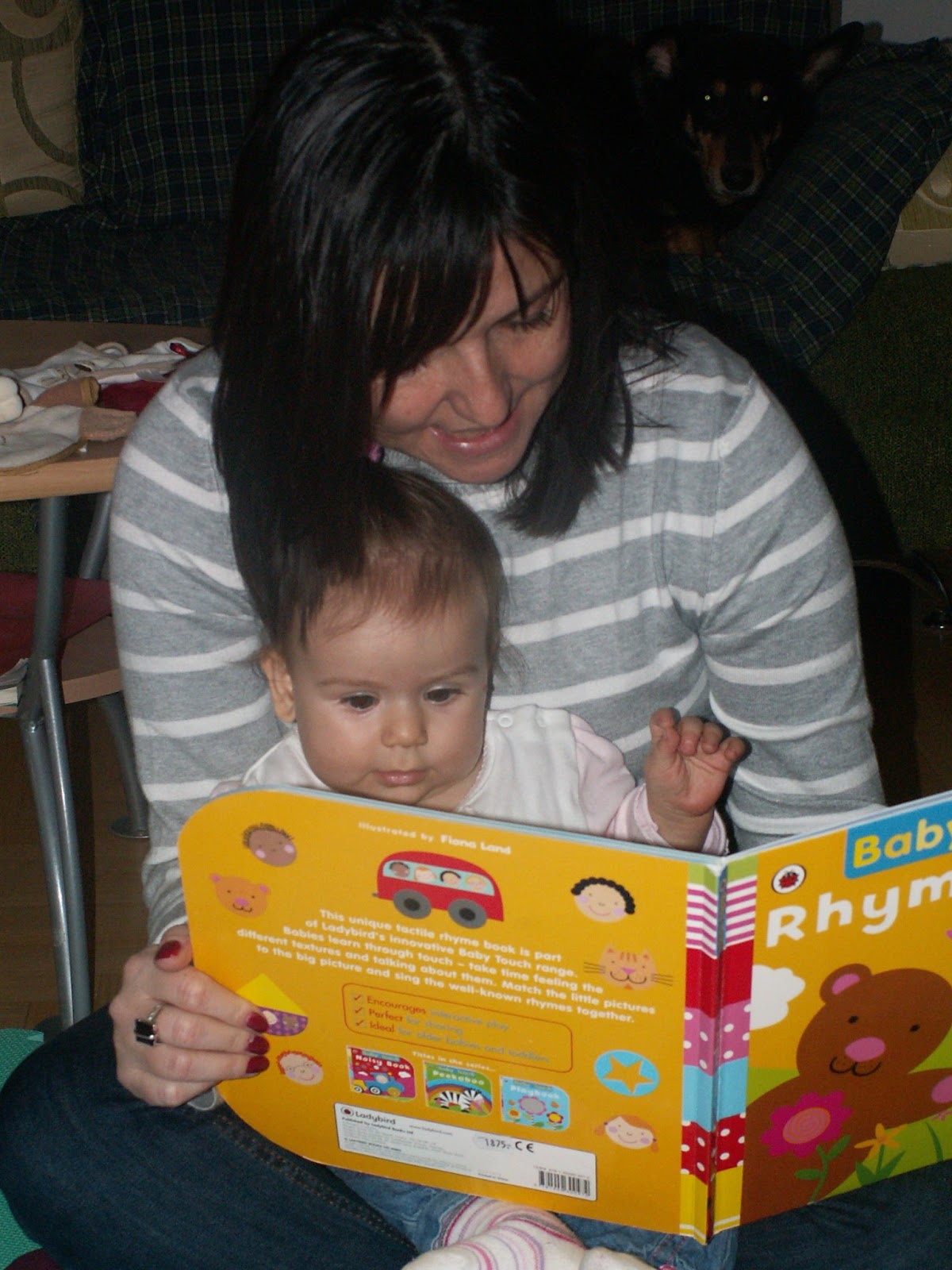
    B. is reading with E. (who is 7 months old here)

    I arranged  with my best friend, B., who is an English teacher as well, to talk to E. in English only. So every Friday when she has no lessons or other programmes she comes over and plays, chats, reads out to E. It’s real fun as I can be with my friend and E. is also entertained IN ENGLISH. There are other family occasions where B. is also present (name days, birthdays, Easter etc), and even at these times when Hungarian is the major language used, B. speaks English to E. Sometimes it’s a bit chaotic and quite challenging for B. to share her attention between two languages, but we have succeeded so far. (By the way, B. speaks four languages at a near-native level: Hungarian, Romanian, English and German). Nice example for E.


    Another helper of ours is A., our British nanny. A. comes once a week (on Thursdays) for 2 hours to play with E. She loves A., smiles at her as soon as she arrives, screams and babbles a lot while A. is at our place. I may claim that E. “talks” to A. the most compared to how rarely they meet. A.’s main task is to talk, talk and talk to E. Another reason why it is so useful for her to be present in our life is that I can brush up my English. If I don’t know the exact, or natural expression for some object, activites, baby language, A. is here to help me out. In the future I would like A. to come more frequently or come out with us to the playground or to the zoo. If I go back to work (which will be soon even if it’ll be only part-time) I would be happier if an English speaker took care of E. while I’m away. If she has time for us as she is quite popular with moms. A. could be a kind of replacement for me.  I know this idea won’t be very welcomed by the Grandmas.
    

    A. is talking to E. (10,5 moths old) about animal flashcards

    At the Helen Doron Early English class, our teacher, Zs., is also a kind of helper. She provides us with another occasion to practise and learn English out of our home. E. can see that other people also use this form of communication. And it is also important that she is with other kids, too.

    The same applies to MEC (Mums’ English Club), except for the fact that it takes place in our home, in E.’s comfort zone.

    My plan for the near future (as soon as E. can walk) is to find a playhouse where native or non-Hungarian mommies go with their little one.