Numbers I. – The bottle cap calculator

We’ve been playing a lot with numbers recently, so here is the first post about a calculator that is very easy to make and fun to practise numbers with.

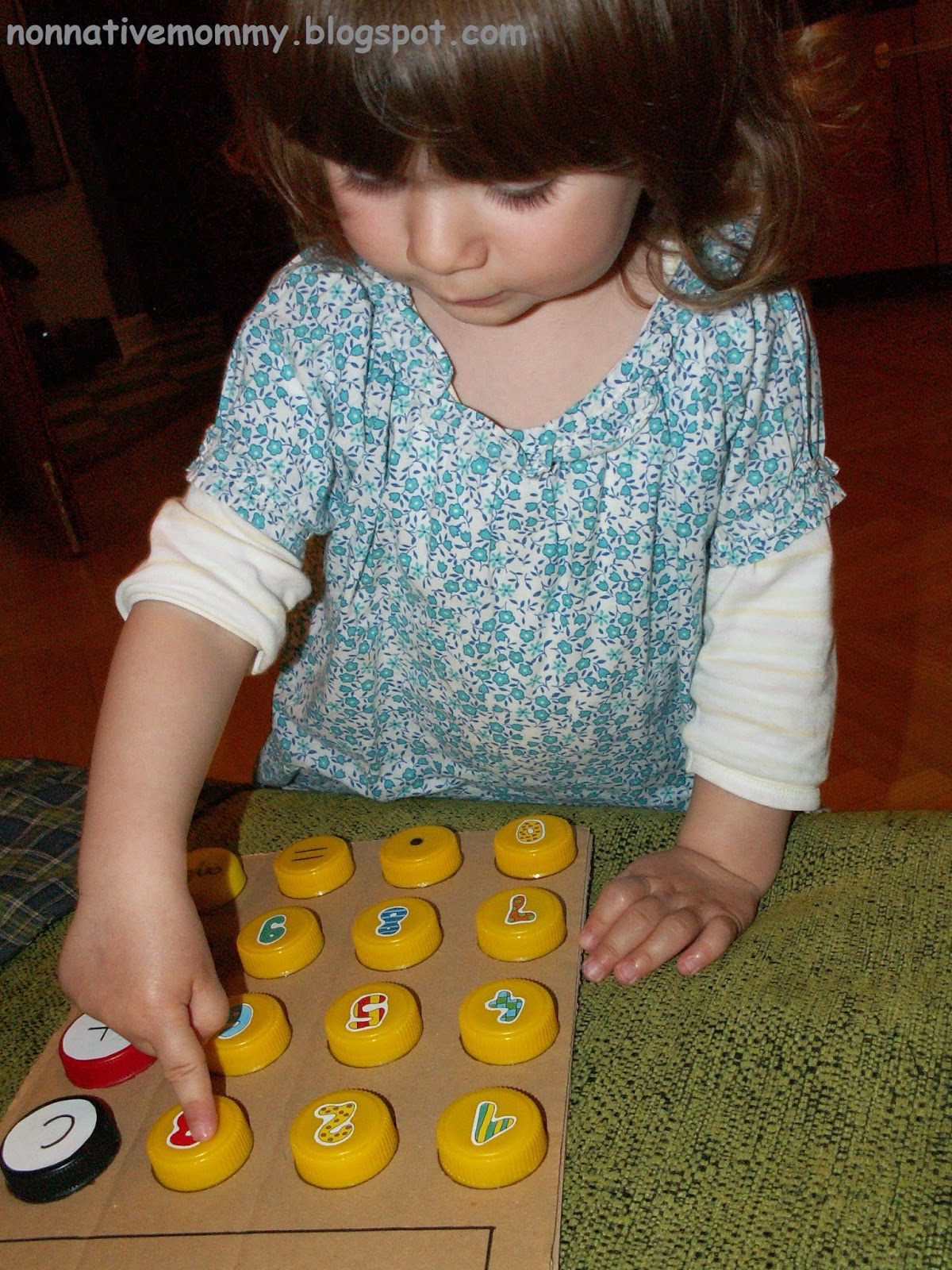
I found this idea not long ago on another blog: Learn with play at home. And I decided to make it as E. LOVES playing with calculators. Sometimes she asks for it and pushes the buttons for 15-20 minutes all by herself saying the numbers and signs (both in Hungarian and in English).

The first calculator was dropped so many times its display went wrong so we bought another, more simple one.

My idea was that she could have her own calculator that suits her little fingers.

tools

 What you need:

  • cardboard
  • 16 bottle caps (in my version)
  • scissors
  • superglue (dries withing 10 seconds)
  • markers and/or number stickers
  • ruler
  • a white sheet of paper
How to make it:
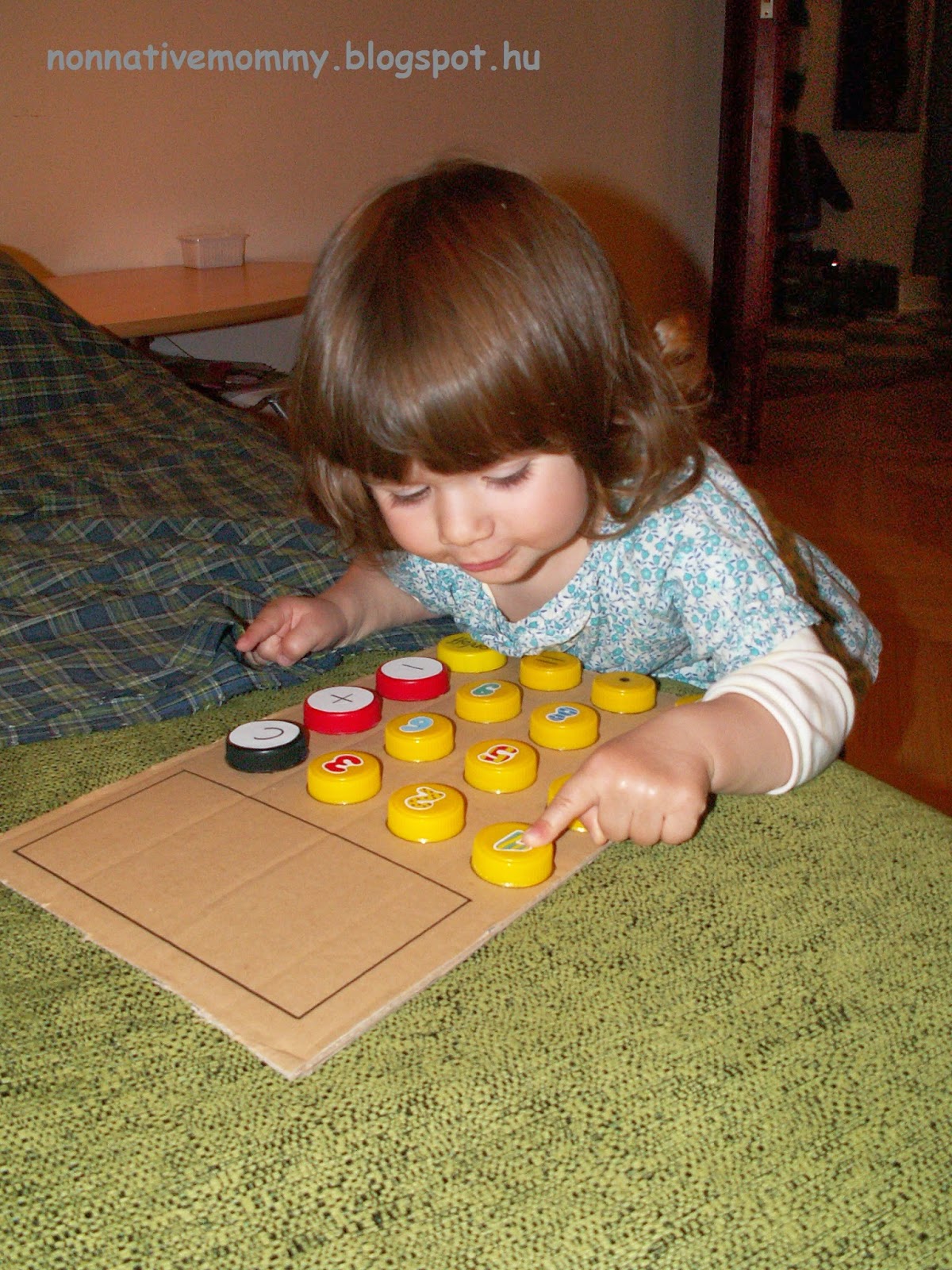
  • cut the cardboard (first arrange the bottle caps to see how big you need to cut the board)
  • stick or write the numbers and other signs on the caps
  • draw the display with the help of the ruler and the marker
  • glue the caps on the board
Sticking the caps on the cardboard is tough. I used superglue as the edge of the caps were very thin and I wanted them to dry quickly. (After few minutes of playing one of the caps came off, so this might not last as long as I wanted)

final result

The page I find this idea on also adds an extended version of the calculator game for those who have started learning to write. I’ll introduce it later if E. still wishes to play with the bottle cap calculator.


Now she is enjoying it a lot.

I managed to record a video too, but it is too dark. If you have any ideas how to lighten it let me know and I’ll attach it.

——-***——-***——-***——-***——- 27/03/2014——-***——-***——–***——-***——-

I’ve been trying to lighten the video but I couldn’t. Here is the dark video anyway.
But I also recorded another one with our native nanny today. They are playing with the new calculator.

"Amimals" – in zoos

Going to the zoo was always my favourite activity as a child (still love it today) so I could hardly wait for E. to get at least a little bit interested. And the time has come.

Our first time to the Budapest zoo was when she was 6 months old. It was more fun for me than for her. She had a look at the camels (and smiled when saw them pee) and the farmyard and then fell asleep. She only woke up for nursing (which I managed in the disabled loo) then went back to sleep again.

But now as she is over 1 (15 months old more precisely) she takes pleasure in walking around and looking at animals.

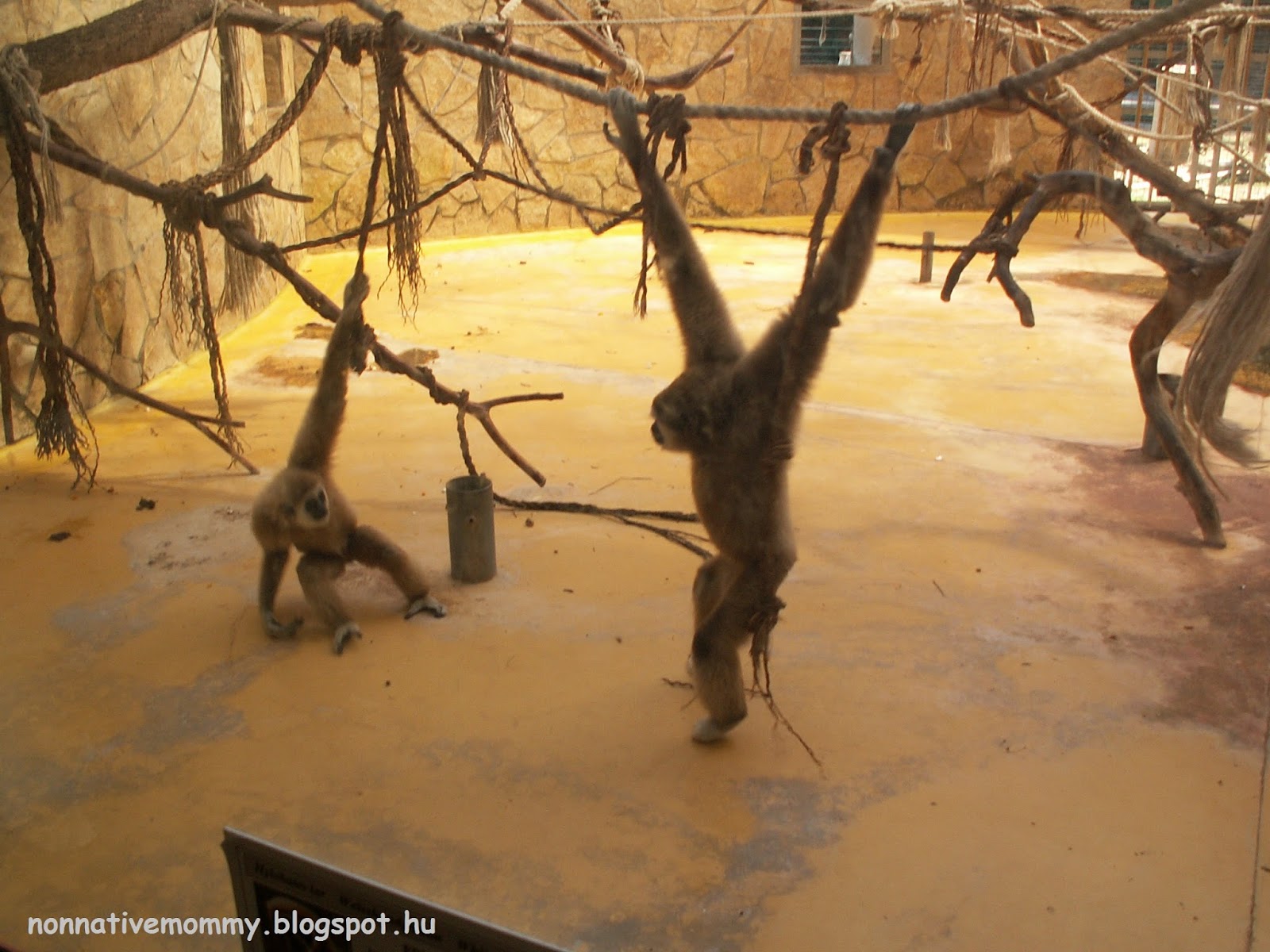
Visiting relatives in Debrecen gave us the sudden idea to visit the zoo there. It was actually a great idea. We all loved it. We were already in the zoo for half an hour (saw some parrots, giraffes and monkeys) when I realised what a good occasion would this be to use English (our Hungarian relatives didn’t accompany us). So we just sang our song to signal the change in using languages and continued our animal adventure in English.

As we were walking around, we described everything to her in English (and as usual she was repeating everything like a parrot):

  • what animals we saw (turtles, a hippo, penguins  – her favourites, more monkeys, laughing doves, roosters and hens, camels, goats, ostriches and lions)
  • what they looked like (“Look, the camel has two big humps”; “Wow, this rooster has a huge red comb on his head”)
  • what sounds they gave (roar, squeak, cock-a-doodle-do, coo-coo etc.)
  • what the animals were served for dinner (fruits, vegetables, mouse, rabbit etc.)

At the end of our visit we found a wooden playground where there were a lot of animals. E.’s favourite was the caterpillar. She climbed on it and rode it for about 15 minutes. We also counted and named the caterpillar’s legs, eyes, mouth and antennae.

Our second English tour in the zoo was in Budapest with our native nanny, A.
I learnt some new animal names (e.g.:cassowary) and we had a wonderful day with a lot of English (I tried to stay in the background and let A. and E. interact with each other a lot). The photos speak for themselves.

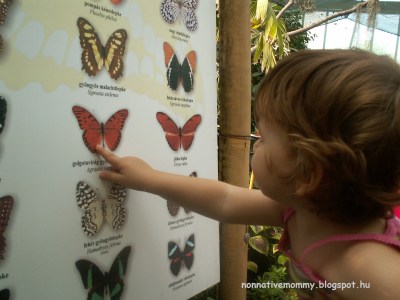
E.’s favourite place was the Butterfly House, where we could see how butterflies come out of their pupa, and of course, there were plenty of different types of butterflies flying around, eating oranges or just resting on the plants. We had to go back once again before leaving the zoo. E. was running around and one could see on her little face how amazed she was. Her favourite animals are butterflies at the moment.
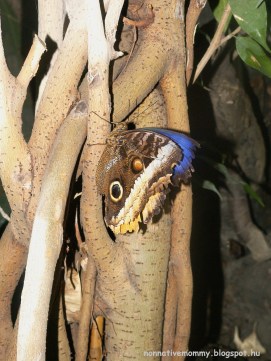
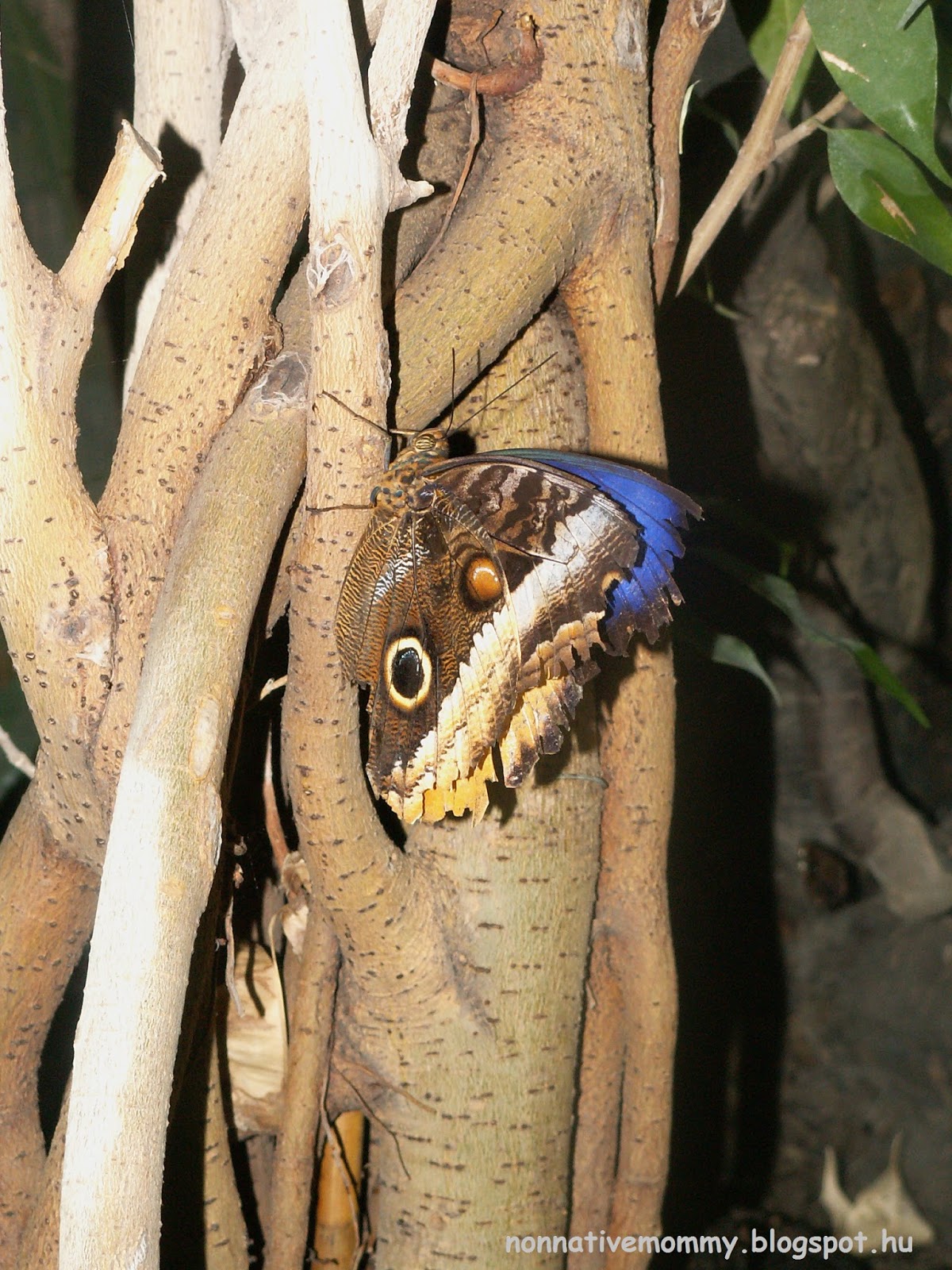
Morpho peleides butterfly – blue on the inside
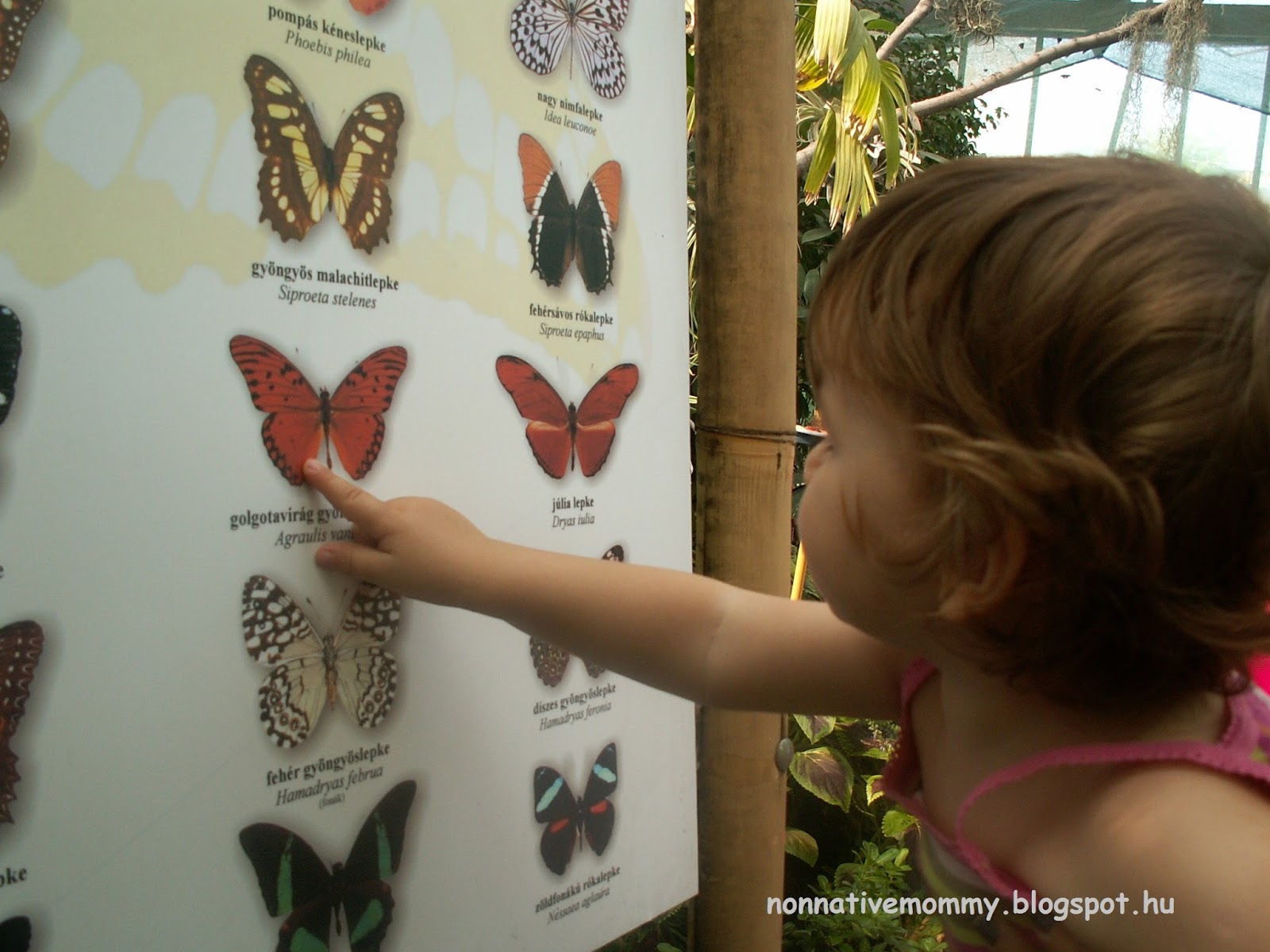
E.’s pointing at the butterfly she liked the most, saying: “orange”

After the zoo experience I found a nice page where the metamorphosis of a butterfly can be seen quite nicely. So I printed it and E.”coloured” it 🙂 with my help.

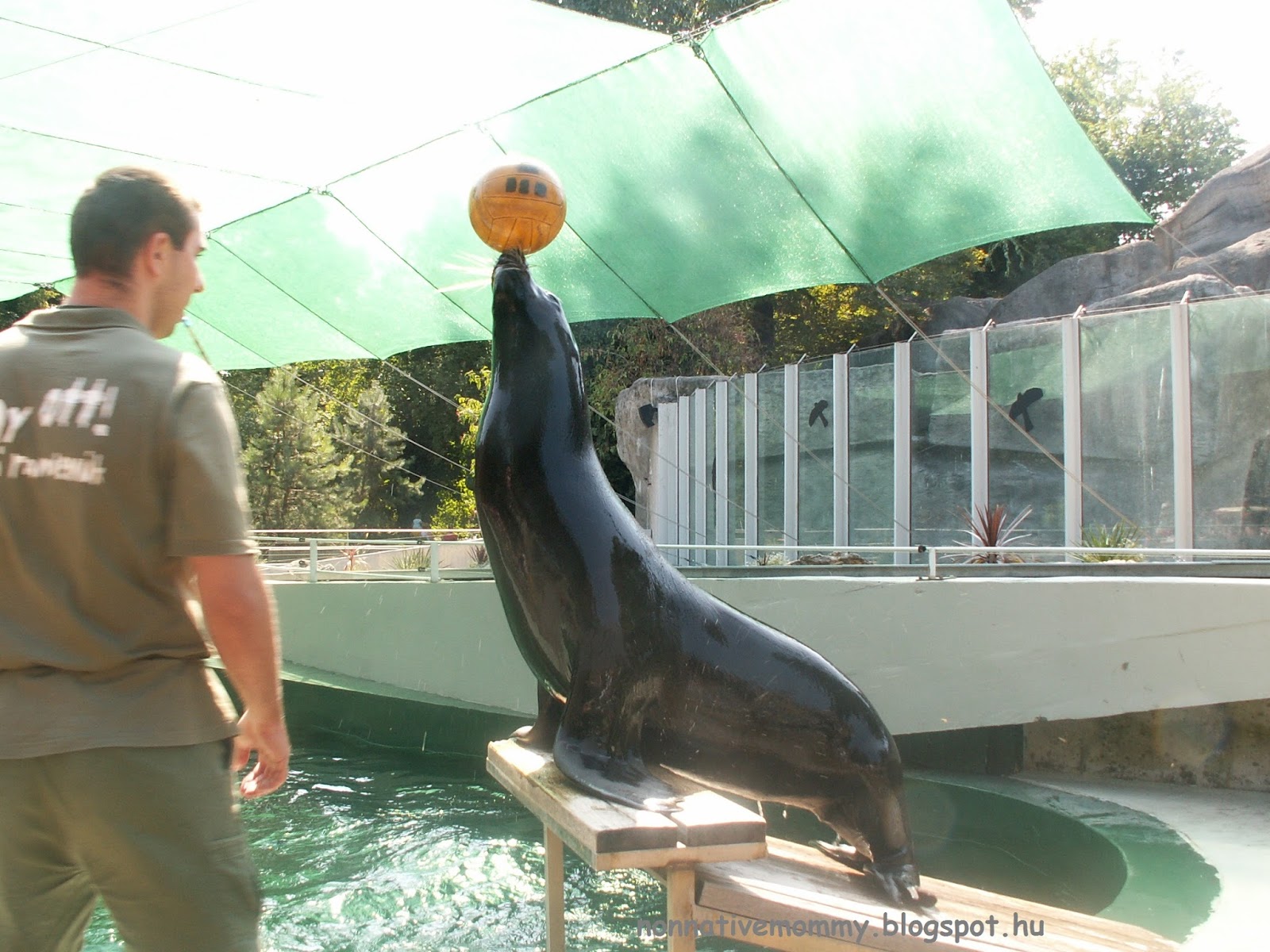
We also watched the seal show at 11 o’clock. A big crowd gathered to see the seals but everything was explained in Hungarian only. (Sorry A., I didn’t interpret it at all 😦  )

E. was fascinated by the ball (and not the seal…)


Baby Giraffe

E. was sleeping when we went to see the Neanderthals. It’s a relatively new exhibition of a (wax) Neanderthal family. This little boy with the cave drawing was my favourite.

After E. woke up we had some lunch (vegetable dish for E. and sandwiches for A. and myself – I wish E. hadn’t said “people” for the first time while I put a spoonful of her dish into her mouth)


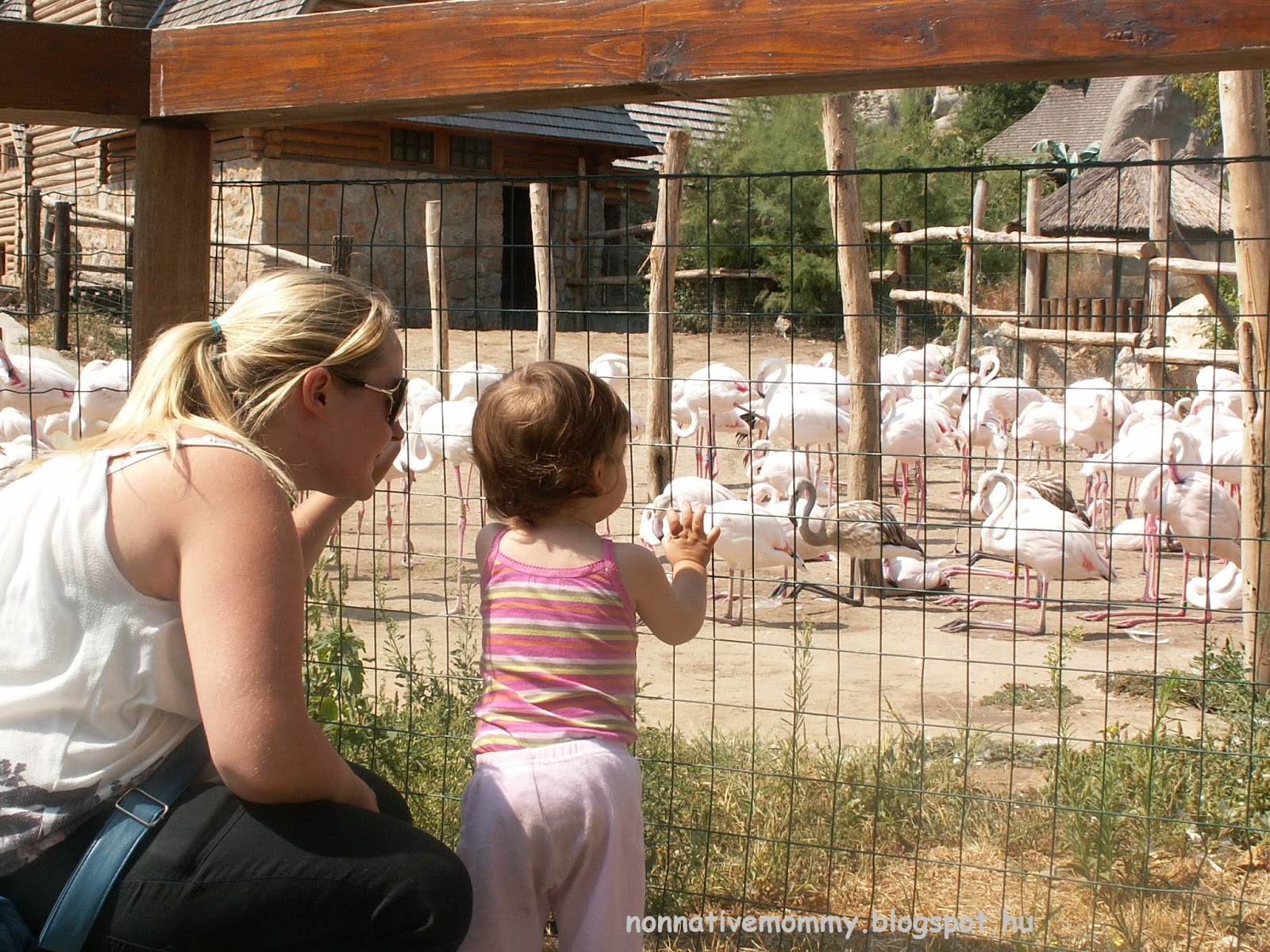
Flamingoes

We also went to see the baby elephant, but E. was more interested in a turtle shell:

Another favourite place was the traditional Hungarian farmyard. Rabbits were E.’s favourite. We had to return for a second visit. E. was repeating the words like “rabbit”, “hop”, “carrot” and “apple” all the way through. E. had an incident with the foal, which wanted to eat her shoes.

All in all, we enjoyed ourselves to a great extent and will return to practise our English as well as having fun around “amimals” – as E. says.

More and more words

Just a short post on how our language development is going. E. is 15,5 months old and about a few weeks ago I stopped counting how many English and Hungarian words she knows.
Now here are some random interesting features of her language knowledge:

English:

  • she knows all the main colours (in both languages)
  • loves saying 3 (or more) -syllable words (aubergine, apricot, butterfly)
  • started to say combination of words (green peas, red rose, purple plum, yellow balloon)
  • she says what she really wants in both languages (more-még, drink-inni, bread-kenyér etc.)
  • her functional language is outstanding – she says thank you, Mommy – when she gives something back to me or when I give her something, here you are (not clearly though – it sounds like: heeyaa), please – when she asks for something, don’t like it – if she doesn’t want to eat something
  • sometimes she sounds like saying a sentence that she doesn’t do in Hungarian (it’s incomprehensible, though)
  • when she points at a spider she says: incywincy
  • potty time is mostly in English so she rather says poopy and peepee
  • prefers songs in English

    Favourite songs now:

  • loves to watch/sing/chant the English alphabet
  • E. likes certain books in English, though I “read” most books in both languages
  • Still, her favourite is Fran Manushkin: How Mamma Brought the Spring

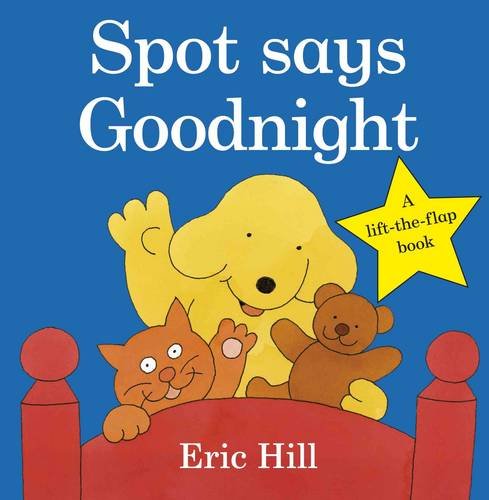
    But she also takes pleasure in Great Day for Up! by Dr. Seuss and Goodnight, Spot by Eric Hill nowadays.

    Hungarian:

    • she is trying to say long words (more than 4 syllables) – palacsinta
    • prefers the countries in this language (her favoutite one to say is Svájc, and her favourite flag is the Belgian – because of the black in it -, though she cannot pronounce it clearly)
    • when she sees the Turkish flag she starts to chant: pont, pont vesszőcske, készen van a fejecske, kicsi nyaka, nagy a hasa, készen van a TÖRÖK basa – her utterence is 50% right, but the intonation is perfect
    • prefers rhymes in Hungarian (Boci, boci tarka, A török és a tehenek)
    • she says tetszik  if she likes something or someone (doesn’t say it in English)


    Some cute details:

    • her favourite animal is the penguin at the moment
    • out of nowhere she calls out her native nanny’s name
    • her favourite colour is black, though she says pink or purple
    • her favourite body part is her belly button (when she has a look at her own, she makes us show ours)
    • her favourite flower is carnation
    • she claps after pooping
    • she loves drawing (onto the parquet, at the playground, on sheets of paper, on the door – but not on the wall yet)
    • she pronounces Peppa Pig as if she were a little native British girl  🙂

    Helen Doron Baby Days

    We took part in the so-called baby days at Helen Doron Language School. During the summer holidays (in July and August) a one-week intensive course (in both months) is organised by the school not to waste the whole summer.

    This month we participated in the first 3 days only, as our native nanny comes twice a week now (Thursday and Friday mornings). I wouldn’t like to miss her.

    The baby days are different from the usual course. The days are organised around a topic or more (because of the revision). There were two moms and their little ones from our group and 5 other kids (aged about 1,5-2). The 9-o’clock start was a little rough but we made it.

    First day:

    The colours and shapes were introduced, (or for the bigger kids) practised during the lesson. So all the toys and games were played focusing on the basic colours: red, blue, green, yellow, white, and much to my surprise, purple and orange.
    There were colourful flags, a new colour song (Colours for everyone) and of course, the old songs as well (Waving song, Uppety song just to mention one or two). The colourful balls also came out of the box, much to E.’s delight, not to mention the building blocks (together with the Stacking song), though E. can’t really build yet, but destroy.

    I would like to emphasise one of the activities that E. liked the most and I’m planning to make it for her. Matching colours activity: pieces of coloured paper are cut, laminated and a piece of Velcro is stuck on the back. Kids need to stick the right colours to their places on a sheet of paper where the colours are signed. I’ll attach a photo to the home-made tools post as soon as I make it.

    Second day:

    The colours and shapes were revised a little bit (the best game was colouring shapes with baby paint or crayons – see the picture above – that we could take home) and then means of transport were introduced: cars, trucks, buses, tractors, aeroplanes, wagon, bicycle (I didn’t really understand why we didn’t use bike instead of bicycle or plane instead of aeroplane)

    Again there were a lot of moving around (with paper plates that have cars, trucks or buses on them – we were imitating driving them)

    Third day:

    Daddy took E. to the lesson where, apart from the previous days revisions (shapes, colours, transport), there were some coloured paper planes to fly through a ring and numbers were covered as well (counting pegs etc.) . There was a new song: Elephant song also connected to counting up to 5. Alas, Daddy could not remember all the details of the lesson, so that’s all I know about it.

    All in all, these three days were fun, the only drawback was that we were too many (8 moms with 8  kids). However, I think we are going to pay for the next session in August, too.


    Helen Doron Early English – First Impressions

    Putting aside my scepticism, few weeks ago we took part in a mock lesson at the Helen Doron school nearby. The teacher, Zs., was really kind, gave us all the information we needed (about the course booklets, CDs, prices, summer programmes, the course itself). She was well-prepared for the lesson (even had a little piece of paper with the lesson plan, CD track numbers etc., which E. wanted to steal). She’s got a relatively strong Hungarian accent. I would be happier with a native speaker, but you can’t have it all.

    The lesson was only 20 minutes long. The usual lesson is 45 minutes otherwise. We have already known one of the songs which is also available online and E. recognised it showing it with a wide smile and arm flapping when it started:

    In the past I had already visited a lesson in another school, where the teacher was nice as well and the lesson could have gone well, however the parents present were a pain in the neck. So this time I was worried about the other moms. Luckily, the whole session was a pleasant surprise. Three mommies were there with their little ones and after we’d chatted a bit, it turned out they also think in the same way as I do. They want some useful activities for their kids. None of them was smarty, bossy or pushy as for the language learning. (At the previous place moms corrected the teacher, talked in Hungarian with their kids during the lesson, bombarded the teacher with their idiotic questions after the lesson. None of these happened here.)
    So we went home cheerfully. I discussed the details with D. and we decided to go for it.

    The course has just started we are at the very beginning. It’s hard to draw any conclusion, but so far so good. We are enjoying it. I found the CD material quite entertaining, nicely put together and only about 10 minutes long. According to the instructions, E. needs to listen to it twice a day. We manage to do that. We have a long list of songs she listens to while I’m doing housework, so I included the Helen Doron tracks into our morning routine.

    The school premises are basic, though. The classrooms are okay, they are well-equipped. Still, I think the flashcard, pictures should be re-laminated every now and then.

    The prices are reasonable. If we do not calculate the booklets and CDs, on a monthly basis it costs as if you were going to a costly playhouse once or twice a week.

    Of course, hiring a native nanny at the same fee would be the best, but I want E. to be in another surroundings, meeting other people, kids.

    In the back of my mind it is also there that some moms might be interested in MEC. I’ll give them a flyer soon.

    I’ll be back posting on Helen Doron Early English more, when I have more to talk about.