Some more autumn crafts

As I said before I love autumn. Not only is it beautiful but also gives us a lot to talk about and plenty of opportunities to be creative.

Here come our new projects concerning autumn:

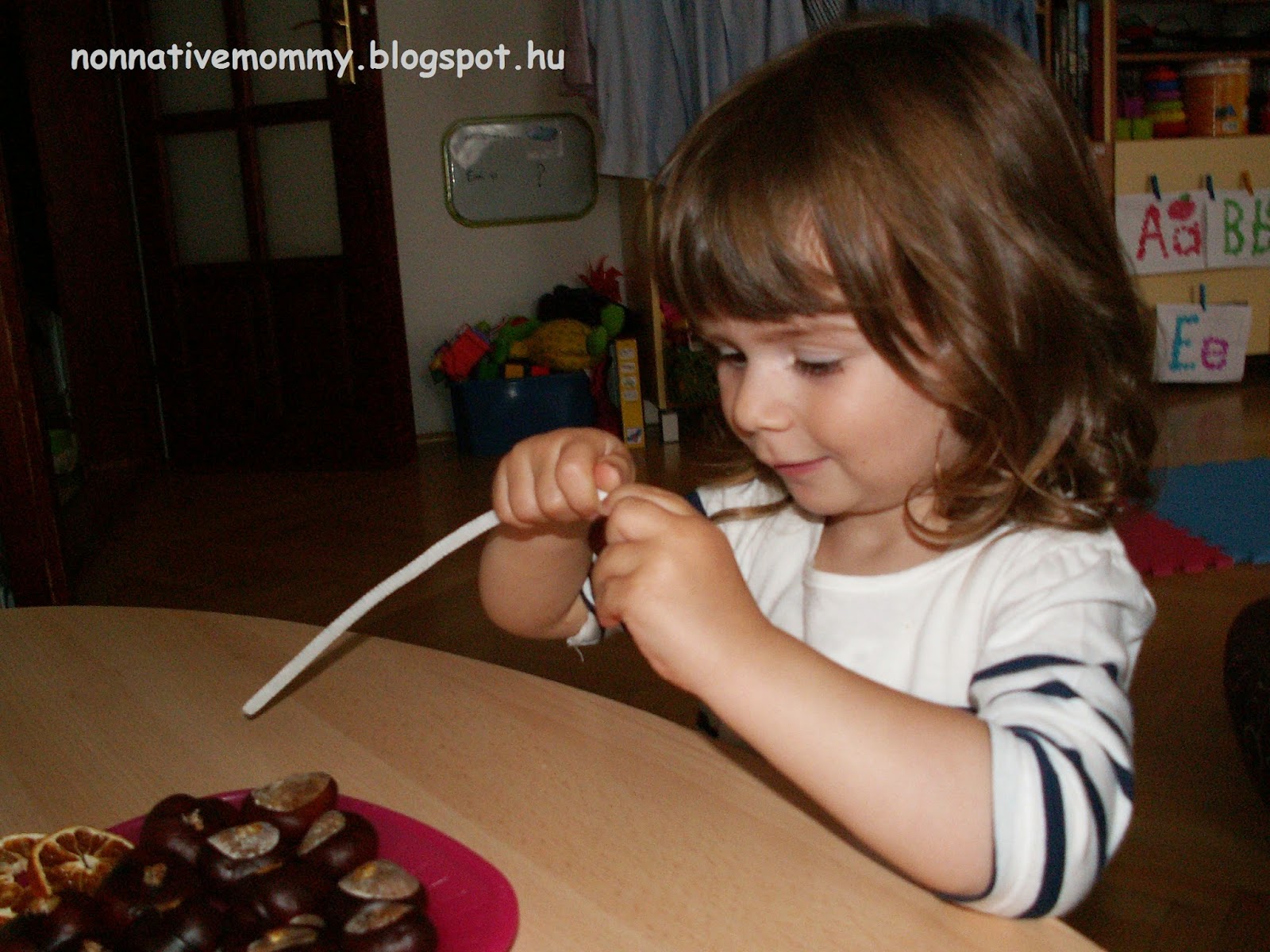
  • Very Hungry Caterpillar out of conkers and dried orange slices (googly eyes, pipe cleaners and glue sticks).
I made holes in the conkers with a screwdriver
threading the conker
then the orange slice
gluing the eyes on
caterpillar heads
caterpillar bodies
Let’s make them friends
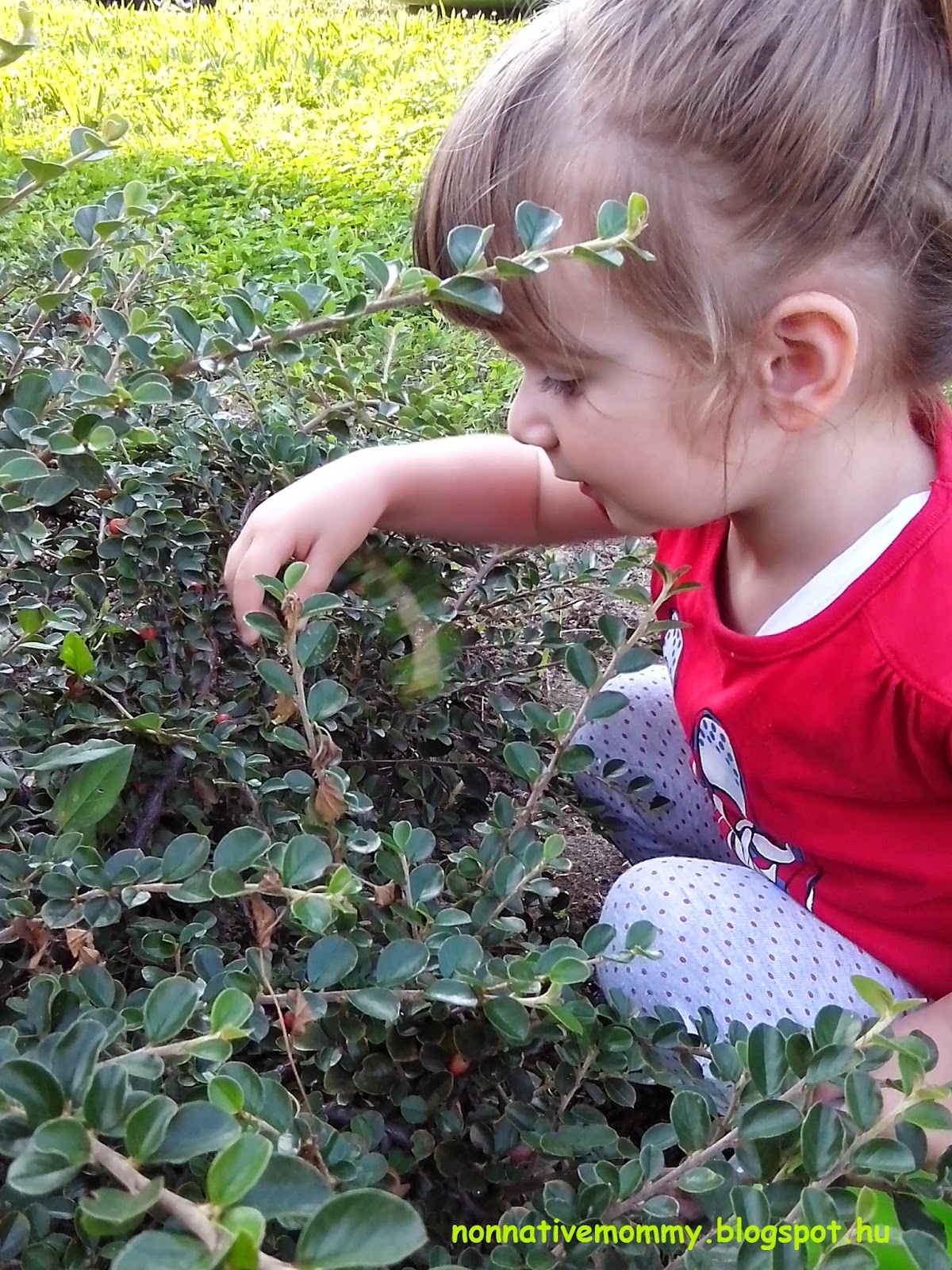
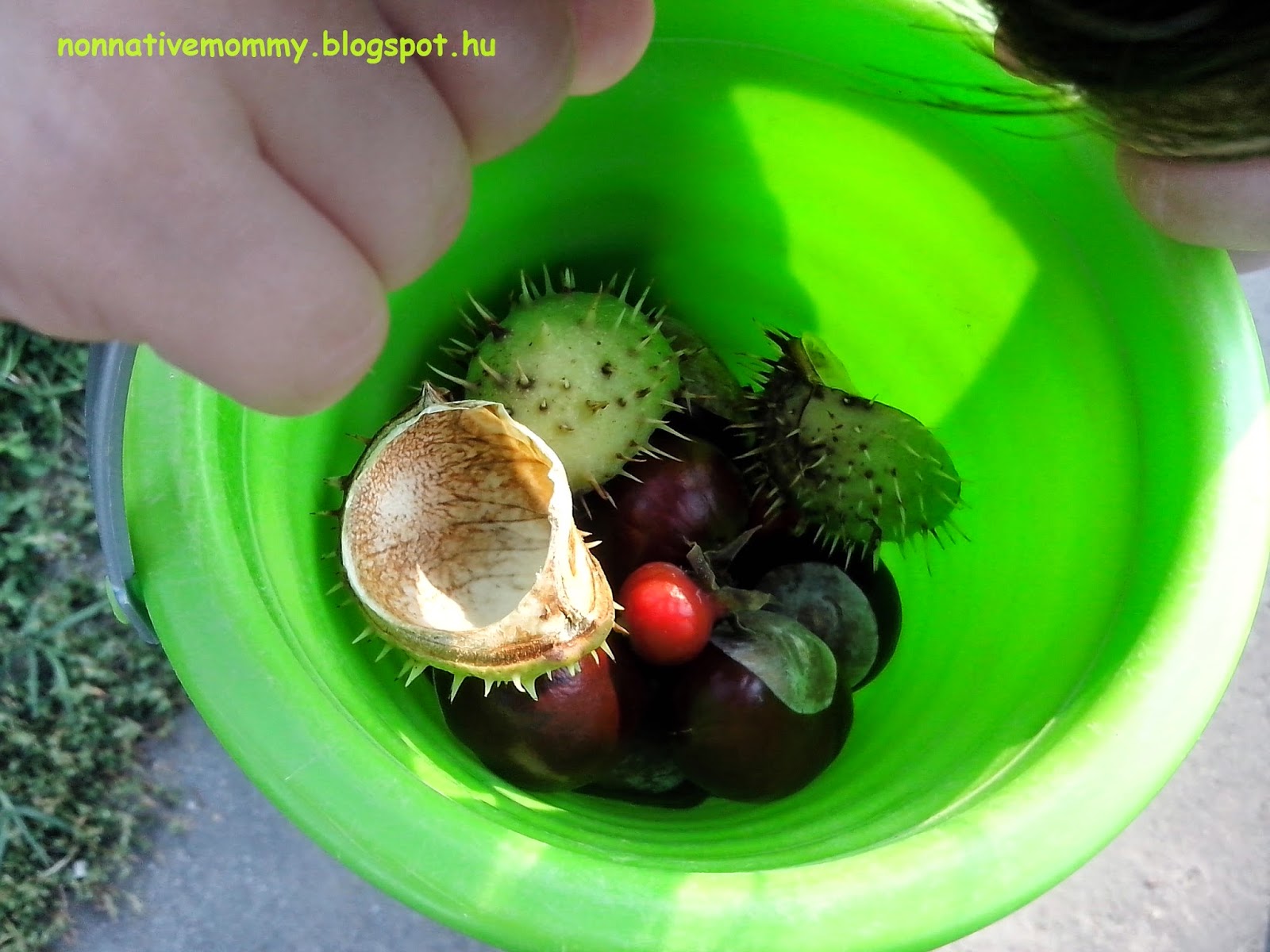
  •  Autumn Nature Hunt – one day when we came home from the nursery I’d packed a bucket for E. to be able to collect whatever she found on the way home. (More simple picking and collecting whatever we find; not as directed and focused as the Tray Nature Hunt we did in the spring)
The next day we were sorting, grouping and naming them:
end result
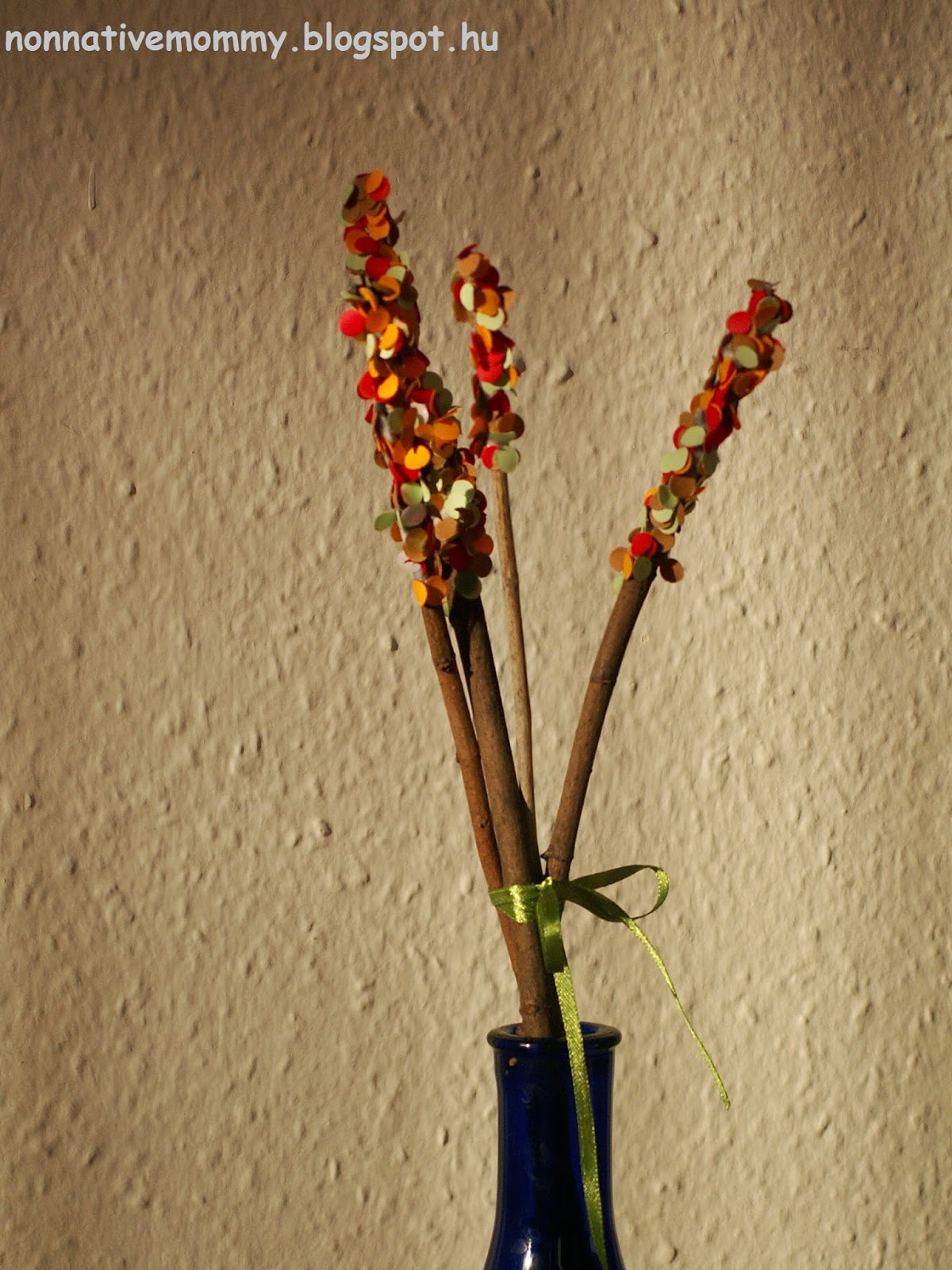
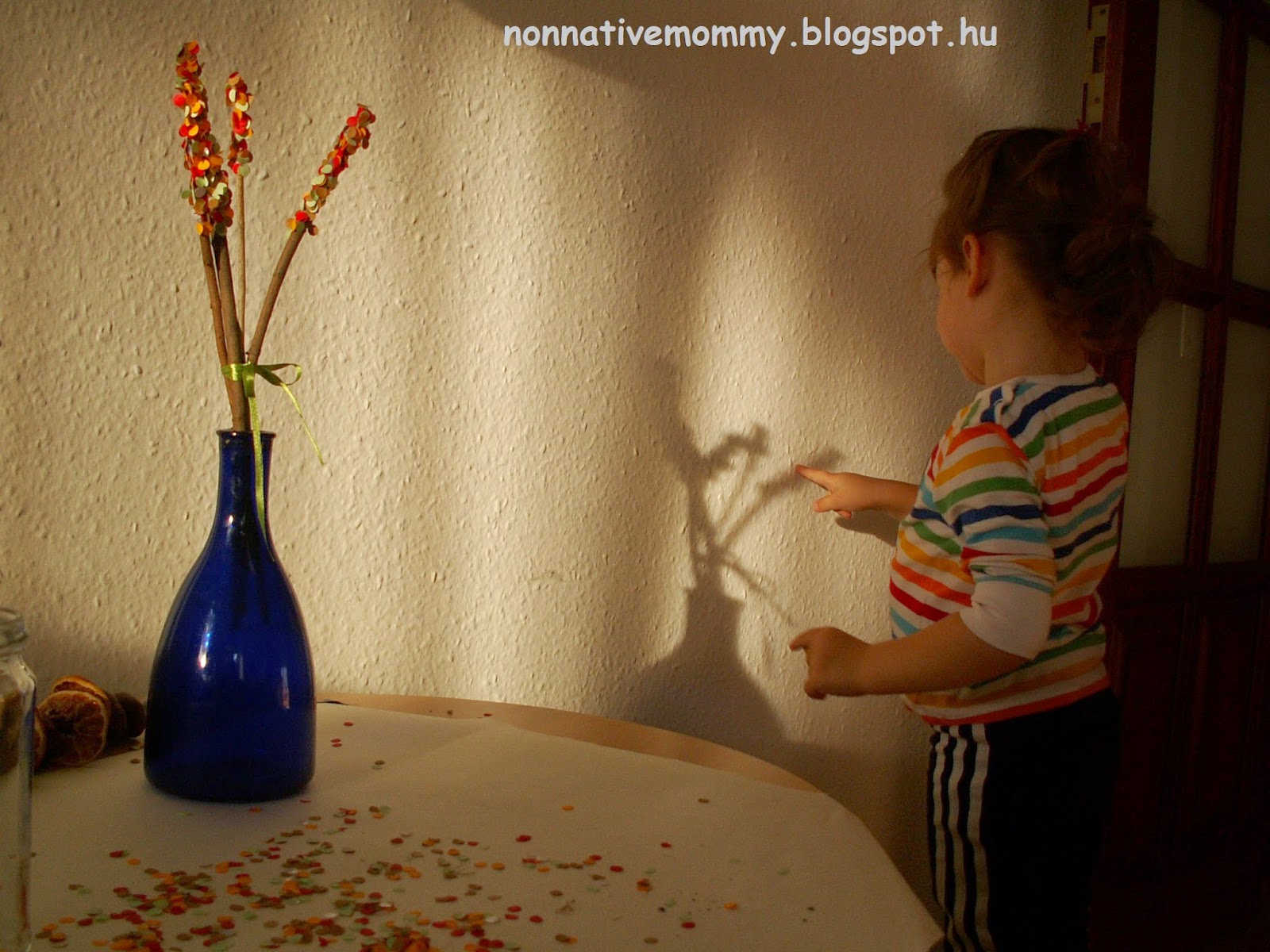
playing with autumn shadows

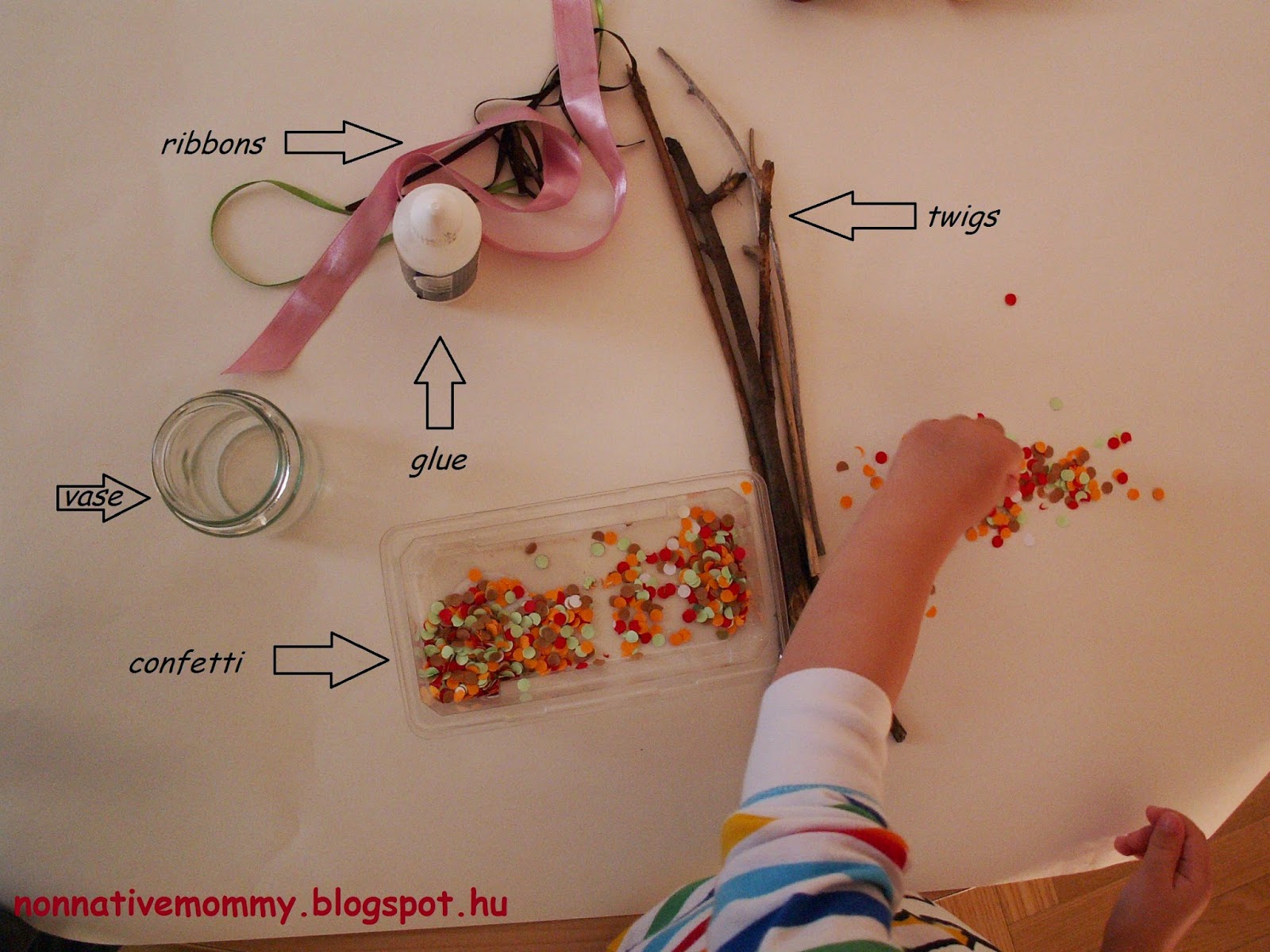
We covered a great number of autumn vocabulary (leaves, trees, berries, colours – just to list few topics), and also the process of sticking, gluing, sprinkling, threading. I’ve just realised that E. is more and more interested in short craft projects and it means a lot of language input. We won’t stop. I’ll come back with more.

Housework fun

As E. doesn’t really like playing alone and wants to be with Mommy all the time we need to do housework together. Actually, she is a great helper and likes taking part most of the times. I’ve read a lot about Maria Montessori and her method on the net and in this book:

I do not wish to popularise her method, I just found some interesting points I can build in my parenting theories and also in our bilingual journey. One of them is:

“He who is served is limited in his independence”

Doing housework together means a lot of language input, quality time together and E’s preparation for real life assisting her in her developing independence.

IN THE KITCHEN

– Preparing food for cooking

Opening pea pods help to develop E’s fine motor skill.
She could examine how the peas are in the pod.
She also learnt a sequence: taking one pod out of the bag, putting the peas in a bowl, placing the empty pod in the rubbish bag.
She can help wash the peas, but as soon as I turn the hob on she is finished in the kitchen.

Vocabulary newly learnt or practised:

     green peas
     pod

     crack

     separate

     throw it away
     grub
     off
     tiny


cutting the butter-bean up

examining the inside
placing the beans into a pot
Using a knife is something E has been longing for. With my very close supervision she had the chance to try it and found it hard: – Mommy, cutting is difficult.
Helping make the bean dish didn’t mean she ate it 😦 although according to some blogger moms, their children became really enthusiastic to eat the food they prepared themselves.
Vocabulary newly learnt or practised:
   chopping board

   knife, knives
   pot (stripy, big, empty, full)

   butter-bean

   bean dish
   What’s yummie for you? (offers the practice or revision of a lot of food)

   wash

   dirty, dirt

– Baking:

whisking

I made this rhubarb cake


Baking a cake has a better chance of success in the eyes of your child. They are more likely to consume what they made. It also involves a lot of kitchen tasks and equipment and the activities have to follow each other quickly, which keeps up the interest of a young kid. Developing gross motor skills is also a key point here, like whisking, mixing, measuring, stirring, pouring etc.

Vocabulary newly learnt or practised:
   flour
   baking powder
   rhubarb

   cake
   scales

   measuring spoon
   wooden/mixing spoon
   bowl
   whisk
   mix
   stir
   grab

   crack an egg
   white/yolk
   lick the spoon 

   apron
   delicious
   tasty
   sweet
   sour
   hot
   dangerous

   baking try
   heat the oven

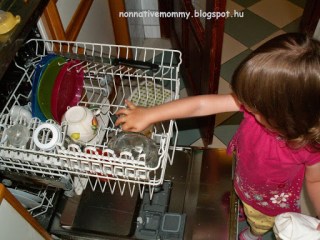
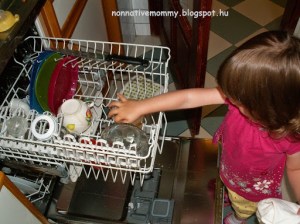
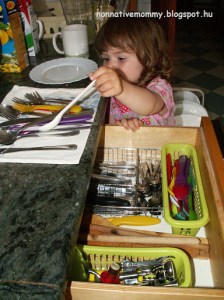
– Packing in and out of the dishwasher:
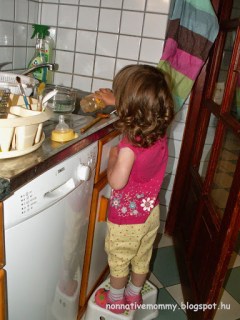
emptying the baby bottle into the sink

putting the baby bottle into the dishwasher

placing the cutlery into their draw

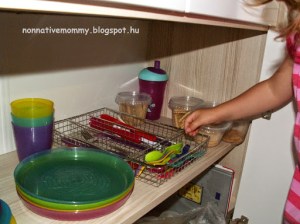
 After a while I rearranged a shelf so she can easily reach her spoons, plates and glasses.


This is E’s favourite household chore. No matter when I ask her to help with it, she never refuses. (It’s not the case with hanging the clothes to dry). Also, she practises with this chore how to select and group similar objects, to name the objects and say their colours or material. She also learns where to find things she needs around the house.

Vocabulary newly learnt or practised:
   cupboard

   cutlery
   tablespoon
   fork
   knife
   teaspoon
   ladle
   glass
   mug
   cup
   pot
  bowl
  plate
  draw
  sharp
  dangerous
  carefully
  place
  baby bottle
  plastic
  steal

IN THE BATHROOM

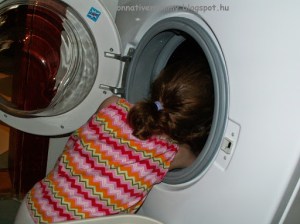
Another pleasant activity for E is to help with the laundry. Packing the clothes in the washing machine is not as much fun as pulling the wet clothes out.

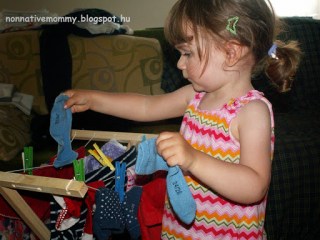
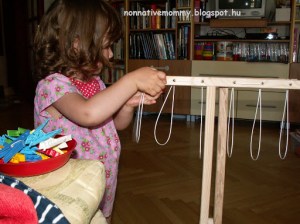
 Usually we put some of her clothes in a separate basket and while I’m putting the adult clothes on the rack, she is putting hers on a smaller rack (which we bought at REGIO toy shop but also available at Fakopáncs online toy shop)
hanging the clothes
opening the dry rack
fixing it with a peg
socks
matching socks with Daddy
on the way to the draw to put the socks away

This is not her favourite activity but she uses her English (and Hungarian) a lot when she is in the mood to help.

Vocabulary newly learnt or practised:
   washing gel
   softener
   dry rack
   hang
   line
   clothes peg
   match
   carry
   fix
   dry
   still wet
   pull out
   pack in
   laundry basket
   dirty
   clean
   take off
   names of clothing (socks, tights, trousers, shorts, T-shirt, blouse, panties, vest etc.)
   Daddy’s, Mommy’s, E’s

MISCELLANEOUS

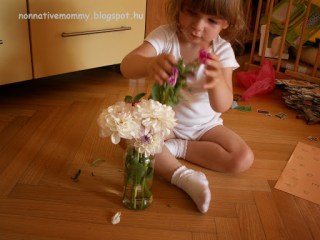
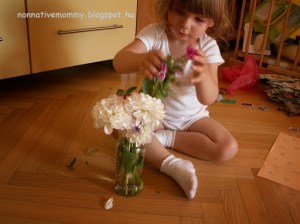
The best part for me is when we decorate our home together. Of course, when she paints or creates something I put it on the wall or in her room. However, she takes pleasure in decorating for us not only for herself. At the market we bought 2 bunches of flowers and she made them into 4, arranging them in small vases.
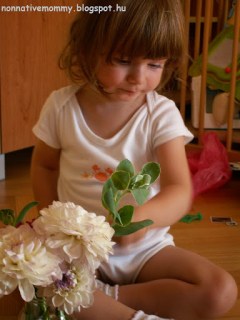
adding some green leaves to the dahlias

we need some pink in this composition

She also enjoys watering the plants on the balcony.

Involving her in the household chores was one of the greatest idea and I’m really glad she likes it, too. It gives us the opportunity to be together, to practise her languages, to experience some practicalities of everyday life and to help her become more and more independent.


Spring nature hunt with a muffin tray

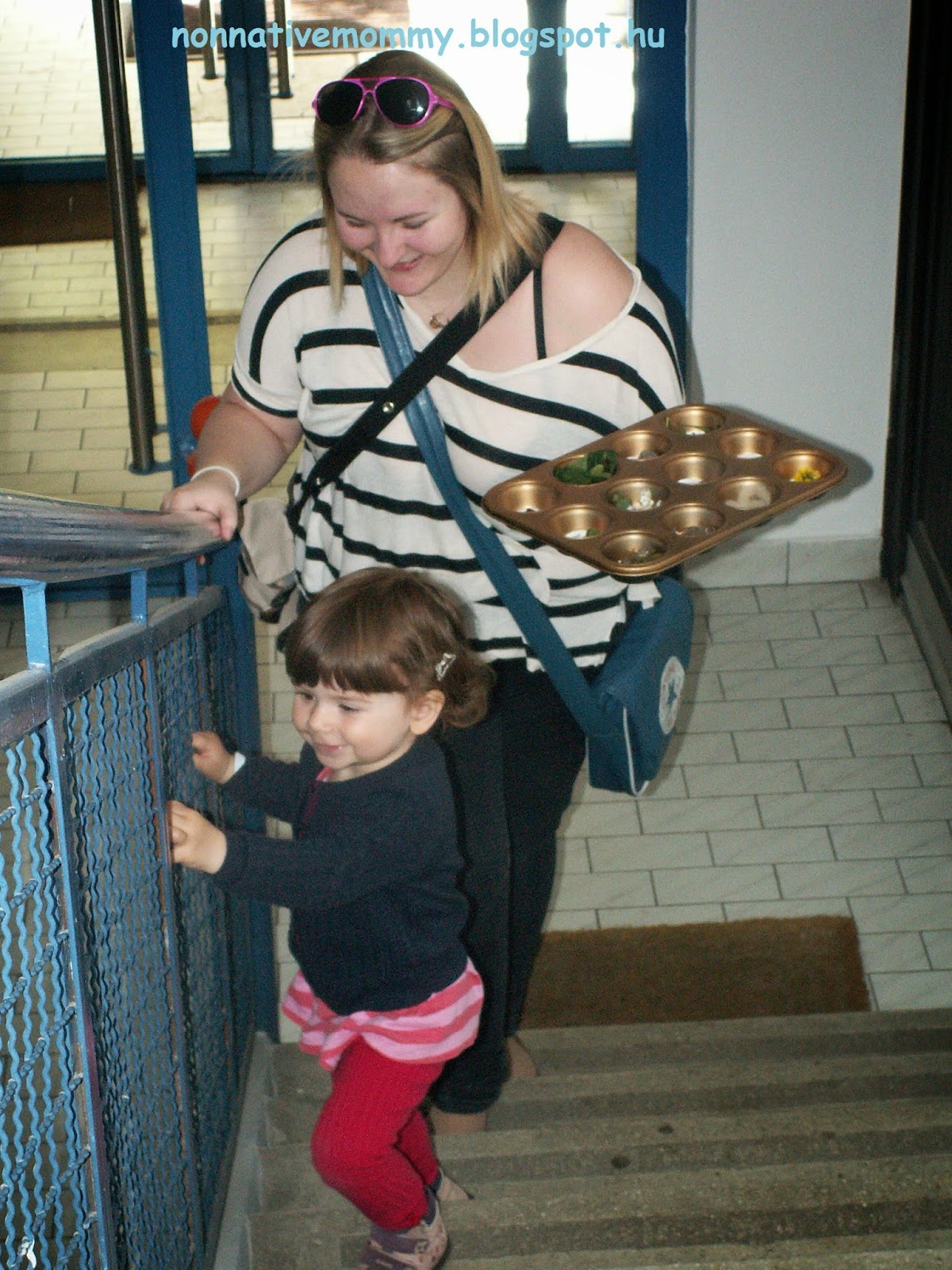
Spring has arrived, together with some rain but luckily today it’s been sunny so we went out for a spring nature hunt.

I got the idea on mamapapabubba.com. This blog is written by a Canadian mum, Jen and she’s got great ideas I love stealing. The spring nature hunt is one of them.

So I was in a rush to prepare everything, because in the park where I was planning to do the nature hunt the grass is growing very high and it is likely to be mowed in the near future. Then we would lose all the wild flowers, high grass and our fun activity.

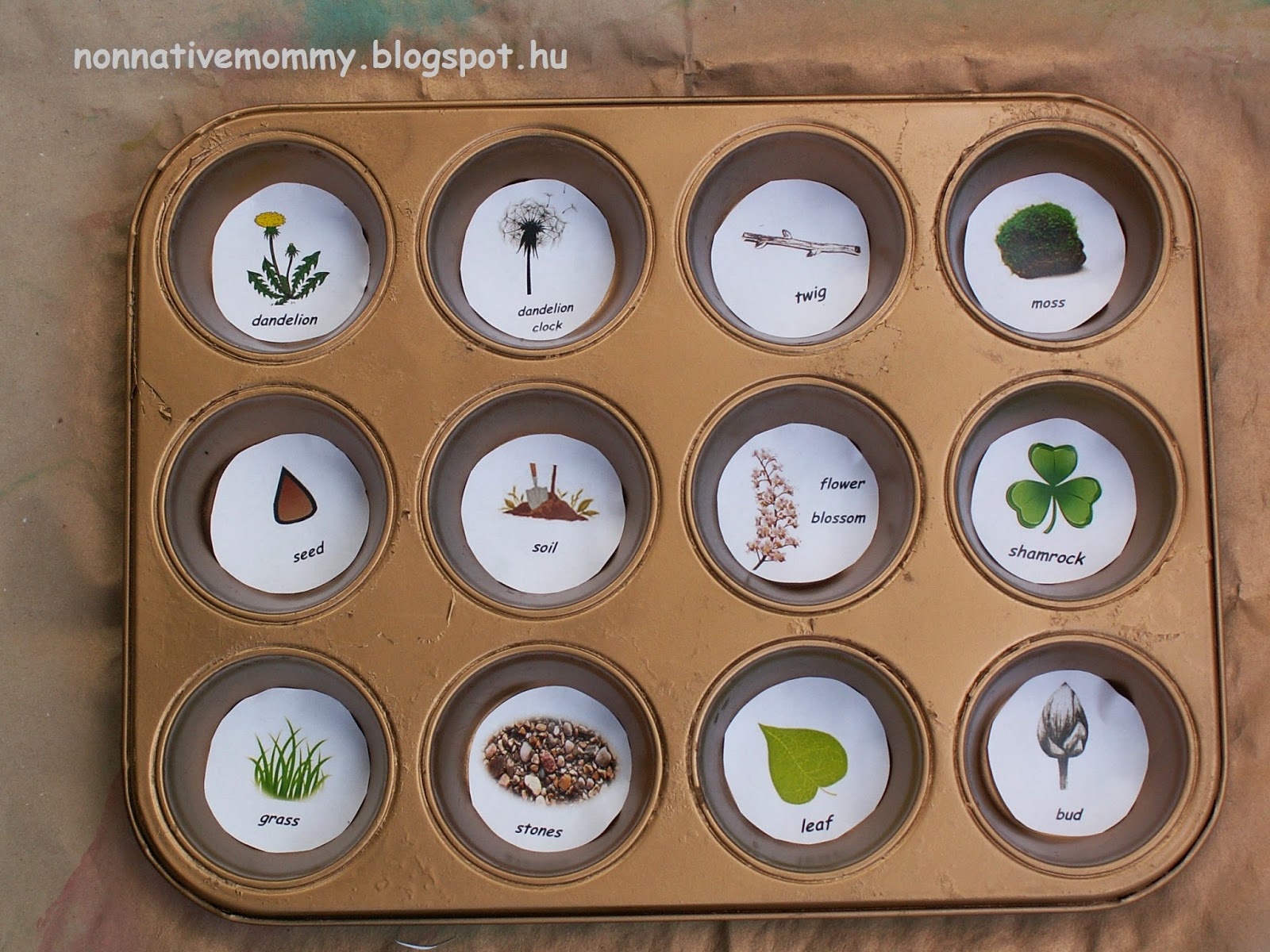
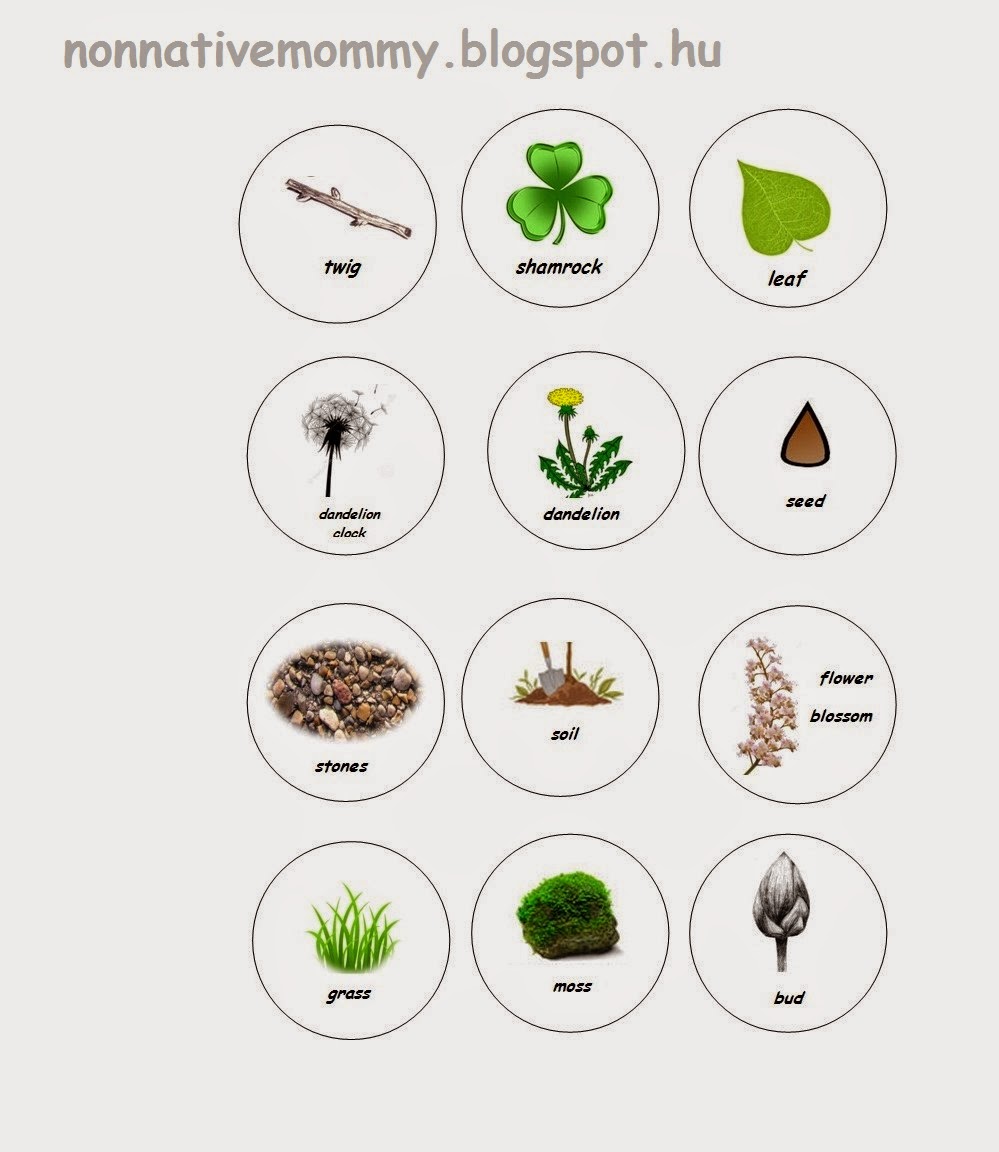
I’ve got and old muffin tray. It was in a very poor condition, so I sprayed it gold. This served as the receptacle (= a new word for me meaning: a container for storing or putting objects in) Then I asked Daddy to print the pictures of some nature items that I’d put together the previous night.

Our native nanny, A. arrived at 10.30 today and we were ready to set off.

E. is identifying what to look for

At firs E. was carrying the tray around, then we put it in the push chair.

E. is not a great fan of walking (she prefers to be carried), but this time she was running around looking for the items on the list, filling up the tray.

I thought it wouldn’t be easy to find seeds, so I took some wheat seeds with me from home, but A. was very attentive and found some. I didn’t need to fake anything 🙂

wheat heads

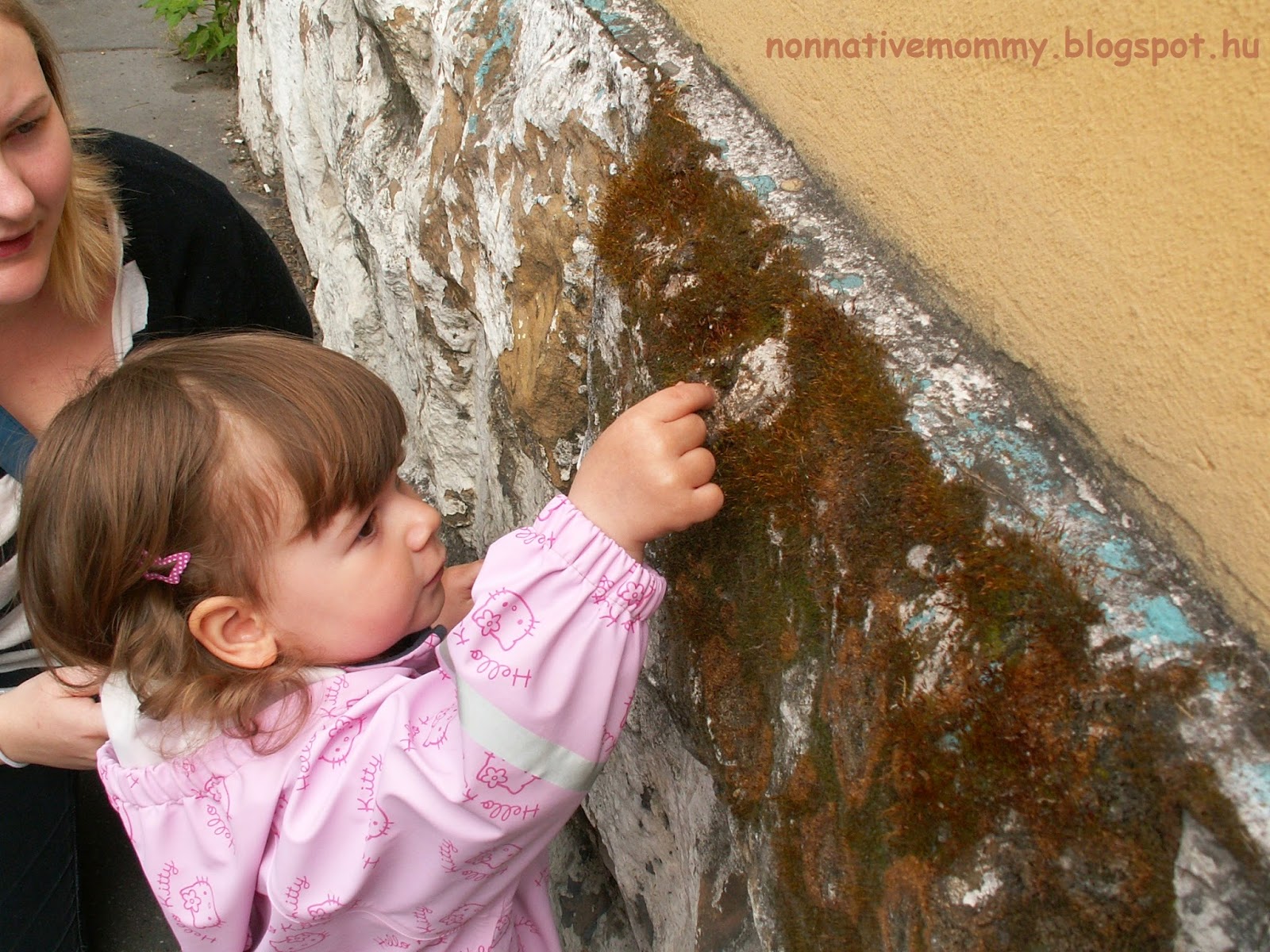
I knew exactly where we could find some moss. (E.’s favourite word from the list)

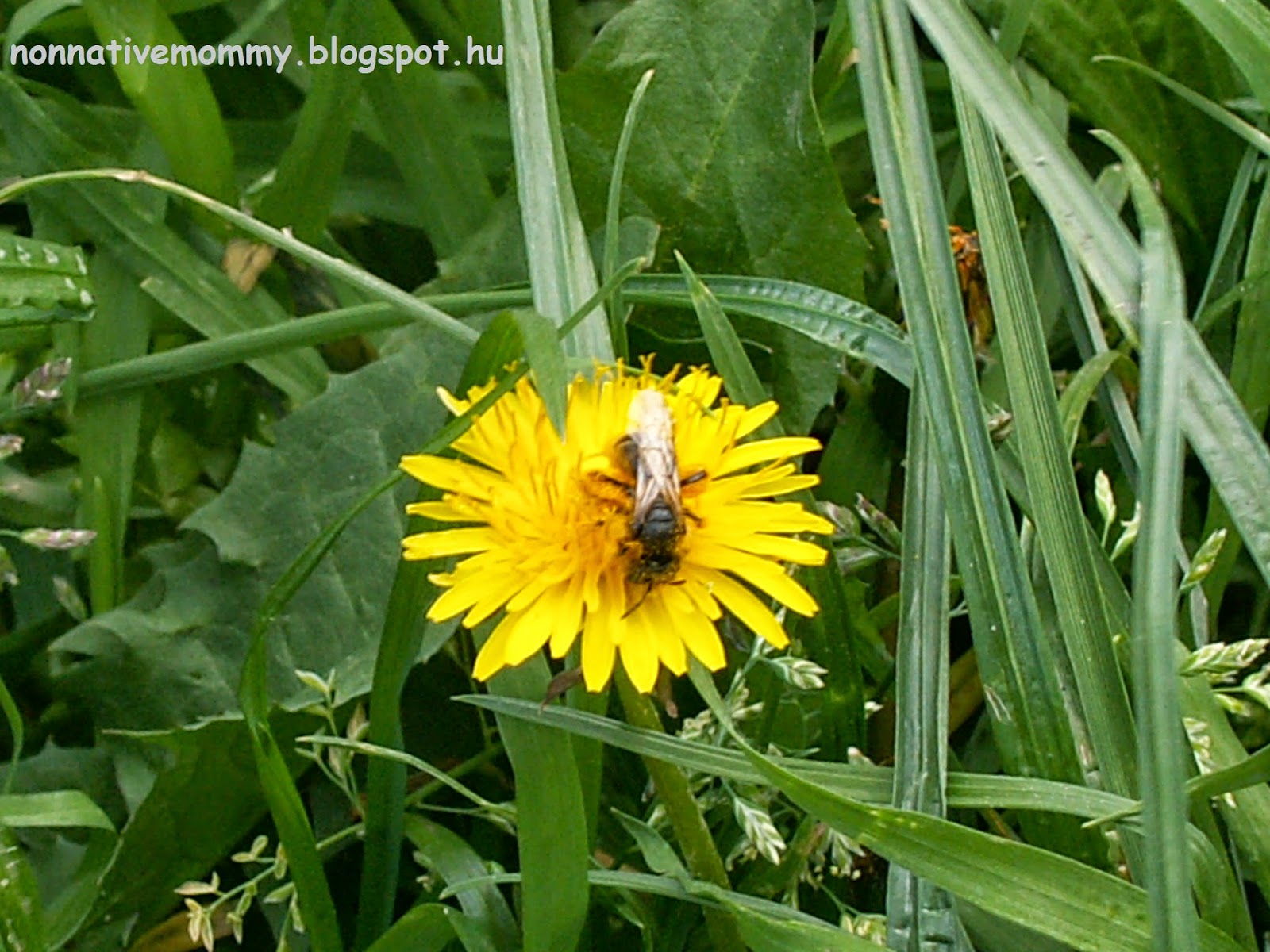
We also bumped into some bees and beetles we needed to observe closely.


One of E.’s favourite flowers is the dandelion and its clock. Now she didn’t blow the seeds away, but collected them in the tray.


E. succeeded in tucking a big horse chestnut tree leaf in the hole. Well done, girl!

We found a shamrock with four leaves. We’ll be lucky 🙂

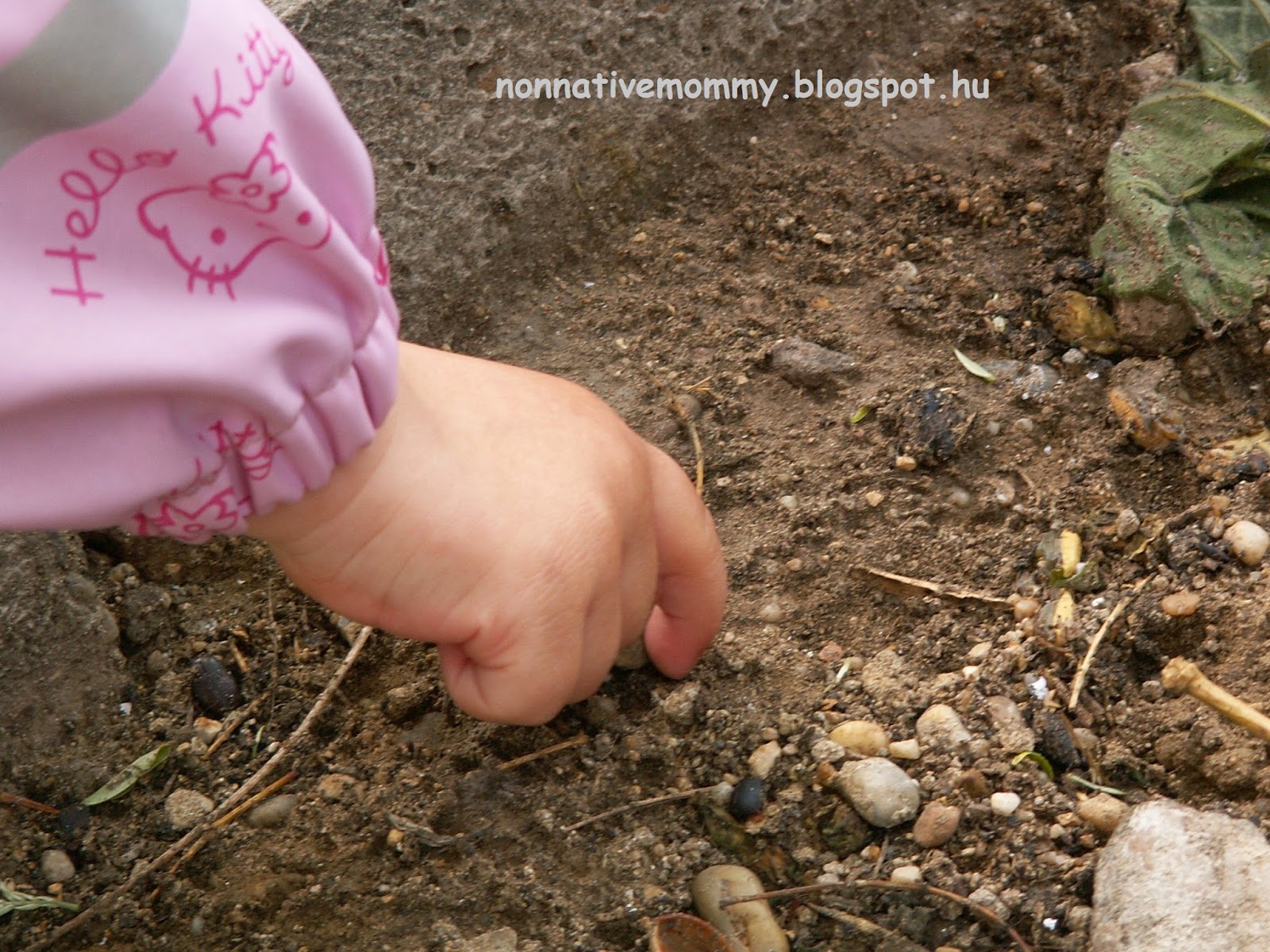
Finding soil fascinated E. the most.

It was hard to find buds, but we managed in the end.

At home A. and E. went on to read E.’s nature book she got for Easter.


I’d like to thank Jen for the great idea. We spent a lovely hour with searching, enjoying the sunshine and learning a lot about nature.

Shapes, shapes, shapes – there are all sorts of shapes

E. is into shapes to a great extent. About 2 months ago (when she was 16-17 months old) she already knew all the basic (and some not so basic) shape names. So it made me think what we can do to practise and play with the shapes in more varied ways.

When E. was quite small, around 6-8 months old, we watched and we’ve still been watching the following videos concerning shapes.

The Shape Song

Shape Song 2

We have some new favourites. While we are watching some of them she bursts out with laughter, like in case of the following:

Miser Maker: I am a shape

The next video might seem very monotonous and boring but my daughter loves it and sometimes wants to watch it 4 or 5 times.

What shape is it?

There are a lot more videos on shapes but I do not want to bore you. You can search for them on youtube.

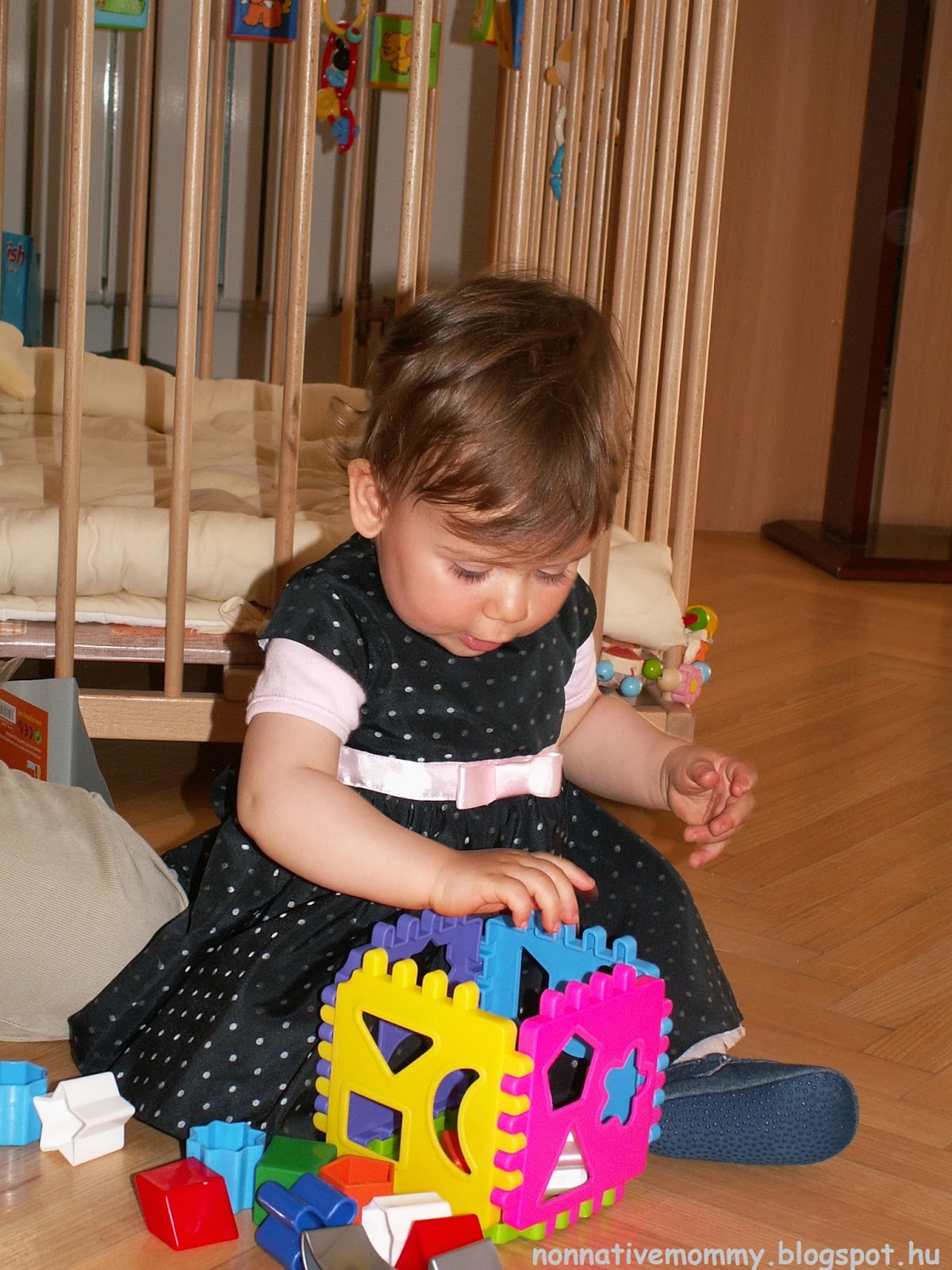
E. got a shape cube for her first birthday, but she was totally untouched by it after taking a first look.

Birthday present with potentials

Mostly, I was playing with it and she was watching, or was just playing away next to me. When she was about 14-15 months old, she started to name the shapes out of the blue, much to my surprise.We also use the shapes of the cube to match shapes in a little bit more different way. I took out a piece of paper and 9 shapes from the cube (I don’t know why 9… it could have been 5, 7 or 10. It was a sudden idea.). With the help of a brown crayon I drew them around (E. was watching closely and tried to help a bit too 🙂 )

Then I gave her the shapes and I didn’t even have to tell her what to do. She started to put the shapes on the paper.


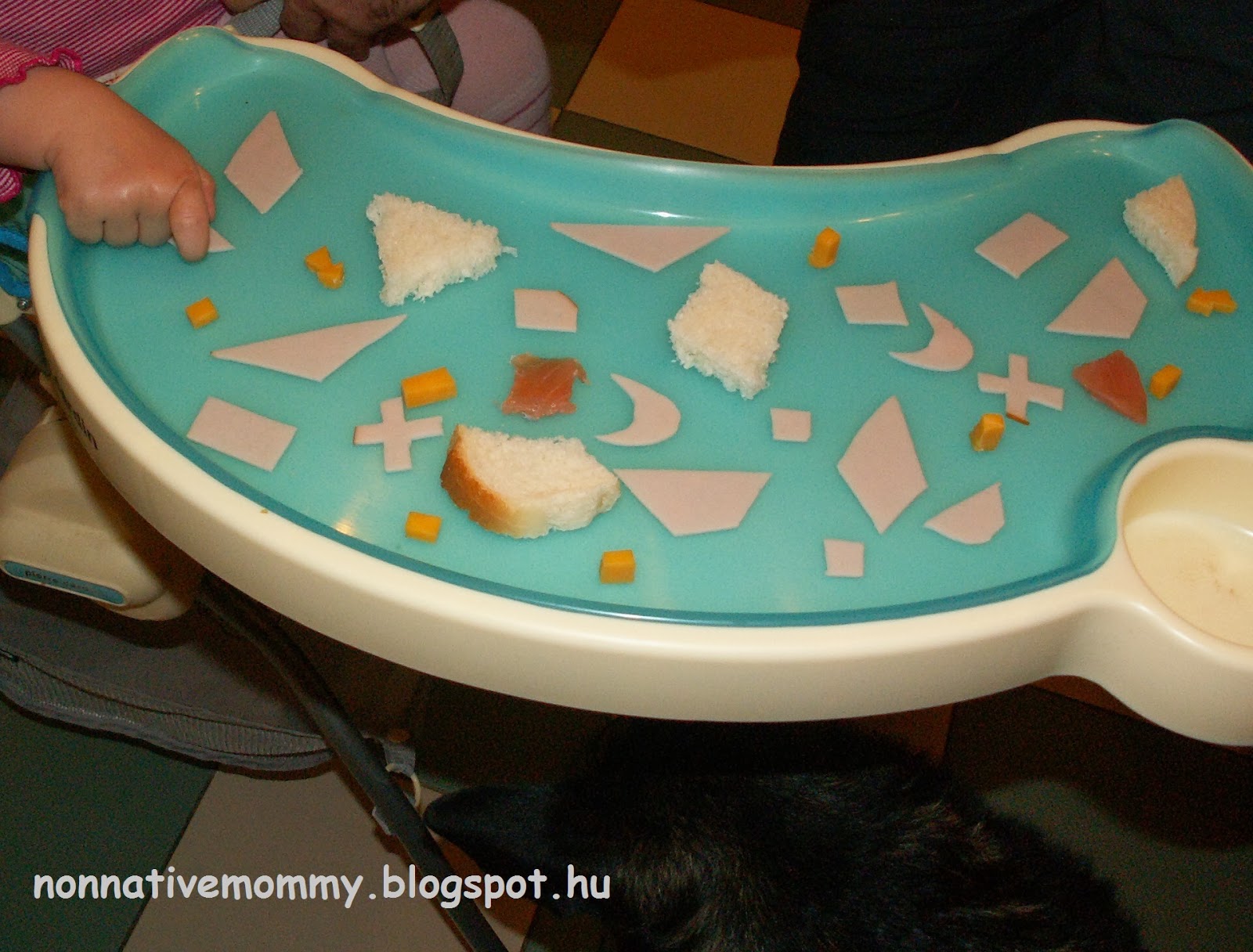
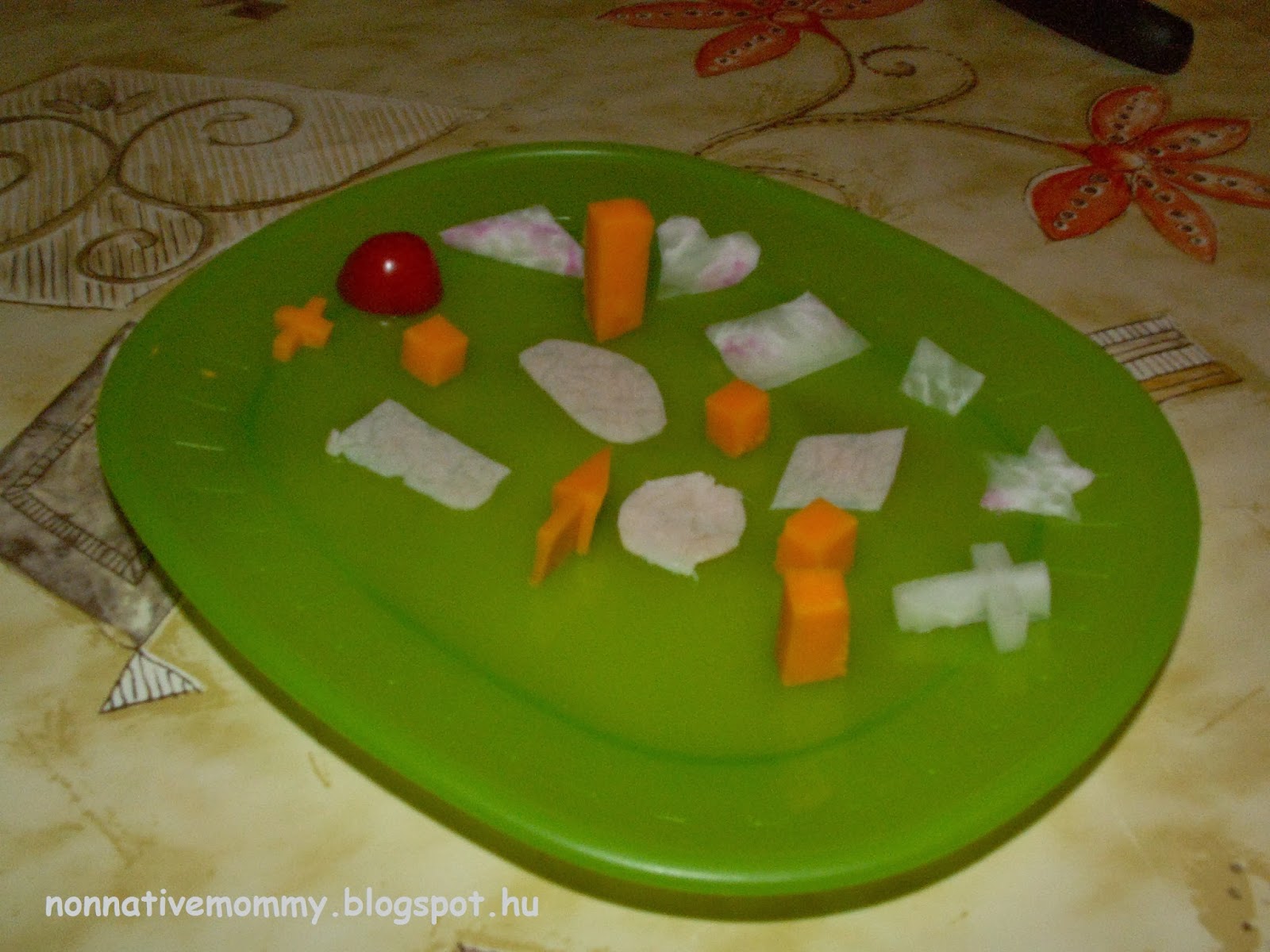
To initiate more talking I always asked what she was doing, what shape it was she was holding etc. Plus, she sometimes said the colour of the shape, too, all by herself.Sometimes E. needs motivation to eat. At dinnertime I prepare some ‘soldiers’ and different shapes carved out of bread, ham, salmon or veggies. It is much more fun for her to eat a pentagon or a triangle than a slice of simple cucumber.


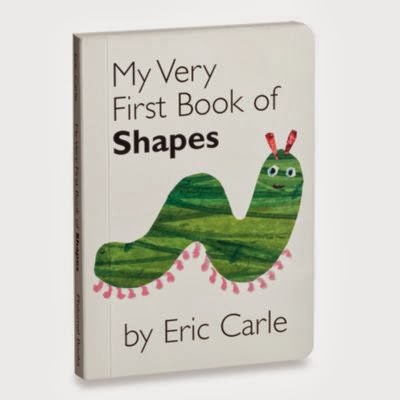
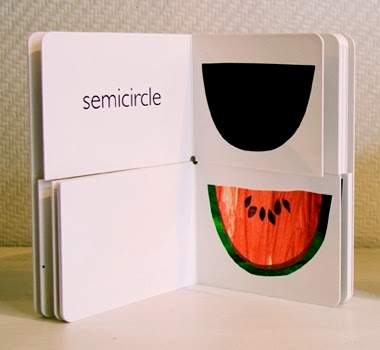
When she turned 16 months we found some books in the library on shapes. This picture dictionary contains two pages of colourful shapes (solids too).


Before taking the book back to the library I had these (and some more pages) photocopied and used the shapes to make flashcards as well.

And a famous favourite (alas, we’ve got it in Hungarian in the library but this unfortunate fact does not keep me back to use it for other language purposes):


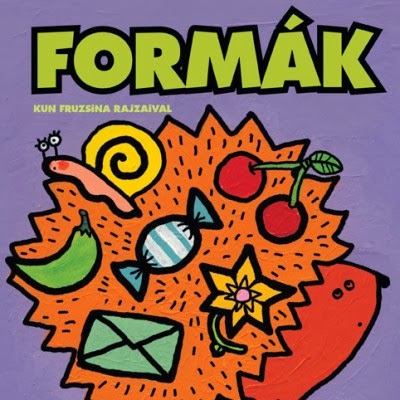
Another Hungarian one: Kun Fruzsina: Formák

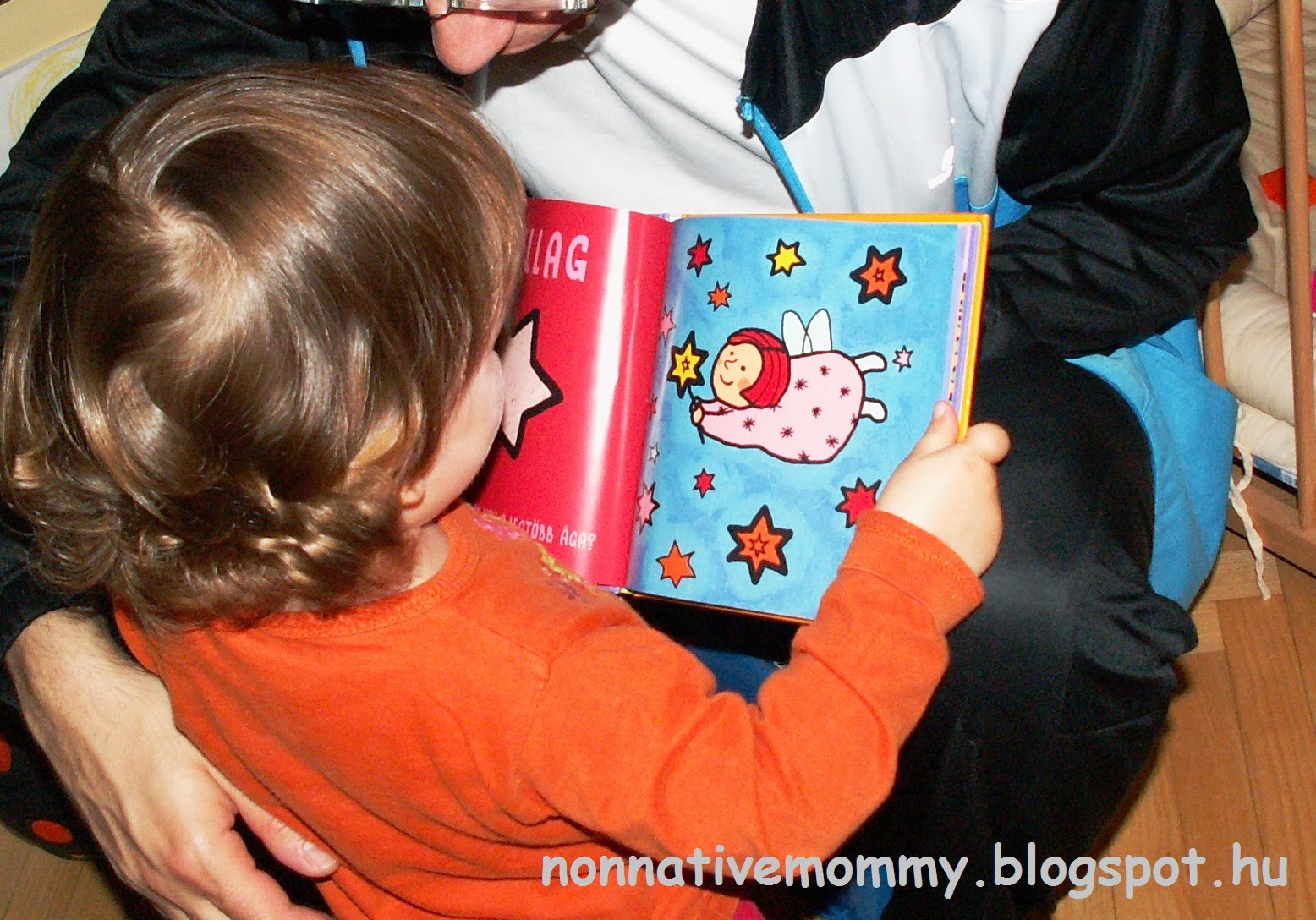
Stars

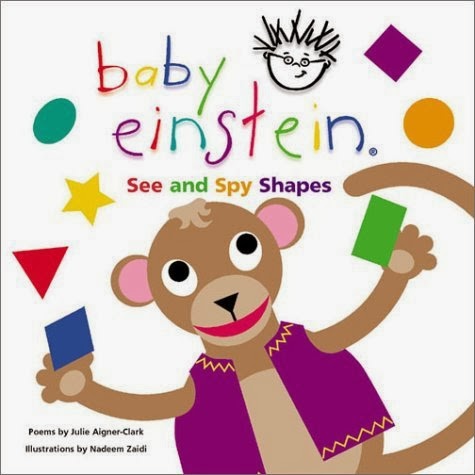
 Last but not least a Baby Einstein book on shapes:

There are tons of books on amazon.com all about shapes. No matter which book you use, but it is another fun way to talk about shapes and see them in different contexts.

Baby’s Best Start (Helen Doron beginner baby course 3rd CD)  has a song about shapes. We listen to it twice a day and E. knows it by heart. Also, the book contains pages of shapes and objects of a similar kind (circle-sun, triangle-sail, square-book).

Often E. identifies shapes by herself. On the table-cloth of our dining table there are some diamond shapes and whenever she walks past she points at them and says: – Little diamond. Here. Big diamond. There.

On the basis of this experience, sometimes we just walk around the house and identify shapes. (The mirror is a rectangle, the washing machine is a cube, the socket is a square and the hair bobble forms a circle etc.) It is also a good idea to collect smaller objects of different shapes in a light box that your child can walk around with. When you have like 10-15 things you can throw them all onto the floor and group them according to their shapes.

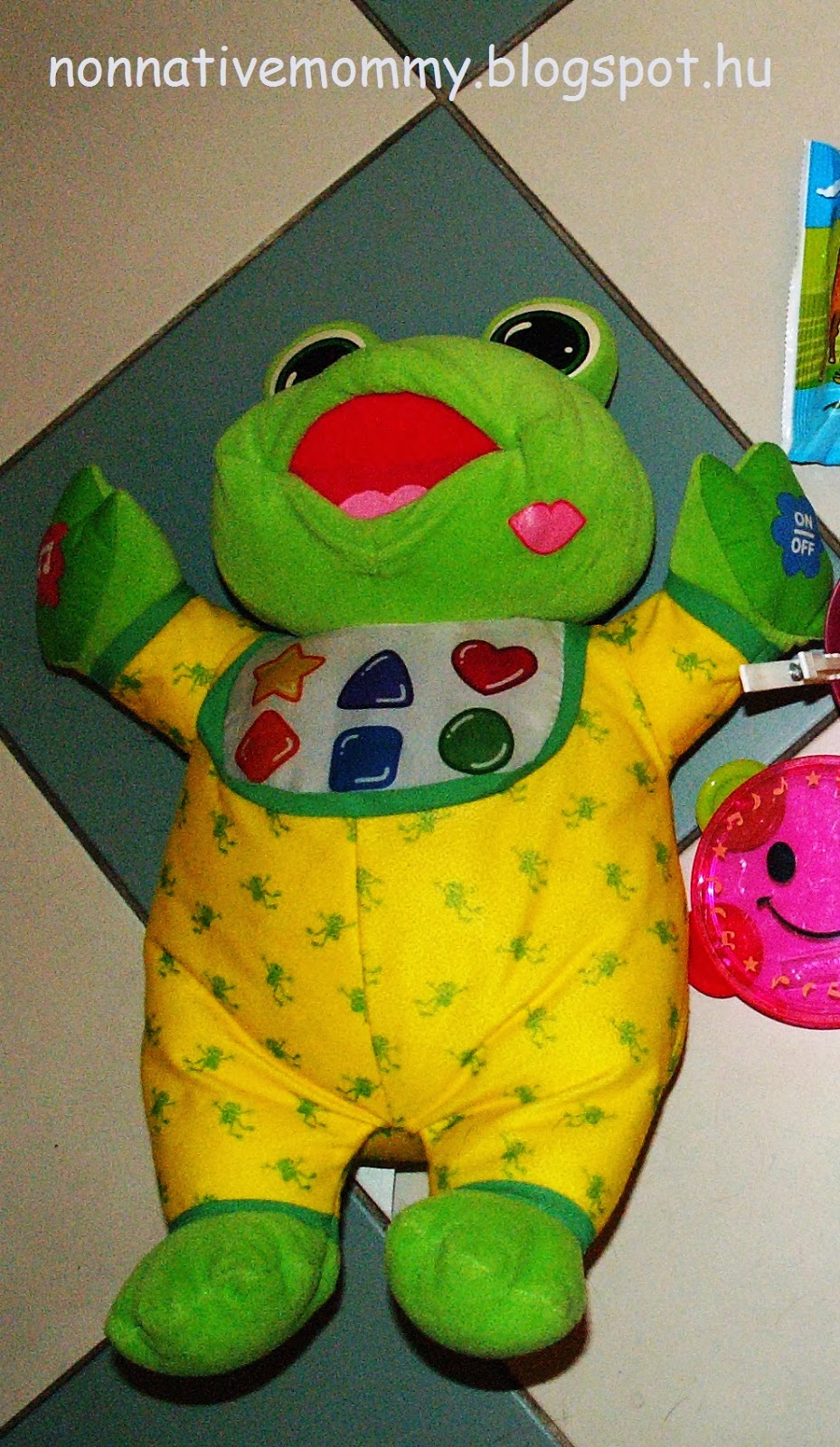
For E.’s first birthday I also bought a second-hand  Froggy with shapes on his tummy. When you turn it on one of the shapes starts flashing. You need to push the flashing button and the Froggy starts singing a famous nursery rhyme/song (Star – Twinkle, Twinkle, Triangle – Mary had a little lamb, Circle – Pat a cake and so on). Unfortunately, the square does not work any more, so whenever E. tries to make the square work I sing the Helen Doron Shapes song.

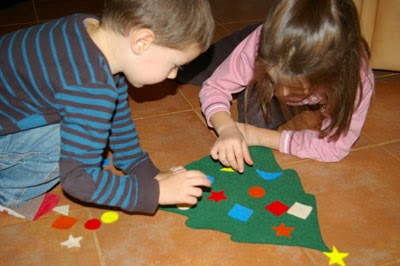
As Christmas was here I was planning to do a little christmasy shape fun, but I did not have time to make it. You can find a lovely Christmas tree decoration game with shapes here (ketnyelvugyerek.hu). The description is in Hungarian, but the picture speaks for itself.

Or a similar activity from Super Simple Learning with a template.

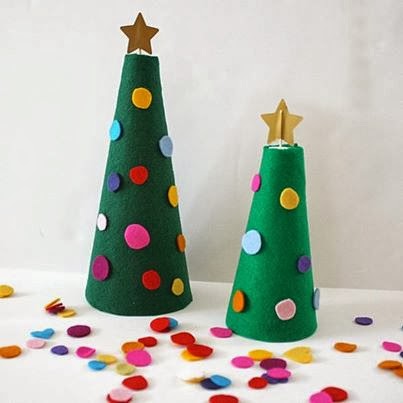
Another simple 3D Christmas tree decoration fun:

http://buggyandbuddy.com/christmas-activities-kids-decorate-felt-christmas-tree/
We are going to do all these next year I am sure, as a little revision. 😉

Finally, let me show you a picture of shape chaos after an hour of playing:


Over 100 words

E. turned 16 months on Monday and I am not exaggerating if I say she can use much more than 100 words in each language (Hungarian and English).

The calculation was done by D. He added up all the functional language (thanking, asking, giving, objecting, greetings etc.) and words of different topics we’ve been dealing with (see the collection bellow) and the sum must be over 100 words, getting closer to 200.

Now I’m collecting the ones that E. uses confidently in the right context (and not just parroting them or not the ones she understands because in this case there are a thousand words, I guess). Of course, these words and expressions are not 100 % clear. (She tends to pronounce the “k”  sound  “p”, the “g” sound “b” or the vowels sometimes melt into one another). Still, it’s her great achievement.

Now I’m trying to focus on her English only:

Peek-a-boo

Functional language:

  • Thank you
  • Please
  • Pick it up
  • Here you are
  • There (if she wants to go somewhere)
  • Let’s go
  • Come on
  • Bye-bye
  • Hi/Hello
  • Don’t like it
  • Like it
  • Cheers (when drinking)
  • Up
  • Out (of the playpen or high chair)
  • not comfy (on the potty)
  • Oops (when something is fallen)
  • Oh, no! (when something goes wrong)
  • Peek-a-boo (when she hides behind the curtain)

Family members:

  • mommy
  • daddy
  • granny
  • papa (for grandpa)
  • baby
  • + names of our family members (7 people), our native nanny (A.) and my best friend (B.)

Animals: (if she doesn’t know the name of the animal she says the sounds they make)

  • doggie
    Our poor mixed-breed
  • froggie
  • cat/kitty
  • cow
  • sheep
  • kangaroo
  • hippo
  • bear
  • mouse
  • rat
  • panda
  • butterfly
  • ladybird
  • bee
  • pig
  • duck
  • ant
  • turtle
  • whale
  • dino

Fruit:

Window pictures
  • apple
  • pear
  • grapes (a bunch of grapes)
  • banana
  • kiwi
  • orange
  • plum
  • lemon
  • cherries
  • strawberries
  • apricot
  • peach
  • tomato
  • berry

Vegetable:

  • aubergine
  • onion
  • potato
  • broccoli
  • mushroom
  • pumpkin

Other foods:

water
  • cheese
  • bread
  • salami
  • sausage
  • honey
  • water
  • milk
  • mayonnaise
  • ketchup
  • butter
  • yogurt
  • coffee
  • ice creme
  • ricecake

Flowers:

  • peony
  • lilac
  • begonia
  • pansy
  • daisy
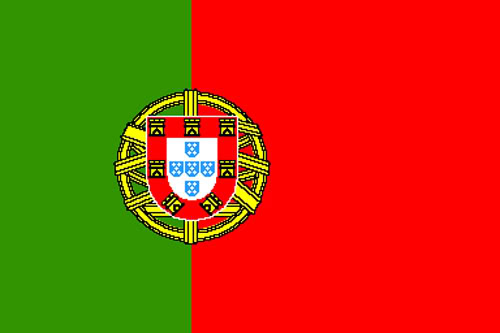
Flag of Portugal – E.’s favourite right now

Countries/Flags/:

  • Norway
  • Belgium
  • Portugal
  • Hungary
  • the European Union
  • Turkey
  • Italy

Colours: (the clearest utterances)

    • red
    • orange
    • yellow
    • green
    • blue
    • purple
    • pink
    • black
    • white
    • grey
Bubbles
  • brown

Shapes:

  • oval
  • triangle
  • heart
  • star
  • pentagon
  • rectangle

Everyday object/Toys:

  • spoon
  • plate
  • knife
  • fork
  • bottle
  • kitchen
  • teddy
  • book
  • playground
  • sandpit
  • bath
  • colour pencil
    drawing a star
  • crayon
  • paper
  • drawing
  • nappy
  • creme
  • toothbrush
  • man (a plastic figurine)
  • clock
  • high chair
  • door
  • playpen
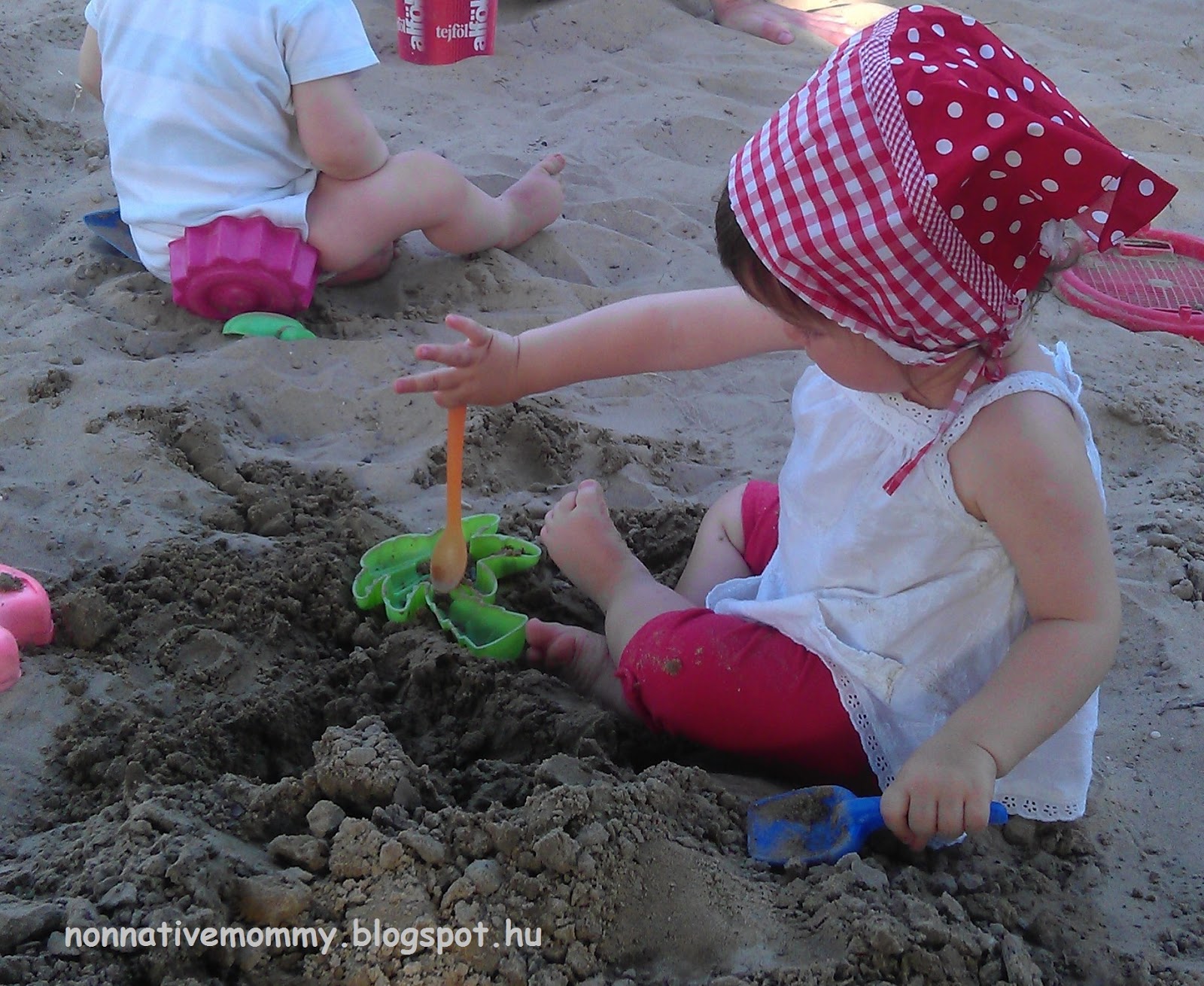
    Sandpit
  • video
  • dummy
  • potty
  • poopy
  • pee pee
  • peg
  • mill
  • car
  • choo-choo train
  • ball
  • puddle
  • big
  • bubbles
  • bin
  • balloon
  • sun
  • cloud
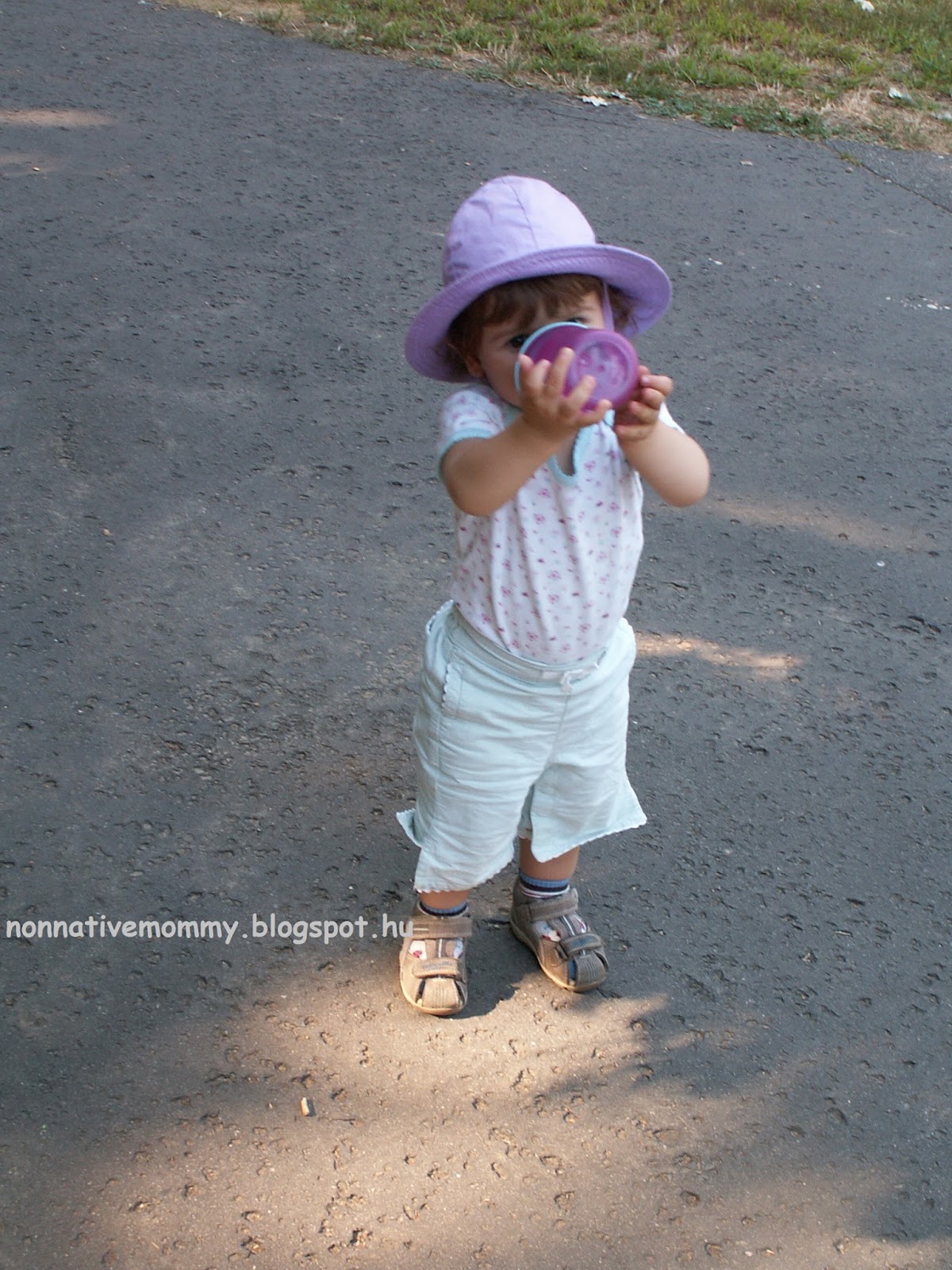
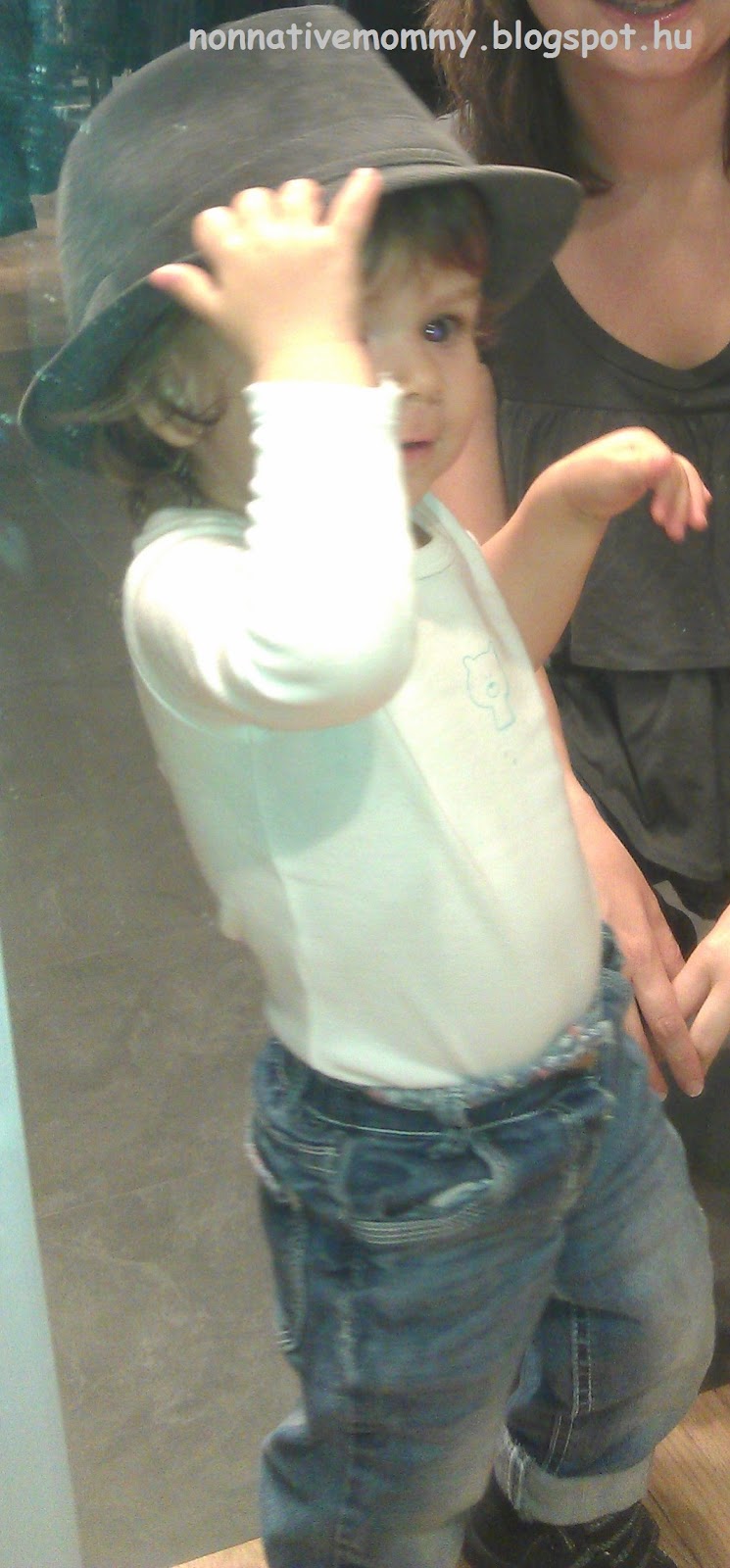
Hat and jeans

Clothes:

  • jacket
  • slippers
  • hat
  • trousers
  • jeans
  • shoes
  • cardigan
  • boots
  • pyjamas
  • socks

Body parts:

  • head
  • pinkie
  • nose
  • ear
  • knee
  • mouth
  • toe
  • eyes

Musical instruments: (she’s not so intereted in this topic although she is quite musical)

  • drum
  • piano

Breeds of dog: (I introduced some dog flashcards 3 days ago)

  • Westie
  • Shar-pei
  • bulldog
  • puli
  • mixed breed

E. is making up more and more combinations, like big puddle, red pinkie (for polished fingernails), purple plum, pencil drawing, banana yogurt, black doggie etc.
If it goes like this, in two more months she’ll say sentences. She’s amazing, a little genius. Am I proud? Hard to say how much 🙂