Doctor, doctor… – pretend play 1.

E. has just turned 2 and in the last couple of months she has started to take pleasure in playing role-plays.
The followings are her favourite:

  • doctors
  • vets
  • cooking
  • tea party
  • shopping
  • sleeping
  • little house
First I’d like to post about playing doctors.
Playing doctors:
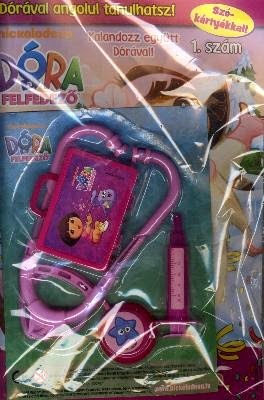
In February I bought an issue of Dora, the Explorer magazine (in Hungarian). It always includes some toys and this time it was a doctor’s case a stethoscope and a syringe. At first she wasn’t interested but around March she started to walk around with the stethoscope in her neck and giving injections to all the stuffed animal and our dog too.
We made her Teddy, Eric, Susie doll and Rabbit sit on the sofa; that was the waiting room. One by one she examined them saying:
– E. is examining Eric.
– Let’s take Teddy’s temperature.
– Breathe in, breath out.
– Thermometer goes in the armpit.
 – Open your mouth wide.
– Eric has fever.
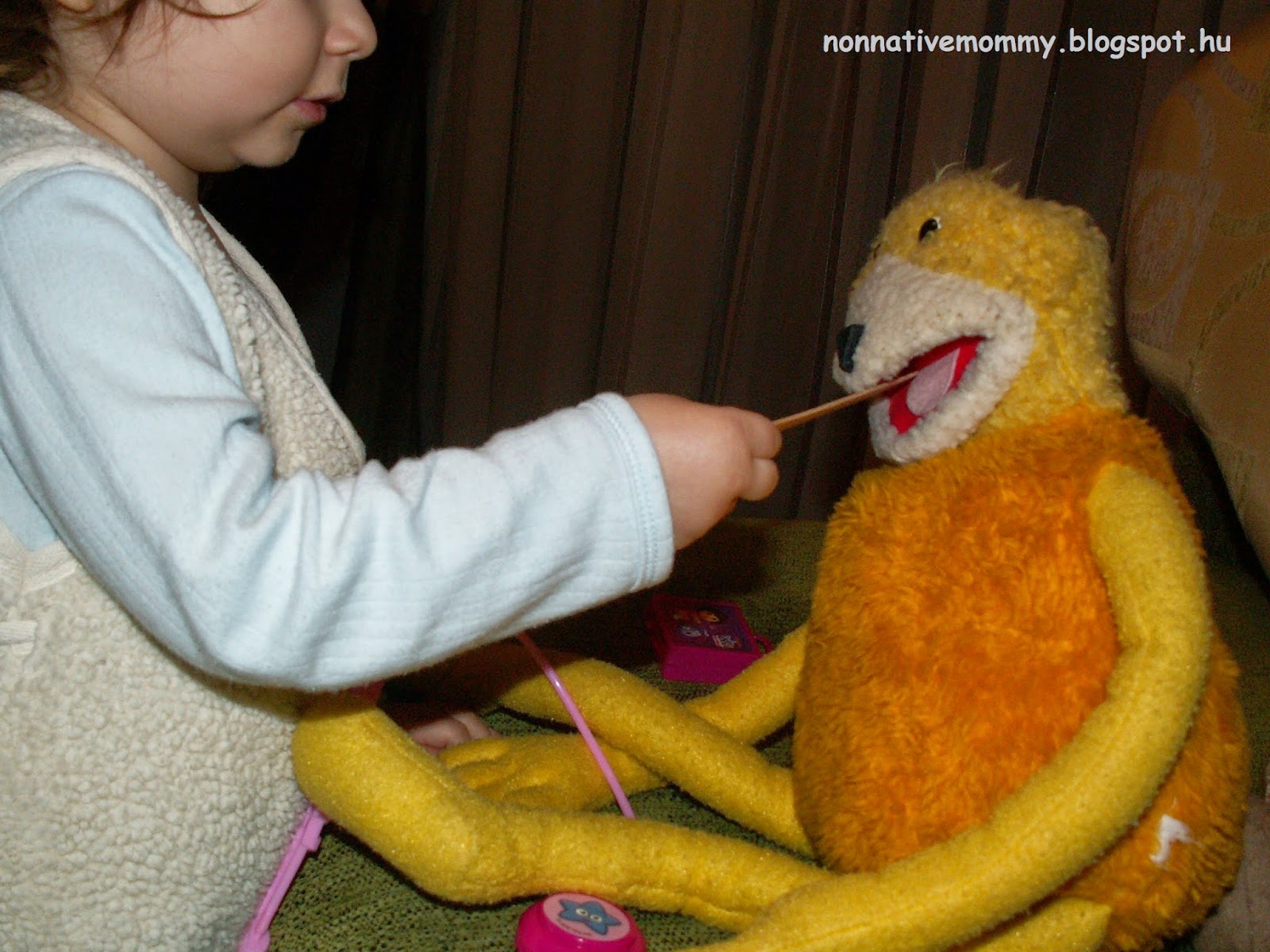
a spatula is also added to the kit
taking Teddy’s temperature


open wide!
Then three weeks ago our dog got ill and we needed to go to the vet several times. E. came once and she was absolutely fascinated. The vet at Gizmók veterinary was amazed how clever and interested she was 🙂
She wanted to know every utensil in the surgery, looked at our dog’s X-ray photo, she checked out some new born kittens and their mommy. She got a little frightened when the parrot screeched but she was also so engrossed with it she couldn’t take her eyes off the bird. The vet was so kind that E. could borrow the doctor’s case from the waiting area until the next morning (when our dog had to go back for another X-ray). As soon as we got home E. opened the doctor’s case and examined the dog (again… poor thing).
She (and I, as well) learned a lot of new phrases both in Hungarian and in English (reflex hammer, otoscope, forceps, tweezers, bandage)
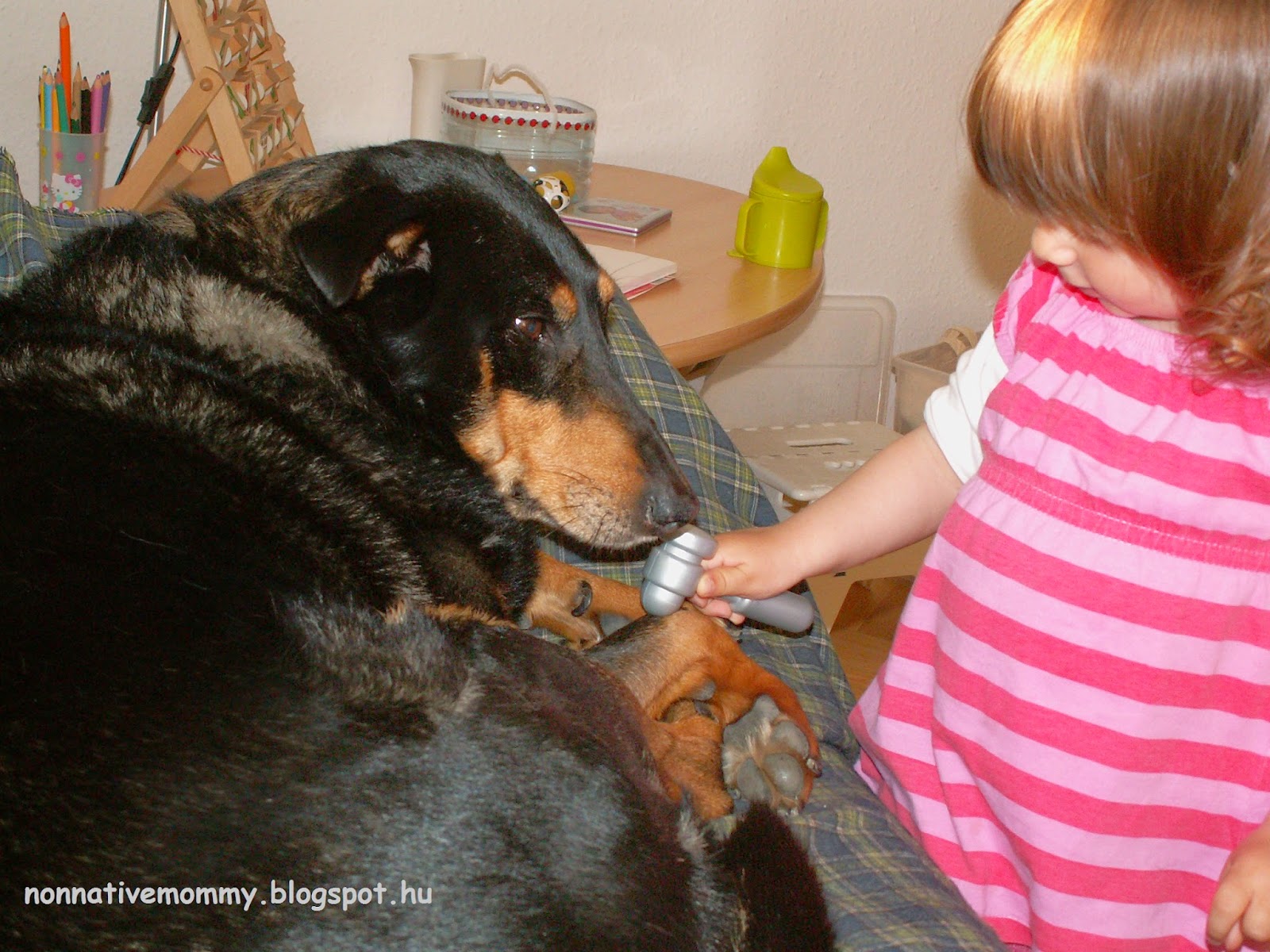
let’s check his reflex.
listening to doggie’s heart beat
examining Daddy – multi-tasking 🙂
Unfortunately we do not have a nice doctor’s case with several tools (though I added a Nurofen syringe, green mask, some bandage and plasters), we really need to buy a proper one together with a white doctor’s coat. I’ve already prepared some flashcards on the topic but they are not finished yet.
So to finish with, here’s a Doctor, doctor joke:
– Doctor, doctor, I keep thinking I’m a caterpillar.
– Don’t worry, you’ll soon change 😀

Spring nature hunt with a muffin tray

Spring has arrived, together with some rain but luckily today it’s been sunny so we went out for a spring nature hunt.

I got the idea on mamapapabubba.com. This blog is written by a Canadian mum, Jen and she’s got great ideas I love stealing. The spring nature hunt is one of them.

So I was in a rush to prepare everything, because in the park where I was planning to do the nature hunt the grass is growing very high and it is likely to be mowed in the near future. Then we would lose all the wild flowers, high grass and our fun activity.

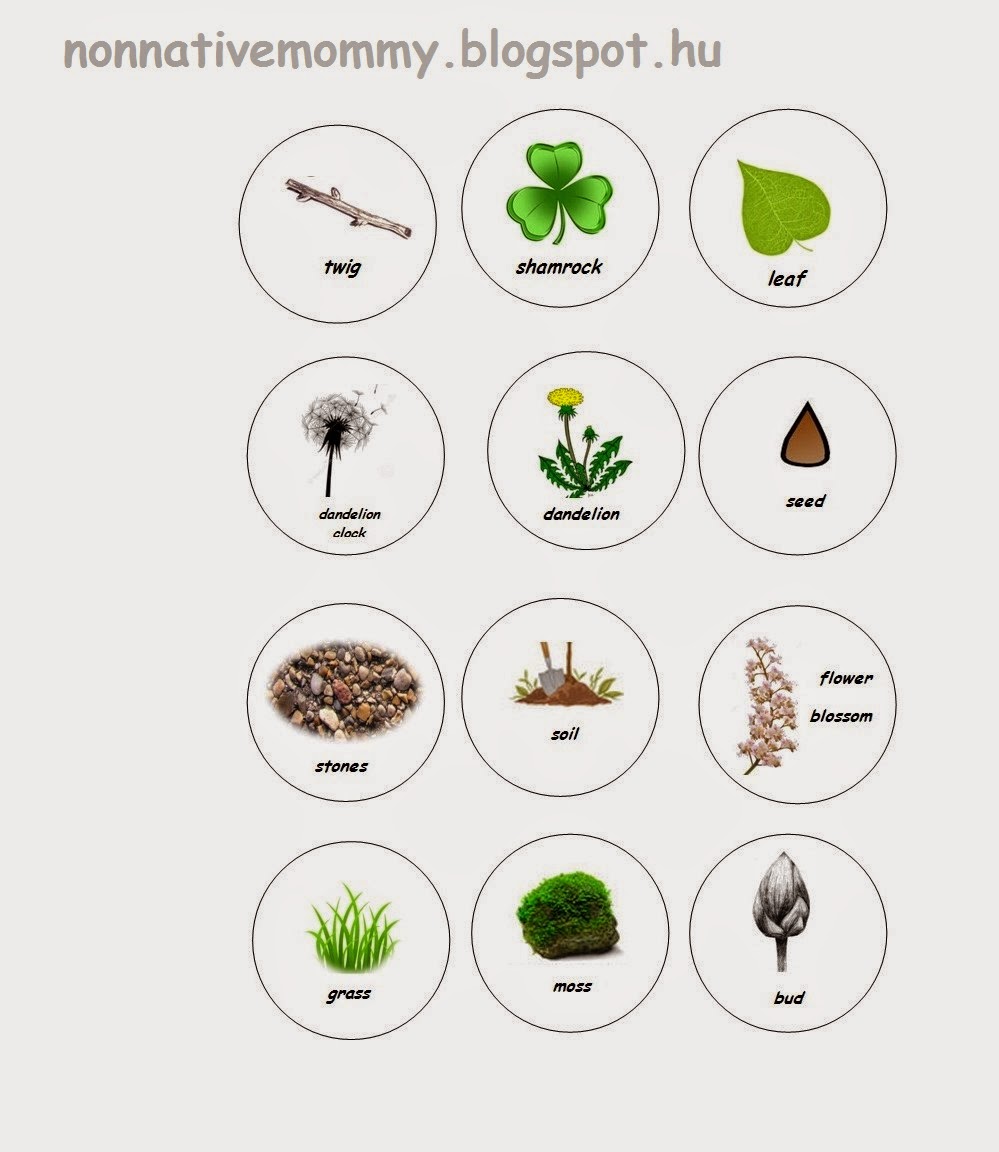
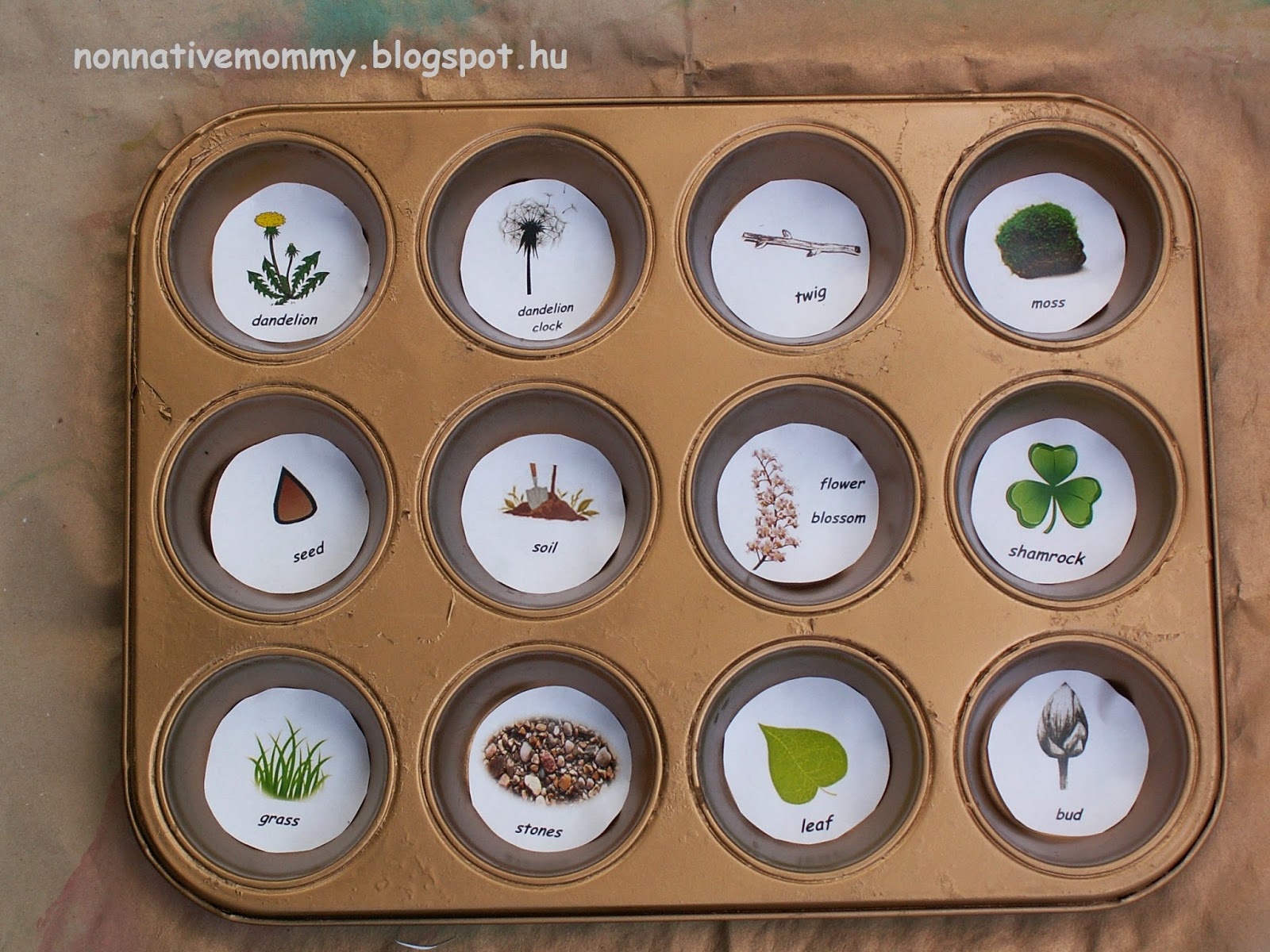
I’ve got and old muffin tray. It was in a very poor condition, so I sprayed it gold. This served as the receptacle (= a new word for me meaning: a container for storing or putting objects in) Then I asked Daddy to print the pictures of some nature items that I’d put together the previous night.

Our native nanny, A. arrived at 10.30 today and we were ready to set off.

E. is identifying what to look for

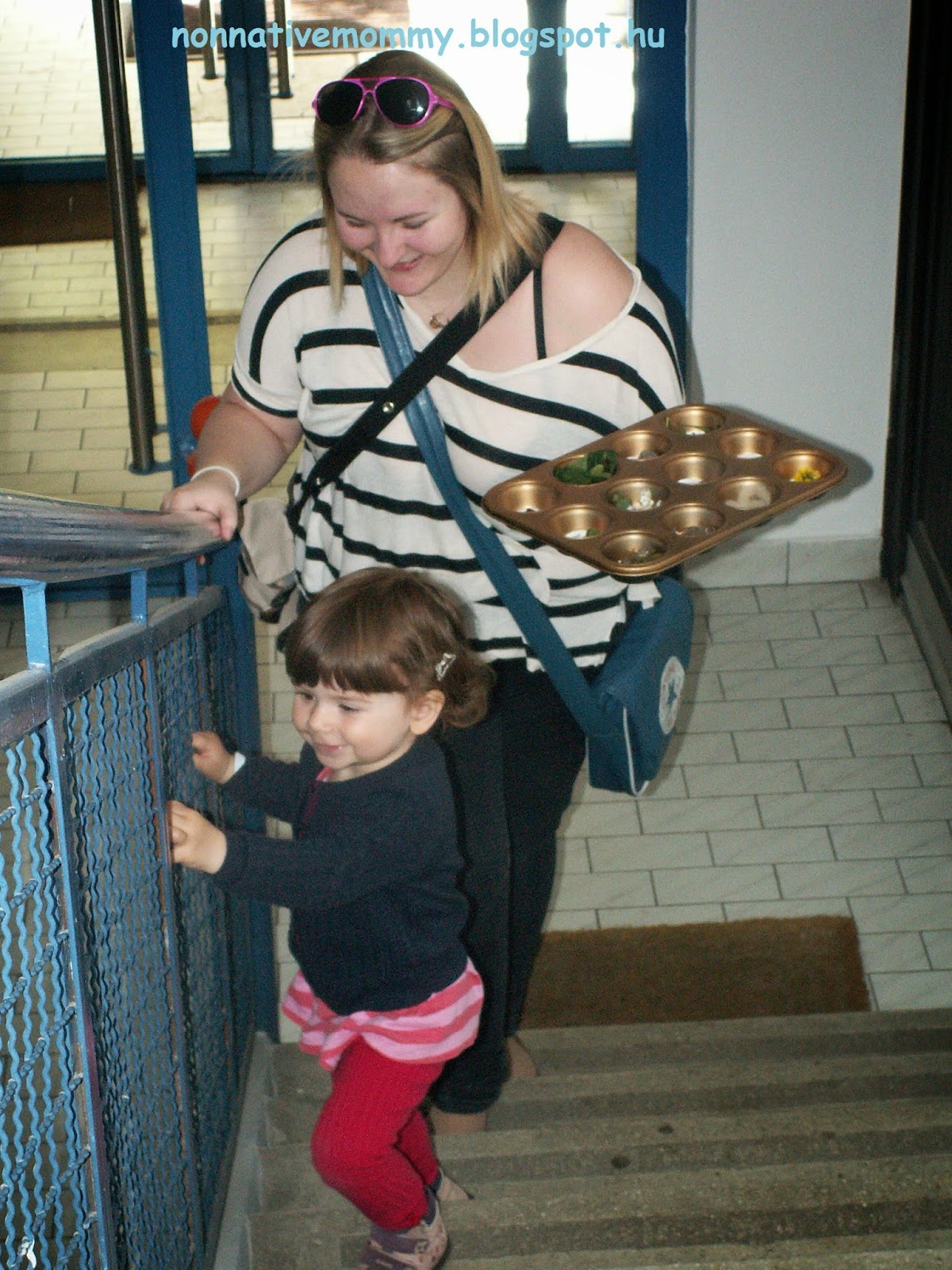
At firs E. was carrying the tray around, then we put it in the push chair.

E. is not a great fan of walking (she prefers to be carried), but this time she was running around looking for the items on the list, filling up the tray.

I thought it wouldn’t be easy to find seeds, so I took some wheat seeds with me from home, but A. was very attentive and found some. I didn’t need to fake anything 🙂

wheat heads

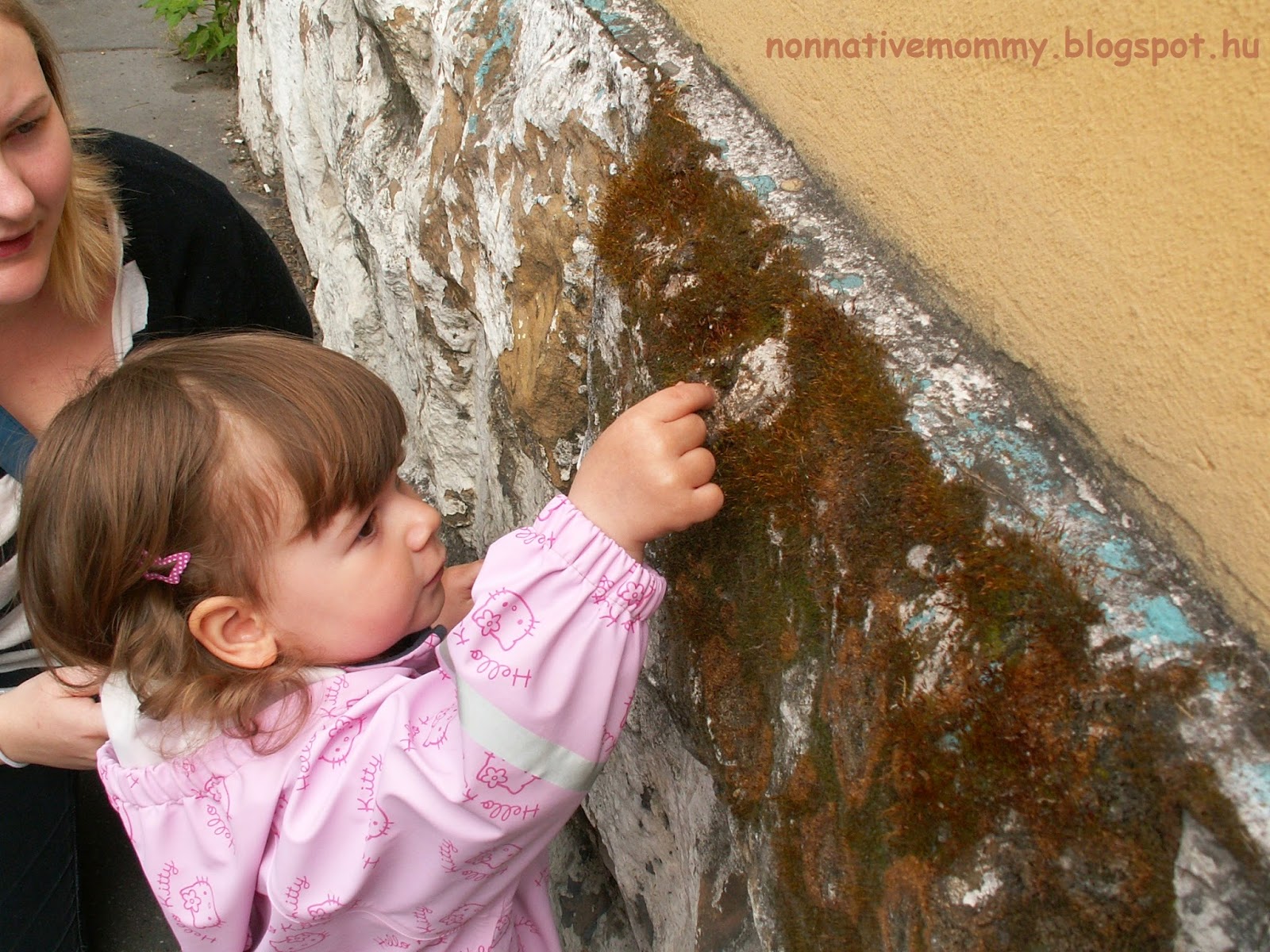
I knew exactly where we could find some moss. (E.’s favourite word from the list)

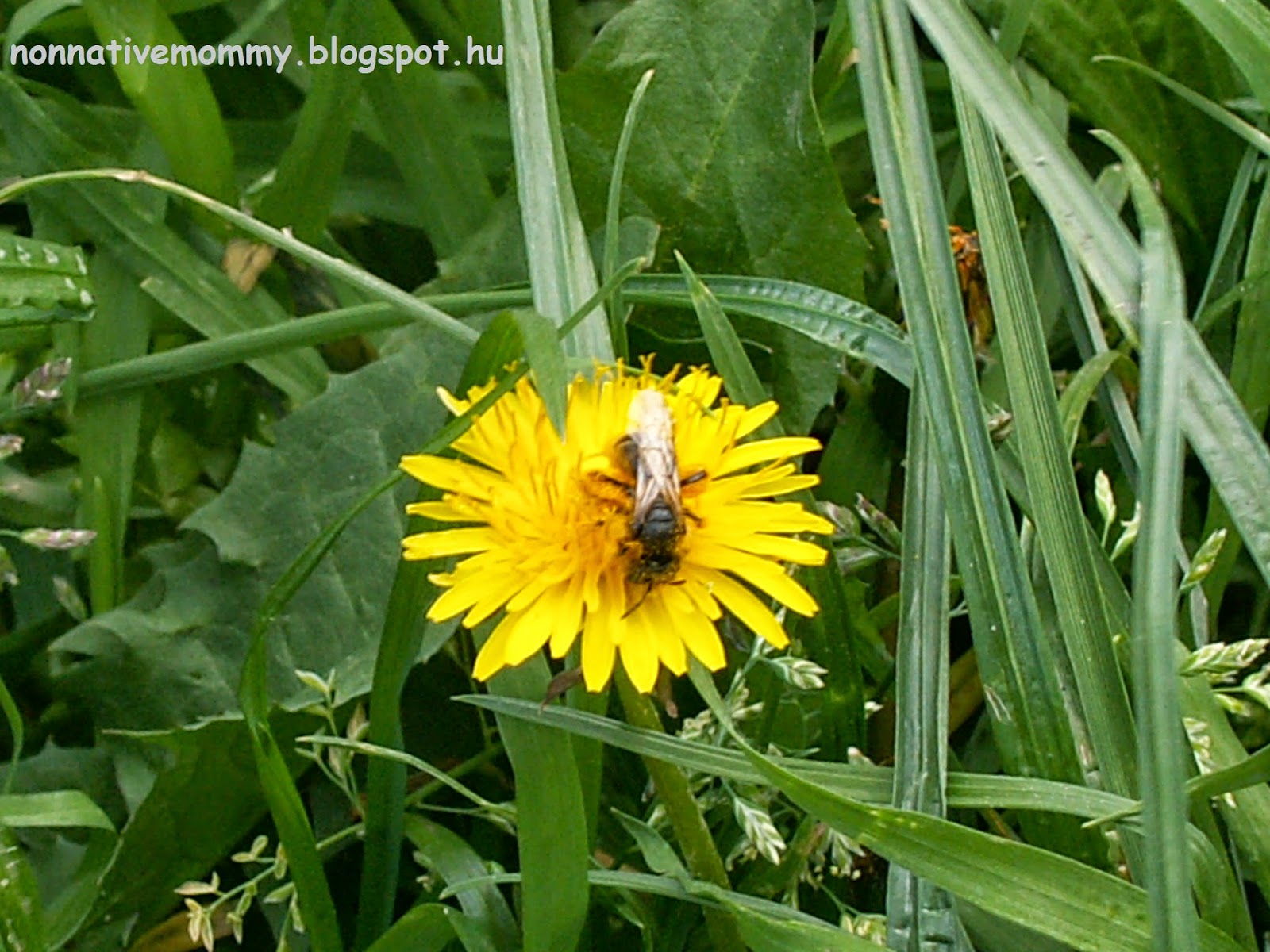
We also bumped into some bees and beetles we needed to observe closely.


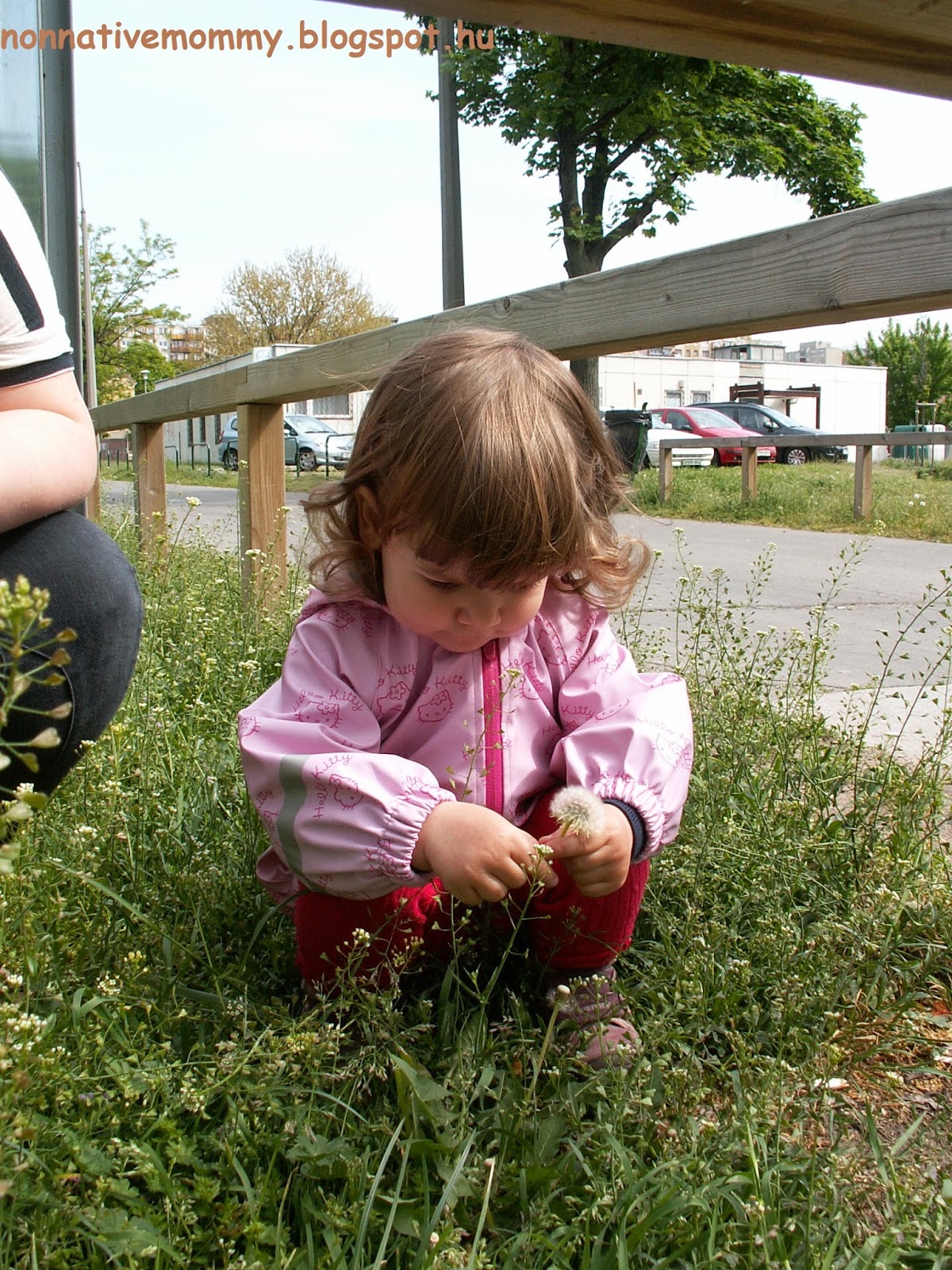
One of E.’s favourite flowers is the dandelion and its clock. Now she didn’t blow the seeds away, but collected them in the tray.


E. succeeded in tucking a big horse chestnut tree leaf in the hole. Well done, girl!

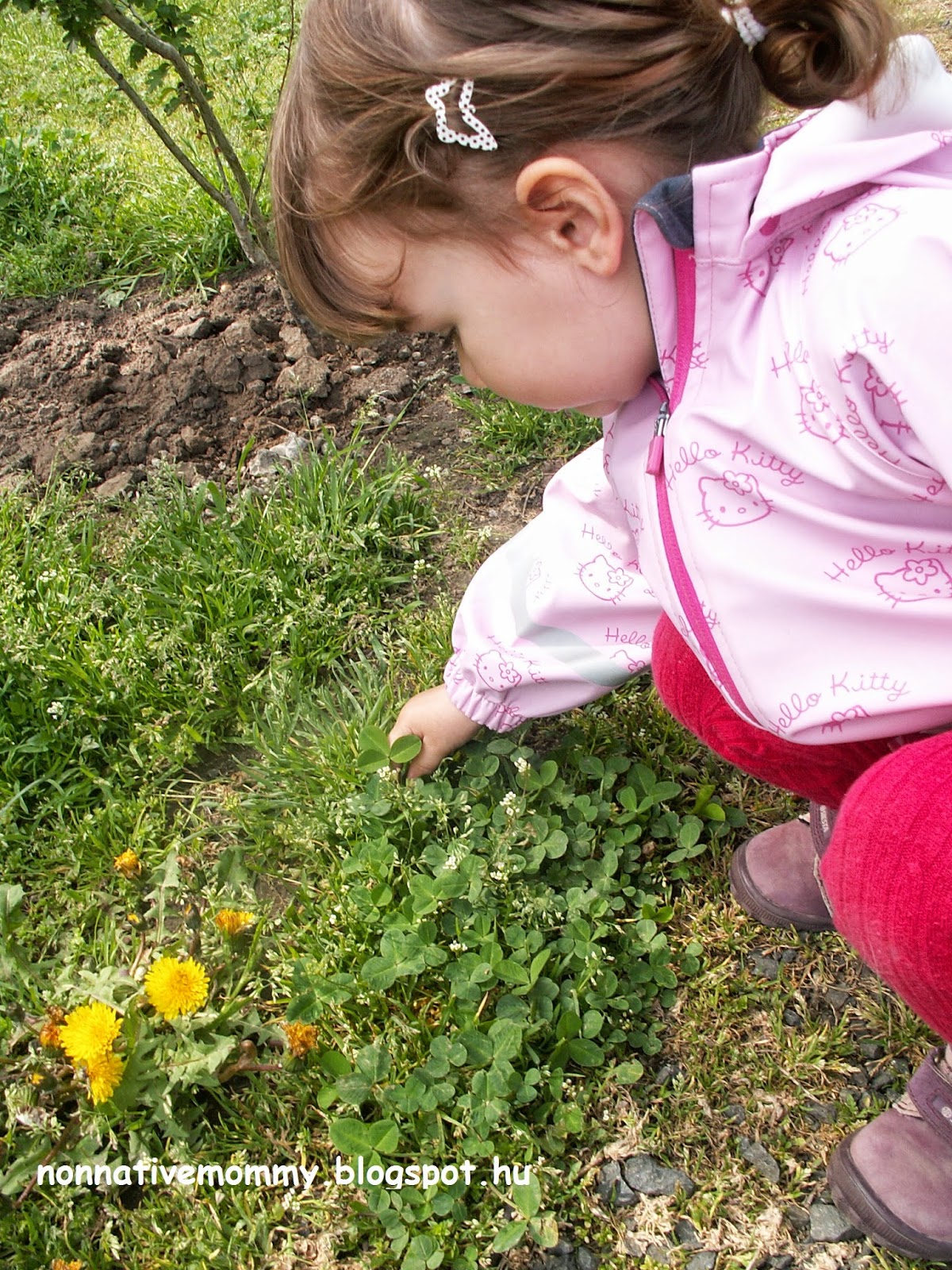
We found a shamrock with four leaves. We’ll be lucky 🙂

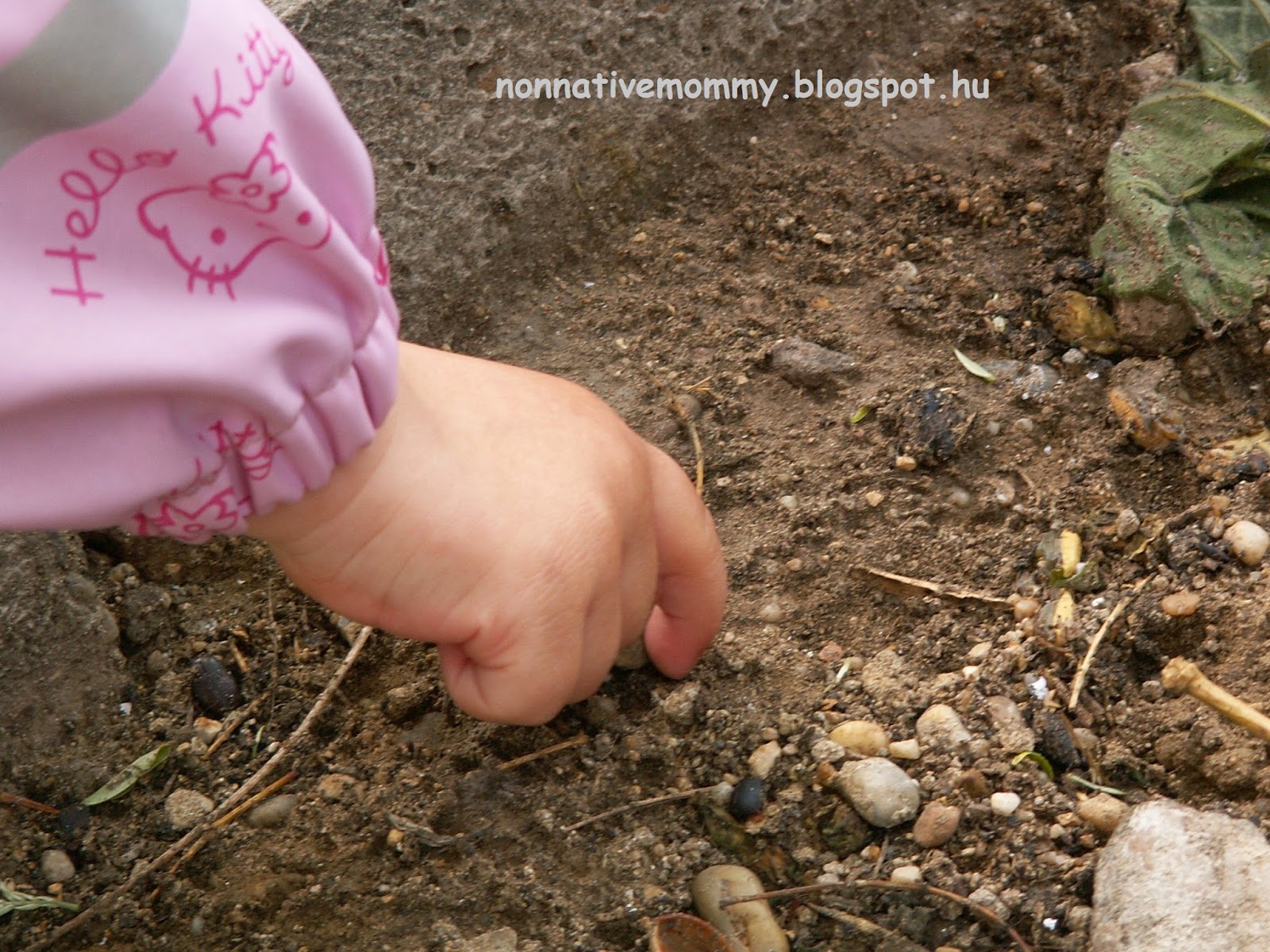
Finding soil fascinated E. the most.

It was hard to find buds, but we managed in the end.

At home A. and E. went on to read E.’s nature book she got for Easter.


I’d like to thank Jen for the great idea. We spent a lovely hour with searching, enjoying the sunshine and learning a lot about nature.

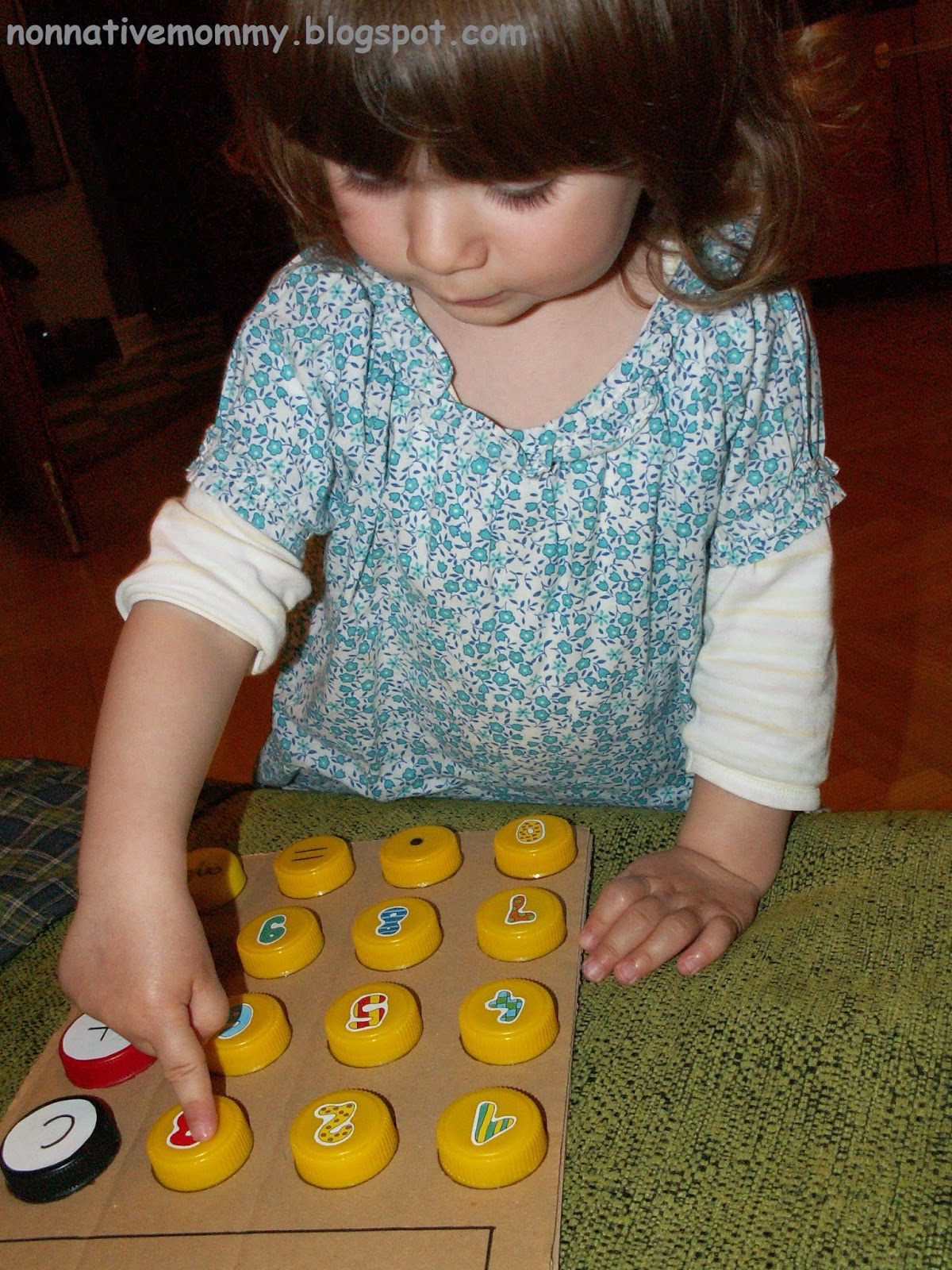
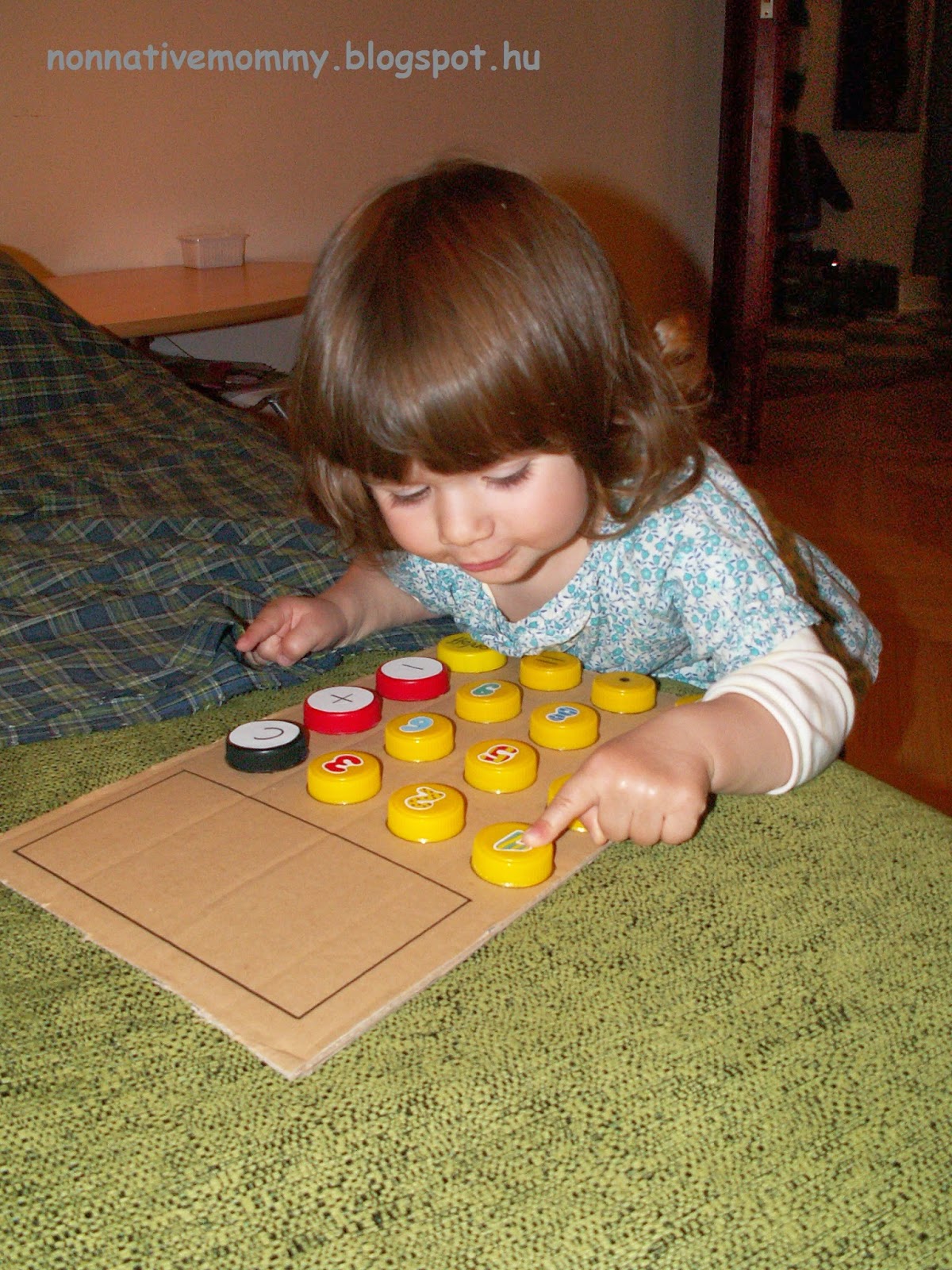
Numbers I. – The bottle cap calculator

We’ve been playing a lot with numbers recently, so here is the first post about a calculator that is very easy to make and fun to practise numbers with.

I found this idea not long ago on another blog: Learn with play at home. And I decided to make it as E. LOVES playing with calculators. Sometimes she asks for it and pushes the buttons for 15-20 minutes all by herself saying the numbers and signs (both in Hungarian and in English).

The first calculator was dropped so many times its display went wrong so we bought another, more simple one.

My idea was that she could have her own calculator that suits her little fingers.

tools

 What you need:

  • cardboard
  • 16 bottle caps (in my version)
  • scissors
  • superglue (dries withing 10 seconds)
  • markers and/or number stickers
  • ruler
  • a white sheet of paper
How to make it:
  • cut the cardboard (first arrange the bottle caps to see how big you need to cut the board)
  • stick or write the numbers and other signs on the caps
  • draw the display with the help of the ruler and the marker
  • glue the caps on the board
Sticking the caps on the cardboard is tough. I used superglue as the edge of the caps were very thin and I wanted them to dry quickly. (After few minutes of playing one of the caps came off, so this might not last as long as I wanted)

final result

The page I find this idea on also adds an extended version of the calculator game for those who have started learning to write. I’ll introduce it later if E. still wishes to play with the bottle cap calculator.


Now she is enjoying it a lot.

I managed to record a video too, but it is too dark. If you have any ideas how to lighten it let me know and I’ll attach it.

——-***——-***——-***——-***——- 27/03/2014——-***——-***——–***——-***——-

I’ve been trying to lighten the video but I couldn’t. Here is the dark video anyway.
But I also recorded another one with our native nanny today. They are playing with the new calculator.

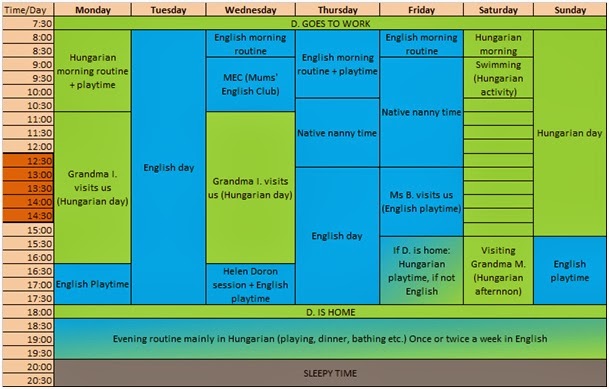
Our new timeable for 2014

New year – new timetable. First I though we have been spending less time with English in 2014, but I was mistaken. We are spending more time with the second language than according to the previous year’s timetable.

Here is the new chart:

49 % English time, 51 % Hungarian time 

Of course we are flexible, this is just the plan. An illness, some unexpected visitors or a change in our helpers’ schedule can alter the timetable but this is more or less the main framework.

You can see two areas in the timetable (Friday late afternoons, and dinner-/bath time) which are neither clearly dedicated to English nor Hungarian, or, I can put it, they are the most uncertain periods of the week. The reason for this is D. has been working a lot and because of his long hours we never know if he is at home at these times or not. So when he can’t make it we use English. This is how we compensate for missing daddy.

Our native nanny, A., comes twice a week, a total of 6 hours per week.

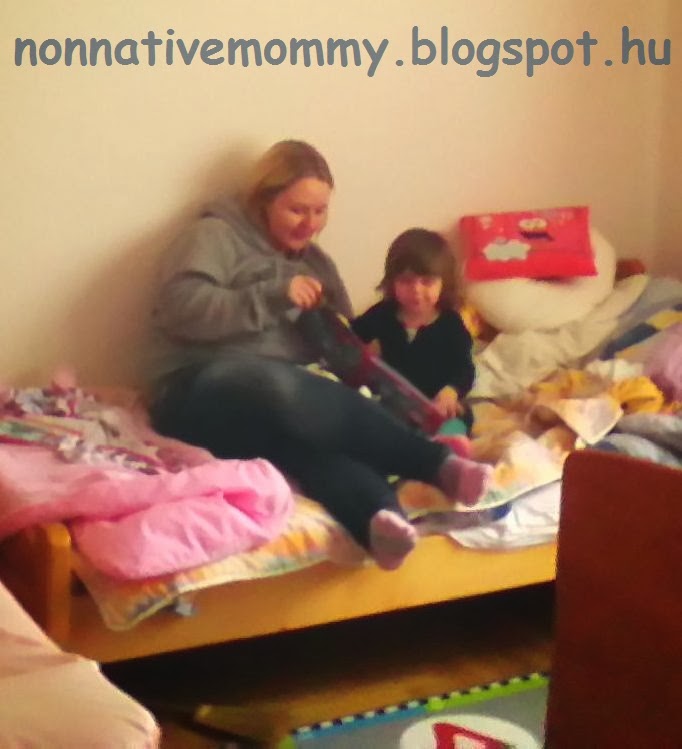
A. and E. are reading Berry and Dolly

The timing of the Helen Doron sessions has been moved from the mornings to the afternoons and on a different day (Wednesday) but we still have one occasion per week. To be honest, we are not listening to the CDs as often as we used to. It is mainly because E. is a little bored of them (me too…) and she knows them all by heart, so what for? Still, she enjoys the lessons, especially painting (I’ll write more about it in another post) and moving water from a teapot or a dish to a cup. Playing with scrunchy balls -crumpled newspaper sheets with cello-tape around them- and pots are also among her favourite activities. We sometimes play with them here at home as well.

Fascinated by the baby paint

Even if it is a Grandma day (using Hungarian) at the end of the day I always try to fit in some English playtime, cooking time, shopping time or playground visit etc.

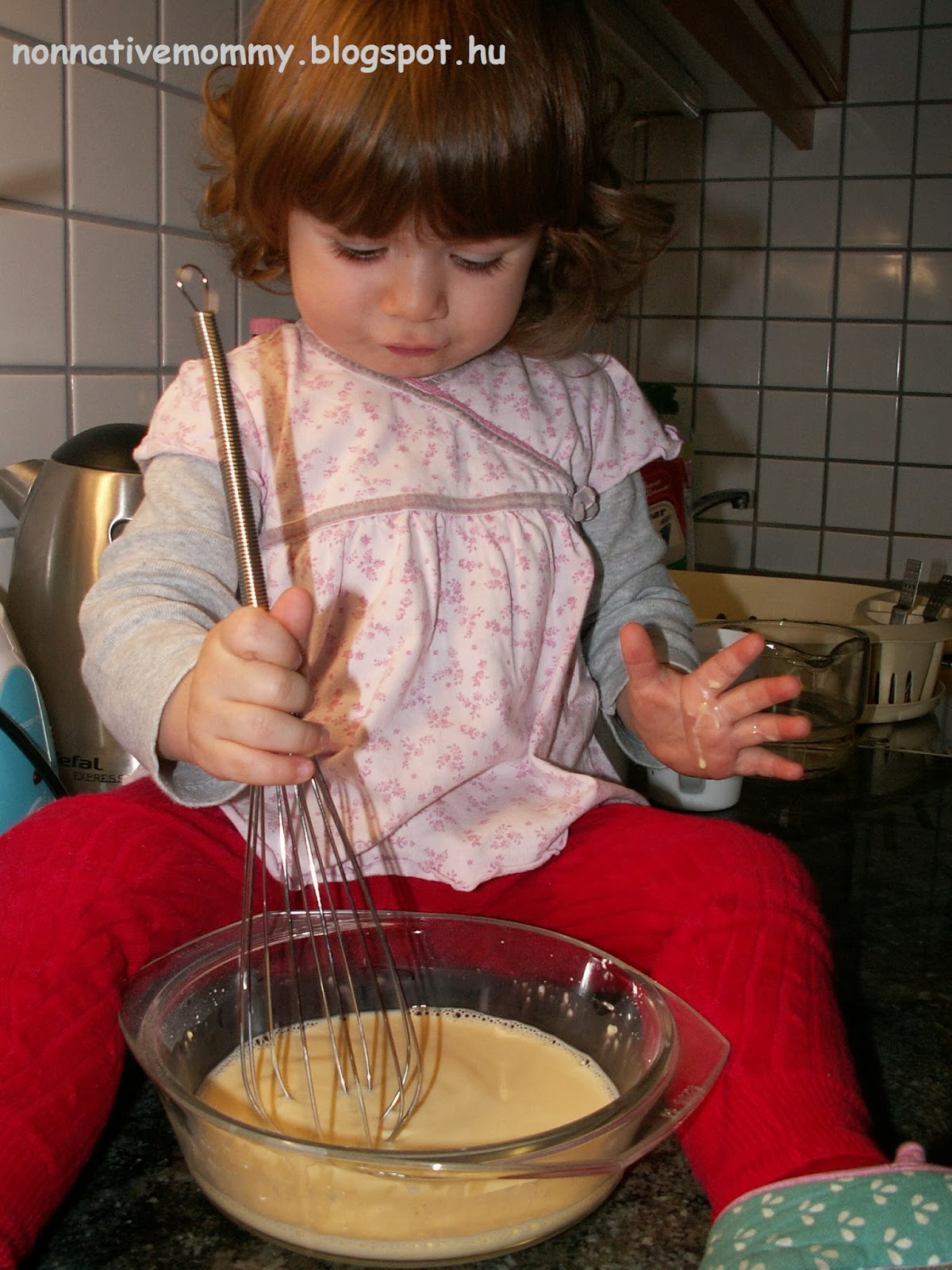
whisking egg yolk

The weekends are the trickiest. As I really want father and daughter to build a strong and warm relationship we (the three of us together or just the two of them) have quite a great number of programmes  in Hungarian environments. I find this more important than the language development.

Daddy time

However, at weekends I always try to spend some hours with English. These are not long, and not so interactive or highly communicative activities, like watching videos in English, or reading a story in English.

I’m looking into our bilingual future with confidence and great hope. 2014 will be even more successful than 2013 was.

Shapes, shapes, shapes – there are all sorts of shapes

E. is into shapes to a great extent. About 2 months ago (when she was 16-17 months old) she already knew all the basic (and some not so basic) shape names. So it made me think what we can do to practise and play with the shapes in more varied ways.

When E. was quite small, around 6-8 months old, we watched and we’ve still been watching the following videos concerning shapes.

The Shape Song

Shape Song 2

We have some new favourites. While we are watching some of them she bursts out with laughter, like in case of the following:

Miser Maker: I am a shape

The next video might seem very monotonous and boring but my daughter loves it and sometimes wants to watch it 4 or 5 times.

What shape is it?

There are a lot more videos on shapes but I do not want to bore you. You can search for them on youtube.

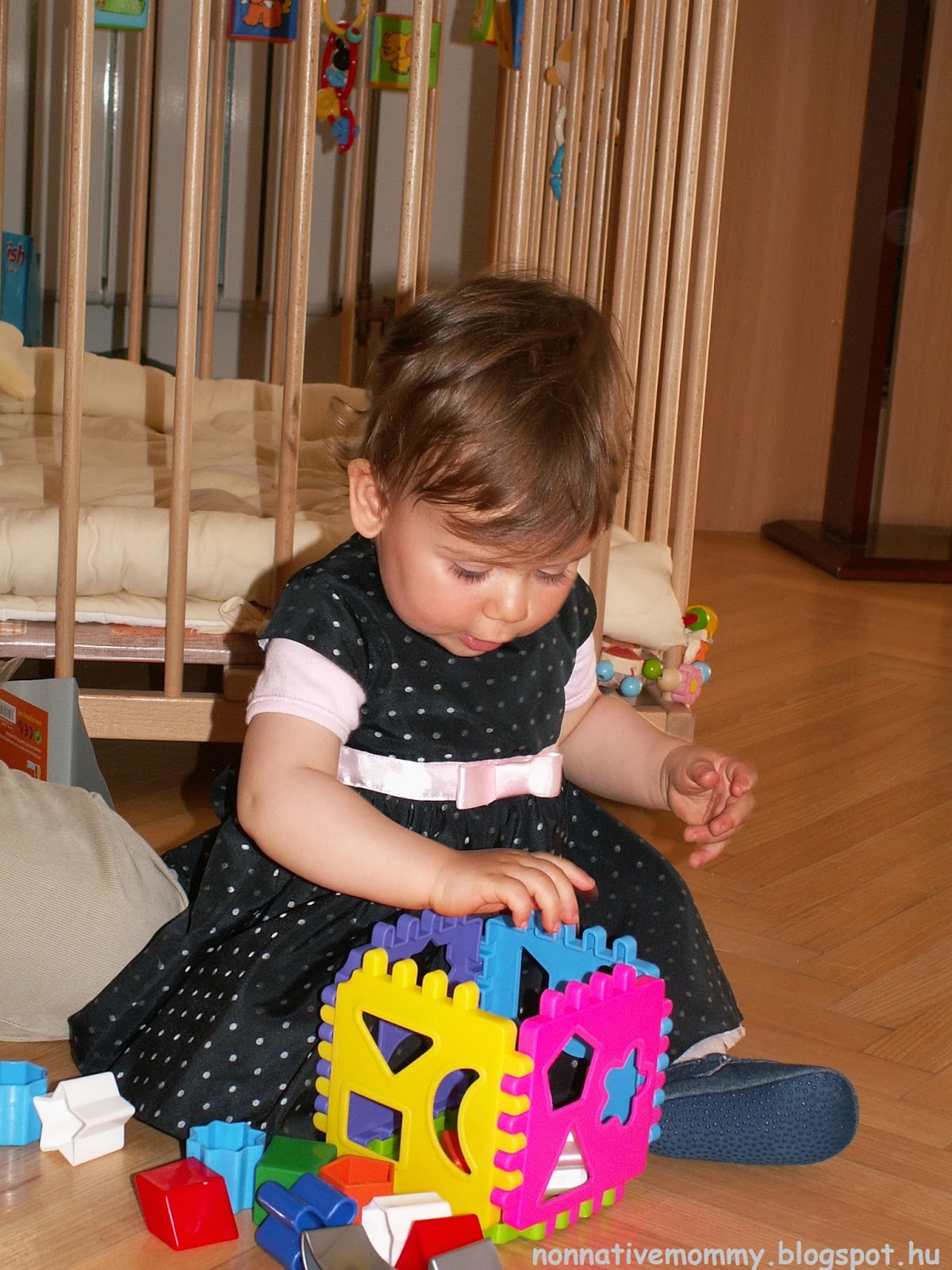
E. got a shape cube for her first birthday, but she was totally untouched by it after taking a first look.

Birthday present with potentials

Mostly, I was playing with it and she was watching, or was just playing away next to me. When she was about 14-15 months old, she started to name the shapes out of the blue, much to my surprise.We also use the shapes of the cube to match shapes in a little bit more different way. I took out a piece of paper and 9 shapes from the cube (I don’t know why 9… it could have been 5, 7 or 10. It was a sudden idea.). With the help of a brown crayon I drew them around (E. was watching closely and tried to help a bit too 🙂 )

Then I gave her the shapes and I didn’t even have to tell her what to do. She started to put the shapes on the paper.


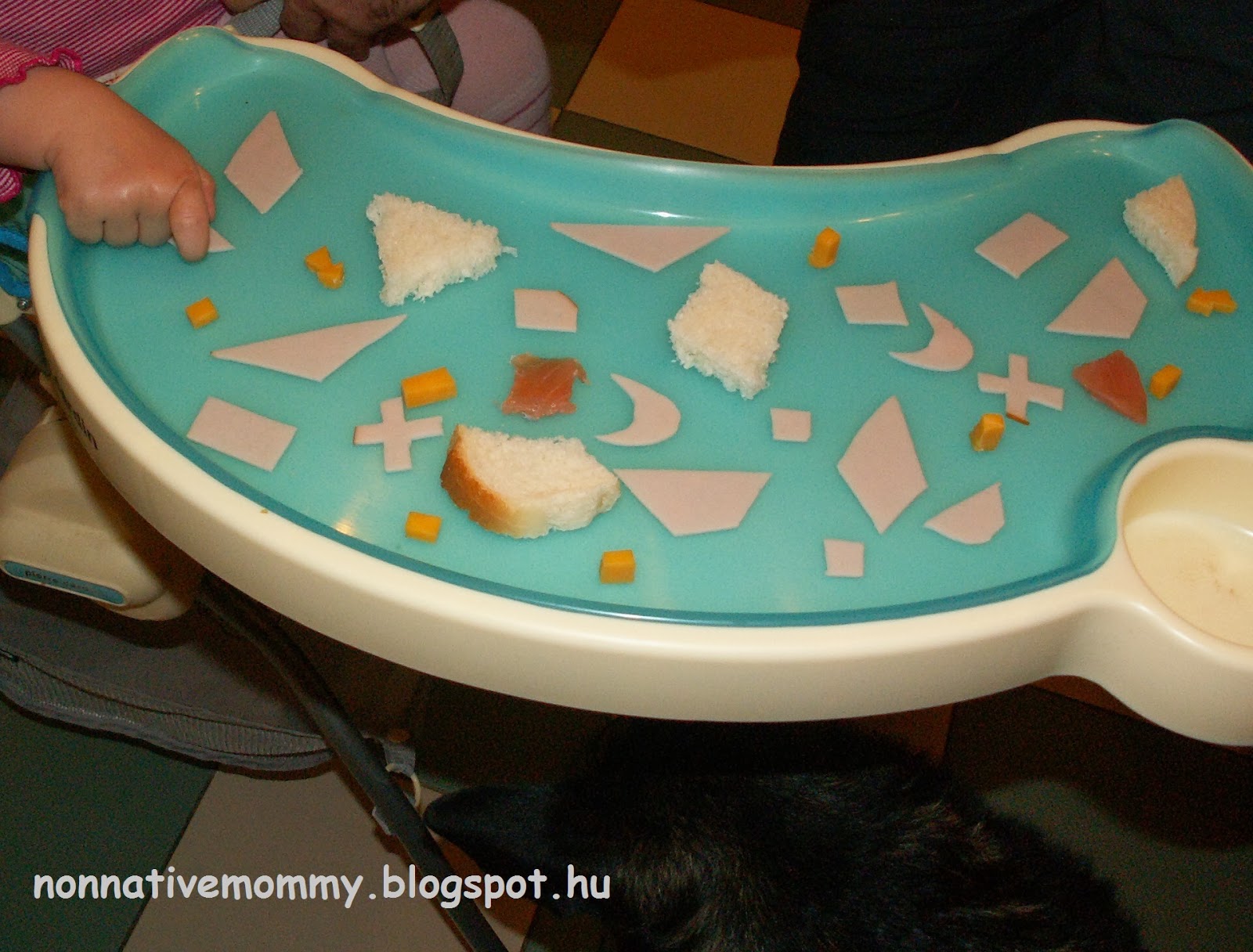
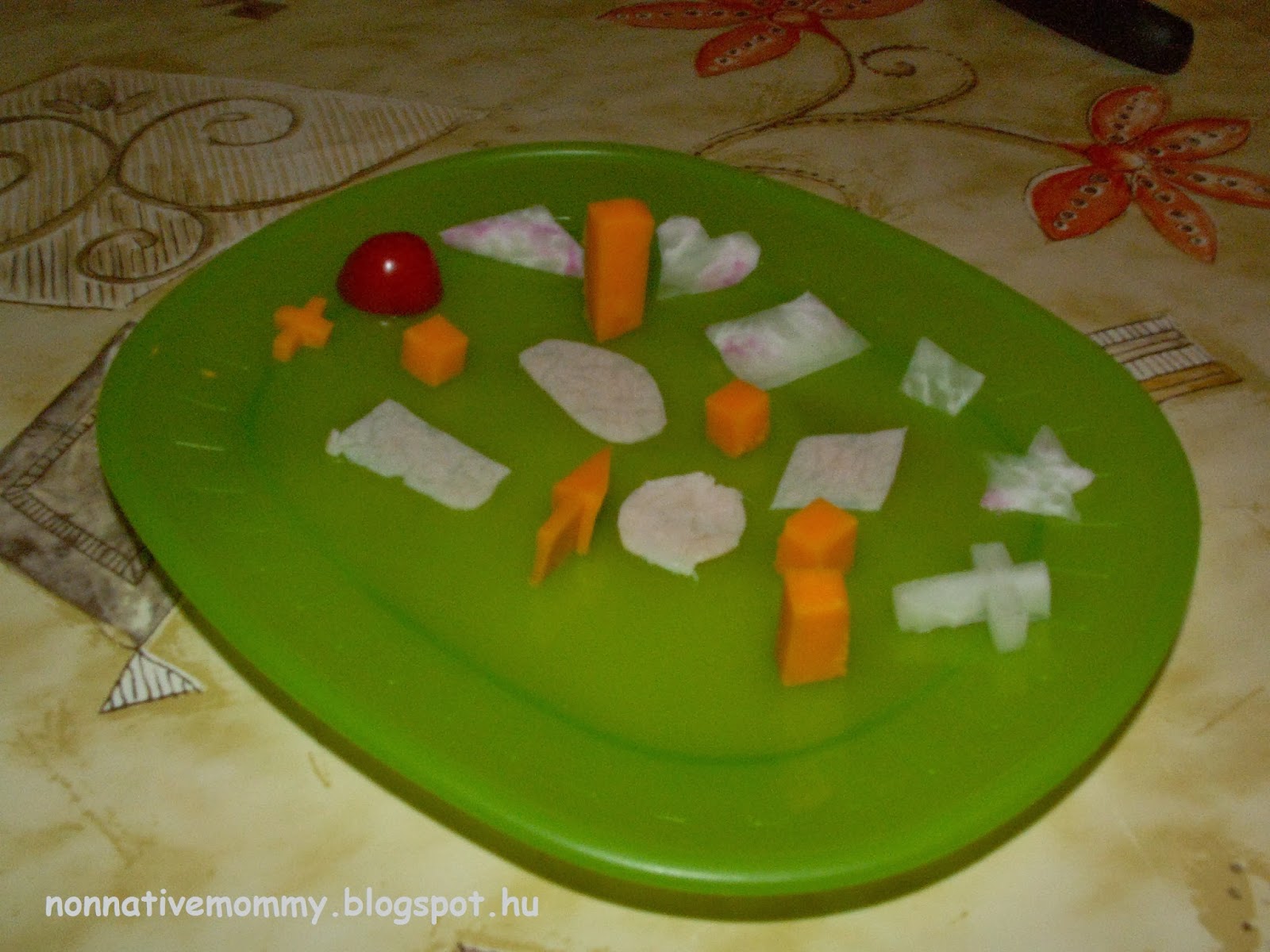
To initiate more talking I always asked what she was doing, what shape it was she was holding etc. Plus, she sometimes said the colour of the shape, too, all by herself.Sometimes E. needs motivation to eat. At dinnertime I prepare some ‘soldiers’ and different shapes carved out of bread, ham, salmon or veggies. It is much more fun for her to eat a pentagon or a triangle than a slice of simple cucumber.


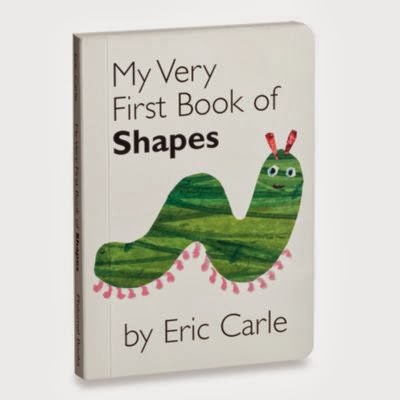
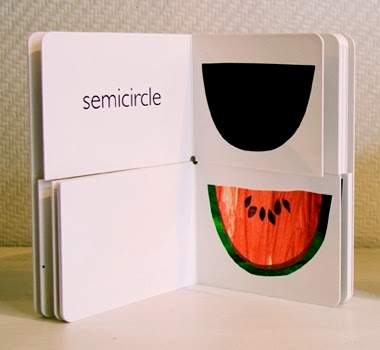
When she turned 16 months we found some books in the library on shapes. This picture dictionary contains two pages of colourful shapes (solids too).


Before taking the book back to the library I had these (and some more pages) photocopied and used the shapes to make flashcards as well.

And a famous favourite (alas, we’ve got it in Hungarian in the library but this unfortunate fact does not keep me back to use it for other language purposes):


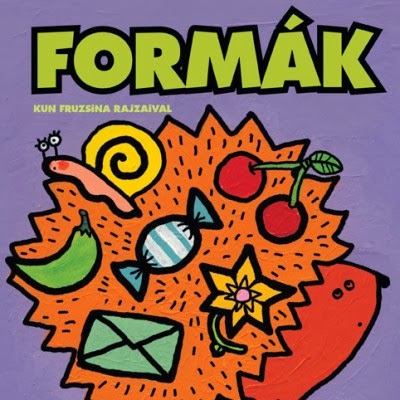
Another Hungarian one: Kun Fruzsina: Formák

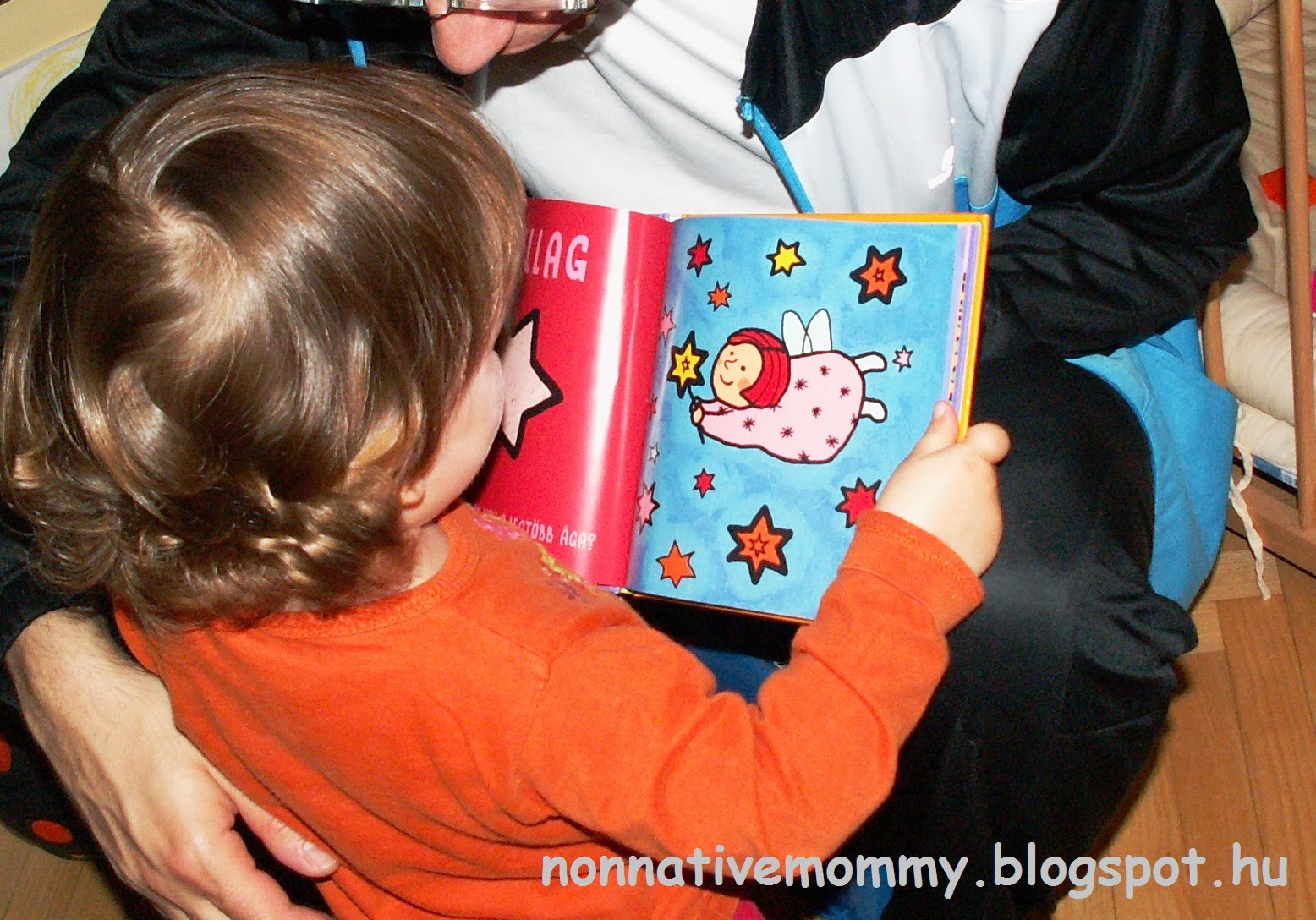
Stars

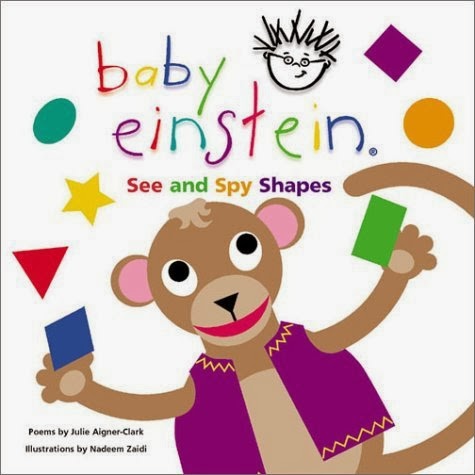
 Last but not least a Baby Einstein book on shapes:

There are tons of books on amazon.com all about shapes. No matter which book you use, but it is another fun way to talk about shapes and see them in different contexts.

Baby’s Best Start (Helen Doron beginner baby course 3rd CD)  has a song about shapes. We listen to it twice a day and E. knows it by heart. Also, the book contains pages of shapes and objects of a similar kind (circle-sun, triangle-sail, square-book).

Often E. identifies shapes by herself. On the table-cloth of our dining table there are some diamond shapes and whenever she walks past she points at them and says: – Little diamond. Here. Big diamond. There.

On the basis of this experience, sometimes we just walk around the house and identify shapes. (The mirror is a rectangle, the washing machine is a cube, the socket is a square and the hair bobble forms a circle etc.) It is also a good idea to collect smaller objects of different shapes in a light box that your child can walk around with. When you have like 10-15 things you can throw them all onto the floor and group them according to their shapes.

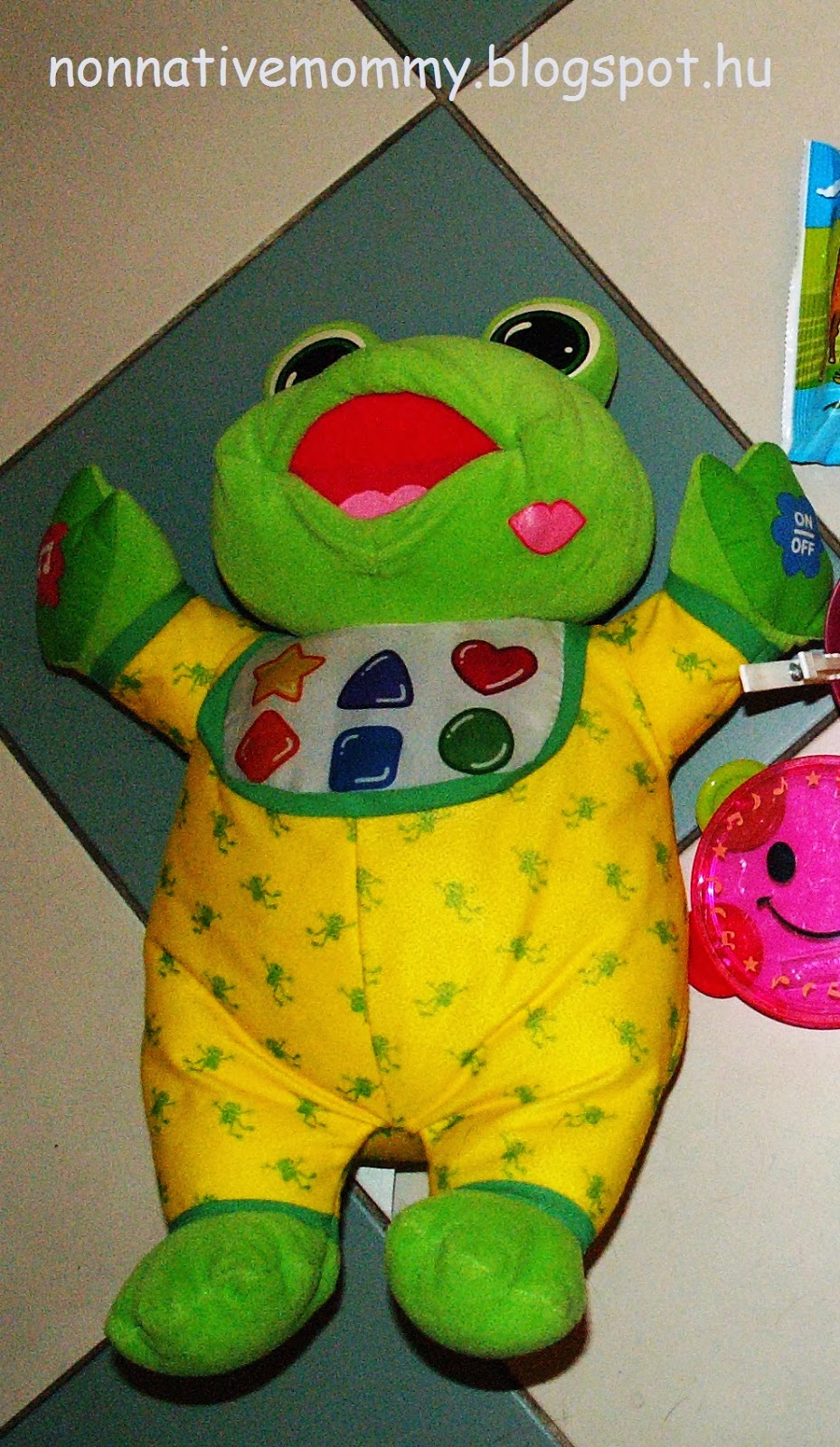
For E.’s first birthday I also bought a second-hand  Froggy with shapes on his tummy. When you turn it on one of the shapes starts flashing. You need to push the flashing button and the Froggy starts singing a famous nursery rhyme/song (Star – Twinkle, Twinkle, Triangle – Mary had a little lamb, Circle – Pat a cake and so on). Unfortunately, the square does not work any more, so whenever E. tries to make the square work I sing the Helen Doron Shapes song.

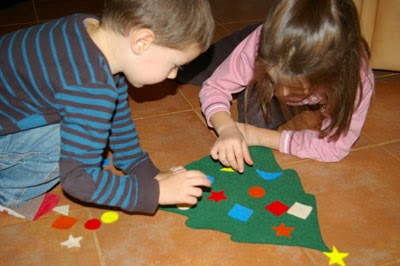
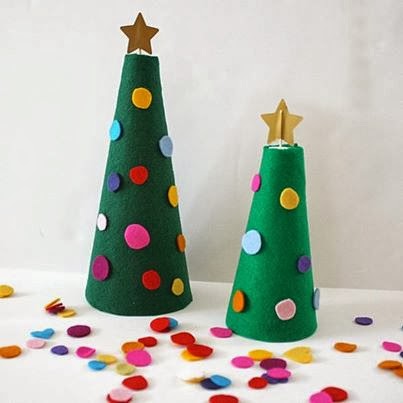
As Christmas was here I was planning to do a little christmasy shape fun, but I did not have time to make it. You can find a lovely Christmas tree decoration game with shapes here (ketnyelvugyerek.hu). The description is in Hungarian, but the picture speaks for itself.

Or a similar activity from Super Simple Learning with a template.

Another simple 3D Christmas tree decoration fun:

http://buggyandbuddy.com/christmas-activities-kids-decorate-felt-christmas-tree/
We are going to do all these next year I am sure, as a little revision. 😉

Finally, let me show you a picture of shape chaos after an hour of playing: